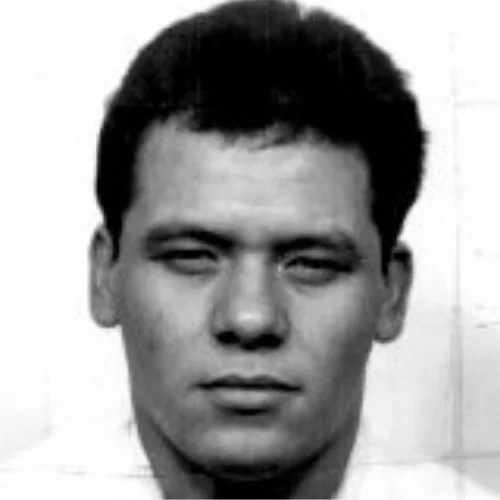
1967 - 1997
Summary
Name:
Irineo Tristan MontoyaNickname:
El NeyYears Active:
1985Birth:
June 03, 1967Status:
ExecutedClass:
MurdererVictims:
1Method:
Stabbing / BeatingDeath:
June 18, 1997Nationality:
Mexico1967 - 1997
Summary: Murderer
Name:
Irineo Tristan MontoyaNickname:
El NeyStatus:
ExecutedVictims:
1Method:
Stabbing / BeatingNationality:
MexicoBirth:
June 03, 1967Death:
June 18, 1997Years Active:
1985“Goodbye. I will wait for you in Heaven. I will be waiting for you. I love my parents. I am at peace with God. Fight for the good.”
— Irineo Tristan Montoya
Irineo Tristan Montoya was born on June 3, 1967. He was a Mexican national who later became one of the foreign citizens executed in Texas after claims were raised that he had not been properly informed of his right to contact the Mexican consulate after arrest.
By 1985, Montoya was in the Brownsville area of Cameron County, Texas. He was 18 years old when John Edgar Kilheffer was killed. The case also involved another man, Juan Villavicencio, who was identified in Texas appellate records as Montoya’s companion during the robbery and killing.
Montoya’s case later became internationally controversial because his supporters and the Mexican government argued that he was not given proper consular access after his arrest. Amnesty International reported that he signed a confession written in English after interrogation without an attorney or assistance from the Mexican consulate, and that English was a language he did not read, speak, or understand.
On November 17, 1985, John Edgar Kilheffer, 46, was killed in Cameron County, Texas. According to Texas appellate records, prosecutors alleged that Irineo Tristan Montoya and Juan Villavicencio caused Kilheffer’s death during the course of a robbery. The indictment and jury instructions described the killing as a stabbing with a knife.
Public case summaries state that Kilheffer had given Montoya and Villavicencio a ride. During the incident, Kilheffer was attacked, robbed, and fatally stabbed. Some reporting also described the crime as a stabbing and beating. A Washington Post report from the time stated that Kilheffer was stabbed at least 22 times and that his body was dumped in a grapefruit grove near the Rio Grande River.
Montoya was later convicted of capital murder and sentenced to death in Texas. The prosecution’s case included a confession, but that confession became a major issue in later protests. Montoya’s supporters argued that he signed a confession in English that he did not understand and that he had not been allowed to contact the Mexican consulate. The Mexican government protested the execution, arguing that his treaty rights had been violated.
The case drew international attention because Montoya was a Mexican citizen and Mexico does not have a civilian death penalty. Supporters sought to stop the execution, but the United States Supreme Court rejected his appeals, and Texas Governor George W. Bush refused to grant a 30-day reprieve, stating that Montoya had received a fair trial.
Irineo Tristan Montoya was executed by lethal injection in Texas on June 18, 1997. He was 30 years old. His final statement was recorded by the Texas Department of Criminal Justice as: “Goodbye. I will wait for you in Heaven. I will be waiting for you. I love my parents. I am at peace with God. Fight for the good.”
