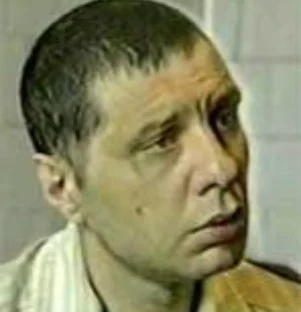
b: 1960
Summary
Name:
Ilshat Zakiryaevich KuzikovYears Active:
1992 - 1995Birth:
February 27, 1960Status:
ImprisonedClass:
Serial KillerVictims:
3+Method:
Stabbing / Throat-cuttingNationality:
Russiab: 1960
Summary: Serial Killer
Name:
Ilshat Zakiryaevich KuzikovStatus:
ImprisonedVictims:
3+Method:
Stabbing / Throat-cuttingNationality:
RussiaBirth:
February 27, 1960Years Active:
1992 - 1995“I am a nurse of society. I am cleaning up all the rubbish.”
— Ilshat Zakiryaevich Kuzikov
Ilshat Zakiryaevich Kuzikov was born on February 27, 1960, in Leninabad, Tajik SSR, Soviet Union, now known as Khujand, Tajikistan. His childhood was marked by instability and domestic violence. His father regularly abused his mother, and in 1973 she died from injuries inflicted during one of these assaults. Following her death, Kuzikov and his brother were raised by an aunt. In later interviews and psychiatric evaluations, Kuzikov reportedly claimed that witnessing his mother's violent death left him emotionally detached from violence and desensitized to blood from an early age.
As a young man, Kuzikov trained as a welder. At approximately twenty years of age, he moved to Vyborg to complete his compulsory military service. During this period, he experienced growing mental health problems. In 1982, he reportedly attacked a co-worker with a wrench, an incident that brought him to the attention of Soviet authorities. Rather than facing criminal prosecution, he was diagnosed with schizophrenia and committed to psychiatric treatment.
After completing psychiatric treatment, Kuzikov settled in Leningrad, which is now Saint Petersburg. He lived in a modest apartment and attempted to establish a stable life. He married during this period, but the relationship eventually ended in divorce. Following the breakdown of the marriage, his personal circumstances deteriorated significantly. He worked intermittently, including employment as a market street sweeper, while becoming increasingly dependent on alcohol.
Throughout the 1980s and early 1990s, Kuzikov remained known to psychiatric services and continued to struggle with alcoholism and social isolation. Neighbors later described him as quiet and generally unremarkable, though his heavy drinking was widely known. Behind this outwardly ordinary existence, however, his mental health continued to decline. By the early 1990s, he was living alone and spending much of his time drinking with acquaintances and other marginalized individuals. It was during this period that the crimes for which he later became infamous reportedly began.
The known case against Ilshat Kuzikov involved the deaths of three male acquaintances in Saint Petersburg. The victims are commonly listed as Sasha Pichonkin, Misha Bochkov, aged 37, and Edik Vassilevski, aged 43. Public reports state that the victims were drinking companions or acquaintances and that Kuzikov lured them to his apartment, where alcohol was involved before the killings.
Kuzikov said he killed his first victim in 1992 after inviting him to his flat. After the killing, he dismembered the body and disposed of remains in a garbage area. Later reports linked him to additional murders after severed body parts were found near his apartment building and in nearby rubbish areas. One victim, identified as Misha Bochkov, was reportedly found after his severed head was discovered with communal waste. Another victim, Edik Vassilevski, was identified after remains were found in the same general area.
The murders were reported as knife attacks. Some accounts state that Kuzikov struck or attacked victims while they were intoxicated before cutting the throat or stabbing them. Afterward, he dismembered the bodies inside his apartment. Police reports and newspaper accounts also described cannibalism, stating that Kuzikov ate internal organs and kept human remains in containers inside the flat. These claims were widely reported in contemporary coverage and became the most notorious part of the case.
Police eventually connected Kuzikov to the remains after identifying links between him, the victims, and the local psychiatric hospital. Officers went to his apartment, where they found human remains and evidence of dismemberment. Reports state that he did not strongly deny the discoveries and gave statements about the killings. Some accounts say he claimed poverty and hunger as a reason for eating human remains, while other accounts described sexual, sadistic, or delusional elements. Because these explanations came from police interviews and press reporting, they should be treated as reported claims rather than independent psychological conclusions.
In March 1997, Kuzikov was reported to have been found insane. Instead of receiving a prison sentence, he was ordered into closed or maximum-security psychiatric confinement.
