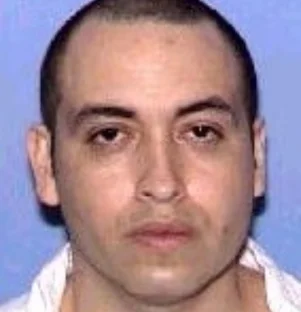
b: 1974
Summary
Name:
Humberto Garza IIINickname:
GalloYears Active:
2003Birth:
July 24, 1974Status:
ImprisonedClass:
Mass MurdererVictims:
6Method:
ShootingNationality:
USAb: 1974
Summary: Mass Murderer
Name:
Humberto Garza IIINickname:
GalloStatus:
ImprisonedVictims:
6Method:
ShootingNationality:
USABirth:
July 24, 1974Years Active:
2003Date Convicted:
March 30, 2005"I want to tell my family I love them. I love them deeply and I didn't kill nobody. Don't worry. I have faith in God that I'll be back and I will win this case."
— Humberto Garza III
Humberto Garza III, known as "Gallo," was born on July 24, 1974. His parents, Lydia and Humberto Garza Jr., were married for 15 years, most of which his father spent in prison, his father died in a prison hospice about a year before the Edinburg murders, a loss Garza's mother said devastated him. Garza first entered the Texas Youth Commission at age 16. In July 1991, days before his 17th birthday, he was arrested for stabbing a man, which he later pleaded guilty to, claiming self-defense against a high school rival.
He was imprisoned from 1992 to 2002 on that charge and a burglary conviction, and was released on parole in April 2002, remaining under supervision until 2010. His parole officer testified he performed well while on parole, securing a job, entering substance abuse treatment, and paying restitution, though he had identified struggles with anger and negative influences and never disclosed being a gang member. By this time, Garza held the rank of "captain" in the Rio Grande Valley gang known as the Tri-City Bombers, also referred to as the "Bombitas."
In the early morning hours of January 5, 2003, Garza organized a plan among fellow Tri-City Bombers members to raid a suspected stash house at 2915 East Monte Cristo Road in Edinburg, Texas, believing a significant quantity of marijuana was hidden there. The property held two separate houses connected by a dirt driveway, occupied by members of a rival gang, the Texas Chicano Brotherhood. Garza and his gang gathered a group of masked men, some wearing jackets marked "POLICE" to pose as law enforcement, and drove them to the property; Garza waited nearby in a vehicle while the armed men stormed both houses.
Police, responding to a 911 call, found the bodies of six men at the scene: Jimmy Edward Almendariz, 22; brothers Jerry Eugene Hidalgo, 24, and Ray Hidalgo, 30; half-brothers Juan Delgado Jr., 32, and Juan Delgado III, 20; and Ruben Rolando Castillo, 32. Each had been shot multiple times. Jerry Hidalgo was found face down in the kitchen of the larger house, his hands and legs bound with extension cords, with a gunshot wound to his back. The living room had been ransacked, and a mattress had been overturned as though searched.
Police received a tip regarding the "pseudo-cop" robbery and took several suspects into custody, including Garza. Following his arrest, Garza gave a statement admitting he was a captain of the Tri-City Bombers and that he had helped plan the raid on the rival gang's stash house, describing the planning in detail.
However, he denied personally shooting any of the victims, claiming that he and another gang member had simply dropped the armed men off at the scene and picked them up afterward. He also told investigators that another gang member had remarked the "assassination wasn't carried out correctly," suggesting some disagreement within the gang over how the raid had unfolded. Twelve men in total were eventually indicted in connection with the killings.
At trial, prosecutors, Assistant District Attorneys Murray Moore and Joseph Orendain, argued that even though Garza might not have personally fired the fatal shots, he bore full responsibility as the plan's architect: "He's worse than the man who pulled the trigger. He executed the plan and he executed the six individuals." Garza's defense attorneys, Ralph Martinez and Keno Vasquez, argued he had undergone a genuine religious transformation while awaiting trial, presenting testimony from jail ministers and a rehabilitation counselor who described his Bible study as sincere.
Prosecutors countered that his religious devotion, if anything, made him more culpable, since it showed he understood right from wrong yet still carried out the plan. Martinez asked the jury to consider a life sentence instead, noting Garza had few disciplinary issues during his earlier prison term and had cooperated with police after his arrest, providing information that helped identify other participants.
A 12-member Hidalgo County jury convicted Garza of one count of murder and one count of capital murder in August 2005, finding he had planned and coordinated the Monte Cristo Road raid under Texas's law of parties, which holds participants in a crime equally responsible regardless of who fired the fatal shots.
After roughly three hours of deliberation, the jury sentenced him to death, finding he posed a continuing threat to society and identifying no sufficient mitigating circumstances. As he was led from the courtroom, Garza embraced his attorneys and turned to address his sobbing family: "I want to tell my family I love them. I love them deeply and I didn't kill nobody. Don't worry. I have faith in God that I'll be back and I will win this case."
Garza was the second man sentenced to death in connection with the Edinburg massacre; co-defendant Juan Raul Navarro Ramirez had received a death sentence for the same killings months earlier, and co-defendant Rodolfo Medrano was later also sentenced to death. Garza's direct appeal, addressing double jeopardy and other claims, was decided by the Texas Court of Criminal Appeals in 2008 (Garza v. State, No. AP-75,217), which affirmed his conviction and sentence. Humberto Garza III remains on Texas's death row.
