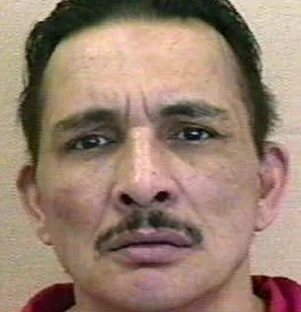
1944 - 2003
Summary
Name:
Henry Lee HuntNickname:
MuleheadYears Active:
1984Birth:
November 22, 1944Status:
ExecutedClass:
MurdererVictims:
2Method:
ShootingDeath:
September 12, 2003Nationality:
USA1944 - 2003
Summary: Murderer
Name:
Henry Lee HuntNickname:
MuleheadStatus:
ExecutedVictims:
2Method:
ShootingNationality:
USABirth:
November 22, 1944Death:
September 12, 2003Years Active:
1984Date Convicted:
November 18, 1985“It’s a good day to die.”
— Henry Lee Hunt
Henry Lee Hunt, known as "Mulehead," was born on November 22, 1944, the oldest of 14 children in a Robeson County, North Carolina family. While incarcerated on death row, Hunt reportedly became a devout Christian, telling reporters he read the Bible cover to cover every year, with Psalms as his favorite book, and expressed confidence that he would go to heaven.
In July 1984, according to the State’s evidence, Dottie Ransom spoke with Rogers Locklear about taking out a life insurance policy on Jackie Ransom and arranging for him to be killed. Dottie had married Jackie Ransom without divorcing Locklear. Prosecutors said her motive was to collect the proceeds from a $25,000 life insurance policy on Ransom’s life.
Rogers Locklear first approached his brother Harry about killing Ransom, but Harry refused. Locklear was then directed toward A.R. Barnes. In August 1984, Locklear and Dottie agreed to pay A.R. Barnes $2,000 to arrange Ransom’s killing. A.R. Barnes later told Locklear that if he did not kill Ransom himself, he would get it done.
On September 8, 1984, Locklear went to A.R. Barnes’ house but instead met Elwell “Babe” Barnes. Elwell Barnes asked whether he could take his brother’s place in the killing for the same payment. Locklear said it was up to him. Elwell then asked Locklear to drive him to Henry Lee Hunt’s home. After a private conversation with Elwell Barnes, Hunt told Locklear that he had the gun and that he and Barnes could complete the killing.
After Locklear pointed out Jackie Ransom, Hunt told Locklear to get Dottie and take her somewhere public so they would have witnesses. Ransom was killed that night. His body was placed in a shallow grave and found the next day. The morning after the killing, Elwell Barnes told Bernice Cummings that he and Hunt had killed Ransom. Hunt later told Locklear, “I killed Jackie last night,” demanded the promised money, and threatened Dottie and Locklear if he was not paid within 30 days.
After Ransom’s death, Hunt learned that Larry Jones had been speaking with police about the murder. The prosecution’s evidence showed that Hunt said he would stop Jones from talking. He later obtained a shovel and a shotgun and said he was going to kill Jones because Jones knew he had killed Ransom.
On September 14, 1984, Hunt, Elwell Barnes, and Jerome Ratley picked up Larry Jones. Ratley drove the vehicle to a dirt road. Hunt told Ratley to stop and turn off the lights. Hunt then shot Jones several times in the chest at close range. When Jones was pulled from the vehicle and was still alive, Hunt shot him again. Jones’ body was dragged into the woods and buried in a shallow grave.
After both bodies were found, Hunt was indicted in Robeson County on two counts of first-degree murder and two counts of conspiracy to commit murder. The bodies were discovered in different areas of Robeson County, one near Lumberton and one near Fairmont. Hunt was tried jointly with Elwell Barnes.
During the trial, the State relied heavily on witness testimony. The prosecution presented statements from people who said Hunt admitted involvement in Ransom’s murder. Jerome Ratley testified as an eyewitness to Larry Jones’ killing. The State also presented ballistics evidence connecting a .25-caliber Beretta to projectiles removed from both victims. The North Carolina Supreme Court later described the evidence of Hunt’s guilt as overwhelming.
The jury found Hunt guilty of both first-degree murders and both conspiracy charges. During the penalty phase, the State presented his prior felony convictions as aggravating evidence. For Jackie Ransom’s murder, the jury found aggravating circumstances based on Hunt’s prior violent felony convictions and the murder being committed for pecuniary gain. For Larry Jones’ murder, the jury found aggravating circumstances based on prior violent felony convictions and the murder being committed to avoid or prevent lawful arrest. The jury recommended death for both murders.
Hunt was sentenced to death on December 20, 1985, in Robeson County Superior Court. He also received two 10-year sentences for the conspiracy convictions. His case went through direct appeal, post-conviction review, federal habeas proceedings, and later challenges connected to North Carolina’s short-form murder indictments. The North Carolina Supreme Court and federal courts ultimately upheld the convictions and death sentences.
In 2003, Hunt’s attorneys continued to argue that there were unresolved questions in the case. Amnesty International reported that his legal team raised issues involving DNA testing of a cigarette butt, witness statements, and the destruction of some investigative files. Hunt continued to maintain his innocence, but the courts did not grant relief that stopped the execution.
Henry Lee Hunt was executed by lethal injection at Central Prison in Raleigh, North Carolina, on September 12, 2003. He was pronounced dead at 2:17 a.m. He was 58 years old.
