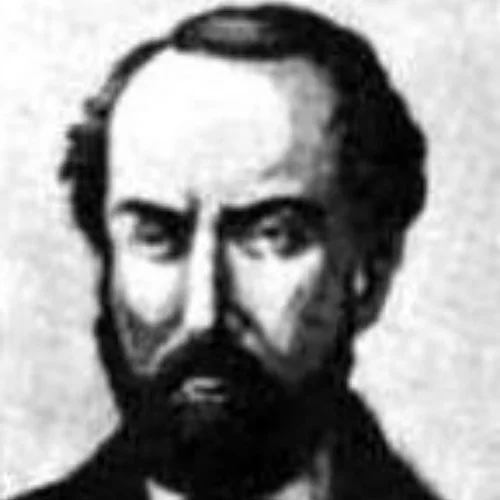
1822 - 1865
Summary
Name:
Heinrich Hartmann WirzNickname:
Henry WirzYears Active:
1864 - 1865Birth:
November 25, 1822Status:
DeceasedClass:
MurdererVictims:
11+Method:
Systematic neglect / DeprivationDeath:
November 10, 1865Nationality:
Switzerland1822 - 1865
Summary: Murderer
Name:
Heinrich Hartmann WirzNickname:
Henry WirzStatus:
DeceasedVictims:
11+Method:
Systematic neglect / DeprivationNationality:
SwitzerlandBirth:
November 25, 1822Death:
November 10, 1865Years Active:
1864 - 1865Heinrich Hartmann Wirz, known as Henry Wirz, was born in November 1822 in Zurich, Switzerland. He attended the University of Zurich, although there is no proof that he graduated. After practicing medicine for a time, he emigrated to the United States in 1849. Many people from Europe were leaving during this period due to political conflicts, including the failed Revolutions of 1848. Wirz married in 1845 and had two children. However, he had a brief prison term in the late 1840s for reasons that remain unclear.
Wirz first settled in Kentucky, where he started a medical practice. Later, he married a widow named Wolfe, who had two daughters. The family moved to Louisiana, where they welcomed a daughter named Cora in 1855. By 1861, Wirz's medical practice was thriving.
When the Civil War began in 1861, Wirz enlisted as a private in the Confederate Army. He claimed to have fought at the Battle of Seven Pines in May 1862, where he sustained a severe injury that left him unable to use his right arm. Yet, there are no official records to confirm his involvement in that battle or any other military engagements prior to his role at the Andersonville prison camp.
Wirz served in Alabama as a prison guard before being moved to Richmond, Virginia, where he helped oversee Union prisoners. Due to his injury, he joined the staff of General John H. Winder, who managed Confederate prisoner camps. In February 1864, the Confederate government built a new large military prison named Camp Sumter near Andersonville, Georgia, to accommodate Union prisoners of war. Wirz took command of Camp Sumter in March and managed the camp for over a year.
Initially, wooden barracks were planned for the prisoners, but instead, they were housed in a large open stockade. The camp faced numerous issues from the start, including a significant lack of food, medical supplies, and poor sanitary conditions. By August 1864, the number of prisoners at Andersonville reached approximately 32,000. The camp's conditions led to a high mortality rate from diseases and malnutrition.
After the Civil War ended, Wirz was arrested in May 1865 by federal cavalry and taken to Washington, D.C. for trial. His command at Camp Sumter and the resulting prison conditions would be heavily scrutinized in court. Ultimately, he faced multiple charges related to conspiracy and murder against Union prisoners. He was found guilty and executed on November 10, 1865.
Heinrich Hartmann Wirz, a Confederate officer, took command of Camp Sumter, also known as Andersonville Prison, in March 1864. This facility housed Union prisoners during the American Civil War. The camp was poorly designed; it had a lack of shelter, insufficient food, and inadequate medical supplies. Overcrowding was a severe issue, with approximately 32,000 prisoners at its peak in August 1864. The conditions led to a high mortality rate. Prisoners suffered greatly from malnutrition and diseases.
Wirz was accused of allowing and even encouraging these poor conditions. Testimonies from former inmates described daily inspections where he appeared indifferent to their suffering. Some witnesses claimed he threatened to starve prisoners if any attempted escape. Additionally, accusations included cruel punishments where men were shot for crossing an imaginary line known as the "dead-line." Reports indicated that he directed guards to shoot prisoners who crossed this boundary. He was also implicated in specific acts of violence, including shooting individual prisoners and subjecting them to cruel treatment using stocks and heavy chains.
In May 1865, after the Civil War ended, Wirz was arrested by U.S. cavalry. He was brought to trial in July of that year, where a military tribunal tried him for conspiracy and murder. Evidence was presented from former prisoners and other witnesses, detailing the harsh realities of life in Andersonville. In early November 1865, Wirz was found guilty of 11 counts of murder and conspiracy. He received a death sentence.
On November 10, 1865, Wirz was executed by hanging in Washington, D.C. His execution did not go as planned; the noose failed to break his neck, leading to a prolonged death. Following the execution, it was revealed that a key witness had lied during the trial, bringing even more controversy to Wirz's conviction. He was buried in a cemetery in Washington, D.C., leaving behind his wife and daughter. The trial and execution of Henry Wirz have generated ongoing debate about morality and responsibility in wartime actions.
