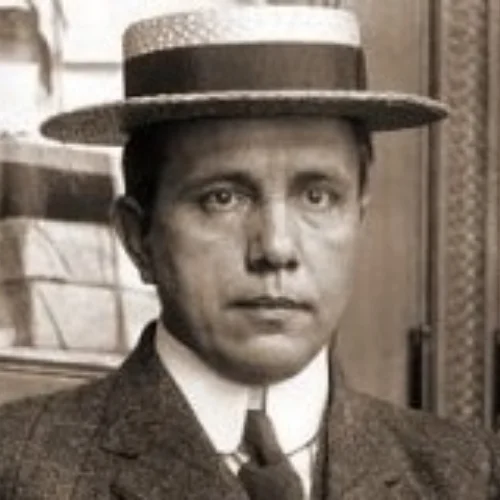
1871 - 1947
Summary
Name:
Harry Kendall ThawYears Active:
1906Birth:
February 12, 1871Status:
DeceasedClass:
MurdererVictims:
1Method:
ShootingDeath:
February 22, 1947Nationality:
USA1871 - 1947
Summary: Murderer
Name:
Harry Kendall ThawStatus:
DeceasedVictims:
1Method:
ShootingNationality:
USABirth:
February 12, 1871Death:
February 22, 1947Years Active:
1906“I have probably saved your life.”
— Harry Kendall Thaw
Harry Kendall Thaw was born on February 12, 1871, in Pittsburgh, Pennsylvania. He was the son of William Thaw, a wealthy coal and railroad magnate, which gave Harry a privileged upbringing. His father was known for his fortune, estimated to be around $40 million, and Harry's mother was very indulgent towards him.
From a young age, Harry displayed troubling behaviors. His mother believed his issues began even before he was born. Throughout his childhood, he frequently changed schools in Pittsburgh and struggled academically. He was often described as unintelligible and a troublemaker by his teachers. Despite these challenges, Harry was granted admission to the University of Pittsburgh to study law, although he did not excel in his studies there. He later transferred to Harvard University, leveraging his family name.
At Harvard, Thaw did not focus on his studies. Instead, he spent much of his time playing poker and engaging in other risqué activities. This lifestyle eventually led to his expulsion after an incident where he chased a cab driver with a shotgun. Although he claimed it was unloaded, the behavior highlighted his reckless nature.
After leaving Harvard, Thaw moved between Pennsylvania and New York, where he continued to indulge in a hedonistic lifestyle that included using drugs and frequenting theaters. It was during this time that he became involved with chorus girls, one of whom was Evelyn Nesbit.
Evelyn Nesbit was a chorus girl who captured Thaw's interest. Their connection began when he learned that she had had an earlier relationship with the famous architect Stanford White. This jealousy fueled Thaw's obsessive feelings towards Nesbit. He went to great lengths to win her favor, even after she initially avoided him due to White's warnings about Thaw's temperament.
Thaw's relationship with Nesbit grew more complicated. He proposed to her several times, but she hesitated due to her past with White. Over time, Thaw's obsessive nature and jealousy of White intensified. He eventually married Nesbit on April 4, 1905. Their marriage was marked by Thaw's controlling behavior and violent tendencies, which further complicated their lives together.
On June 25, 1906, Harry Kendall Thaw attended a performance of "Mam'zelle Champagne" at Madison Square Garden in New York City with his wife, Evelyn Nesbit. During the show, he saw Stanford White, an architect who had previously been involved with Evelyn. Thaw approached White's table multiple times, but he backed away each time.
As the show continued, it reached its finale. Right then, Thaw pulled out a pistol and fired three shots at point-blank range into White’s face. He killed White instantly. The crowd was initially confused, thinking the shooting could be part of the entertainment. However, it soon became clear that White was dead. Thaw calmly held the gun overhead, walked through the crowd, and met Evelyn at the elevator. When she asked him what he had done, Thaw stated that he had "probably saved your life."
Following the murder, Thaw was arrested immediately. The legal proceedings that followed were highly publicized and drew much attention. Two trials took place. In the first trial, the jury could not come to a decision, resulting in a deadlock. In the second trial, Thaw's defense attorney argued that he was temporarily insane at the time of the shooting. This was backed by Evelyn's testimony. She stated that Thaw was trying to defend her honor from White, whom she claimed had abused her. Ultimately, Thaw was found not guilty by reason of insanity on February 1, 1908.
After the verdict, Thaw was committed to the Matteawan State Hospital for the Criminally Insane, where he lived with a degree of freedom. In 1913, he absconded to Canada, but was soon extradited back to the United States. By 1915, another jury found him sane. Thaw continued to face legal troubles throughout his life, including accusations of assault. He passed away on February 22, 1947, at the age of 76.
