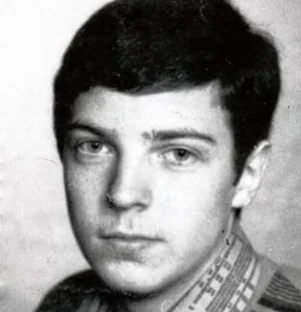
1989 - 1980
Summary
Name:
Gundolf KöhlerYears Active:
1980Birth:
August 27, 1989Status:
DeceasedClass:
Mass MurdererVictims:
12Method:
Bombing / explosive deviceDeath:
September 26, 1980Nationality:
Germany1989 - 1980
Summary: Mass Murderer
Name:
Gundolf KöhlerStatus:
DeceasedVictims:
12Method:
Bombing / explosive deviceNationality:
GermanyBirth:
August 27, 1989Death:
September 26, 1980Years Active:
1980Gundolf Köhler was born on August 27, 1959, in Schwenningen, Baden-Württemberg, West Germany. He was the son of Werner and Martha Köhler, who had relocated from Saxony to Donaueschingen in the early 1950s. The family experienced a tragedy in 1957 when their youngest son, Gerald, drowned at the age of five. Two years later, Gundolf was born, becoming the youngest child in the household.
Köhler spent most of his childhood and adolescence in Donaueschingen. During his teenage years, he developed an interest in nationalist and far-right political movements. By the age of fourteen, he had reportedly attended events organized by the National Democratic Party of Germany (NPD), a far-right political party, and became involved with the Wiking-Jugend (Viking Youth), a neo-Nazi youth organization that modeled many of its activities and structure on the Hitler Youth of the Third Reich.
As he grew older, Köhler became associated with several right-wing extremist groups and individuals. Investigative records later revealed connections between him and the Wehrsportgruppe Hoffmann (WSG Hoffmann), a neo-Nazi paramilitary organization founded by Karl-Heinz Hoffmann. During the mid-1970s, he participated in some activities linked to the group and maintained contact with members of the wider far-right scene in southern Germany.
Köhler also developed an interest in weapons, military equipment, chemistry, and explosives. In 1975, he was seriously injured when an explosive mixture he had assembled detonated unexpectedly. The incident caused significant facial injuries but did not result in criminal charges. According to later investigations, he continued experimenting with chemicals and explosive materials after recovering from the accident.
In 1976, Köhler was present at a violent confrontation involving right-wing and anti-fascist groups in Tübingen. Witness statements collected by investigators indicated that he associated with individuals connected to extremist political organizations during this period. As a university student studying geology at the University of Tübingen, he became involved with the Hochschulring Tübinger Studenten, a nationalist student organization active on campus.
Friends, acquaintances, and later investigative reports frequently described Köhler as socially isolated and intensely interested in firearms, military subjects, and political ideology. By 1980, he had established connections within various sectors of the West German far-right movement. These associations, together with evidence uncovered after his death, became a major focus of investigations into the September 26, 1980 bombing at Munich's Oktoberfest, one of the deadliest acts of terrorism in postwar German history.
On the evening of September 26, 1980, Munich’s Oktoberfest was crowded with visitors. At about 10:19 p.m., an explosive device detonated near the main entrance to the festival grounds at the Theresienwiese. The bomb was placed near or inside a wastebasket and exploded as many people were leaving the festival area.
The attack killed 12 people at the scene or from their injuries. Gundolf Köhler was also killed in the blast, bringing the total number of dead to 13 including the perpetrator. More than 200 people were injured, many of them seriously. Some survivors suffered permanent physical injuries, including amputations and lasting trauma.
The explosive device was described as a pipe-bomb-style or improvised explosive device using military explosive material. Köhler was close enough to the bomb when it detonated that investigators determined he was killed by his own device. Early authorities concluded that the bomb may have exploded prematurely before he could leave the area.
The bombing became one of the deadliest attacks in postwar German history. In the immediate aftermath, investigators identified Köhler as the main suspect. His connections to right-wing extremist circles were known, including links to Wehrsportgruppe Hoffmann. Despite those links, the original investigation closed with the conclusion that Köhler had acted alone and that his motive was unclear or partly personal.
Over the following decades, survivors, lawyers, journalists, and researchers continued to question whether the attack had been fully investigated. Concerns focused on Köhler’s extremist contacts, possible witnesses who reported seeing him with other men shortly before the blast, and the destruction of some evidence years after the original case was closed.
The investigation was reopened decades later. In 2020, German federal prosecutors ended the renewed inquiry but changed the official understanding of the attack. They concluded that Köhler had carried out the bombing from a right-wing extremist motive. Authorities found that he wanted to affect the 1980 federal election and help create political conditions favorable to an authoritarian state based on Nazi ideology.
The renewed investigation did not prove the involvement of accomplices or backers. Because no living suspect could be charged and no additional perpetrator could be legally established, the case was closed again. However, the attack is now officially recognized as a right-wing extremist terrorist act rather than a crime driven only by personal motives.
Gundolf Köhler died at the bombing scene on September 26, 1980. He was never arrested, tried, or convicted because he was killed during the attack.
