Summary
Name:
Grigory GrachovYears Active:
1925Status:
DeceasedClass:
Mass MurdererVictims:
11Method:
Shooting / ArsonNationality:
Soviet UnionSummary: Mass Murderer
Name:
Grigory GrachovStatus:
DeceasedVictims:
11Method:
Shooting / ArsonNationality:
Soviet UnionYears Active:
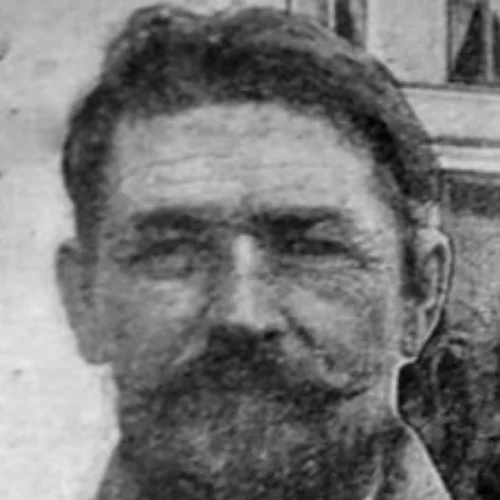
1925Grigory Timofeevich Grachov was a Russian peasant living in the village of Ivankovo, located in what was then the Sudislavsky District of Kostromskoy Uyezd, within the Kostroma Governorate of the Russian Soviet Federative Socialist Republic. Little is known about his early life, education, or family background beyond his status as a rural farmer.
Following the October Revolution of 1917, the newly formed Soviet government enacted sweeping agrarian reforms. Under Vladimir Lenin’s Decree on Land, private land ownership was abolished, and land was redistributed among peasants. The process, however, was often chaotic, contentious, and locally administered, leading to disputes between villagers.
During this redistribution, Grachov failed to obtain a specific plot of land he had long sought, losing it to a neighboring farmer. This loss intensified an already strained relationship with other villagers. According to later accounts, the dispute over land became the culmination of long‑standing grievances and personal animosities. Grachov reportedly believed he had been deliberately cheated out of what he considered his rightful share.
At some point prior to 1925, Grachov had been accused of murder, though he was acquitted. No further details of this case have survived, but it established a precedent for violent conflict in his background.
In the months leading up to the attack, Grachov took deliberate preparatory steps. He sold his property and belongings and arranged for his wife to stay with relatives, actions later interpreted as indications of premeditation. By mid‑1925, his resentment toward the community had hardened into a plan for mass violence.
On 26 July 1925, Grigory Grachov carried out a coordinated spree killing in the village of Ivankovo. While most villagers were away working in nearby fields, he set fire to multiple houses, deliberately igniting them to draw residents back into the village. After starting the fires, Grachov concealed himself nearby and waited for the villagers to return.
As residents rushed back to extinguish the fires threatening their homes, Grachov opened fire on them, shooting indiscriminately. In the ensuing attack, 11 villagers were killed and eight others were wounded. When firefighters from a neighboring town arrived to help control the blaze, Grachov also fired upon them, further extending the violence beyond his immediate community.
In addition to targeting people, Grachov turned his weapon on the village’s livestock, killing between eight and twelve horses, further devastating the settlement’s means of survival. By the end of the attack, 13 of the village’s 14 households had been burned to the ground, leaving Ivankovo almost entirely destroyed.
After completing the attack, Grachov fled the scene. He was later apprehended by the local state militia after a search operation. The massacre was among the deadliest rural spree killings in early Soviet history.
Following his capture, Grachov was put on trial by Soviet authorities. A psychiatric evaluation determined that he was mentally competent and fully responsible for his actions. He was convicted in 1925 and sentenced to 20 years of imprisonment.
Despite the severity of his crimes, Grachov was released after serving only 10 years, reportedly due to an administrative or judicial error, as he was not legally eligible for early release. Upon release, he was formally banned from residing in Ivankovo for four years.
No reliable records document his life after release. His date and place of death remain unknown.
The Ivankovo massacre left a lasting mark on the region. The destruction of nearly the entire village and the loss of life highlighted the extreme social tensions present in rural Soviet communities during the early years of collectivization and land reform.
While the case did not lead to documented nationwide legal reforms, it became an example cited in discussions of agrarian conflict, revenge‑motivated violence, and the limits of early Soviet rural governance. Grachov’s early release was later regarded as a serious administrative failure.
Grigory Timofeevich Grachov is remembered as the perpetrator of one of the deadliest peasant‑on‑peasant spree killings of the early Soviet period.
