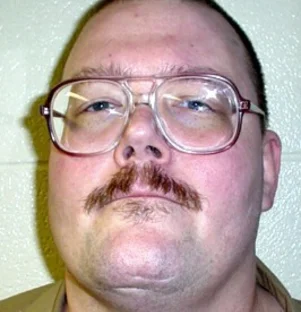
1965 - 2005
Summary
Name:
Gregory Scott JohnsonYears Active:
1985Birth:
February 18, 1965Status:
ExecutedClass:
MurdererVictims:
1Method:
Beating / Stomping / BludgeoningDeath:
May 25, 2005Nationality:
USA1965 - 2005
Summary: Murderer
Name:
Gregory Scott JohnsonStatus:
ExecutedVictims:
1Method:
Beating / Stomping / BludgeoningNationality:
USABirth:
February 18, 1965Death:
May 25, 2005Years Active:
1985“Everyone has been professional.”
— Gregory Scott Johnson
Gregory Scott Johnson was born on February 18, 1965. He was from Indiana and was 20 years old at the time of the crime that led to his death sentence. Public records connected to his case describe him as a young man with a history that included alcohol use, intoxication, and earlier involvement with fire-setting incidents.
Before the murder of Ruby Hutslar, Johnson had attended and graduated from Indiana Boys School. He also served for a short time in the military, including nine months in the National Guard and two months in the Army. These details were later presented as mitigating circumstances during the sentencing phase of his case.
Court and clemency materials also referenced Johnson’s alcoholism, intoxication at the time of the offense, and claims of childhood abuse and psychological trauma. These factors were raised during later arguments against his execution, though they did not prevent the courts or the Indiana Parole Board from allowing the death sentence to proceed.
Johnson was also connected to another death penalty case before his own conviction. He had testified as a prosecution witness against his friend Mark Wisehart, who was charged with capital murder. During Johnson’s interrogation in the Hutslar case, investigators asked whether he had killed Ruby Hutslar because he wanted to join Wisehart on death row. According to the case summary, Johnson became emotional and then gave a confession.
On the morning of June 23, 1985, a newspaper delivery boy noticed smoke coming from the home of Ruby Hutslar in Anderson, Madison County, Indiana. Hutslar was an 82-year-old woman who lived across the street from Johnson’s mother. The delivery boy alerted a neighbor so police could be called. He later returned to the house, but the smoke and fire prevented him from going inside.
Firefighters arrived and brought the fire under control in about half an hour. Inside the house, they found Hutslar near the front door. She had suffered severe blunt force injuries, including broken bones in her face, 20 fractured ribs, and fractures to her larynx and spine. An autopsy determined that she died from the injuries inflicted during the attack, not from smoke inhalation or burns.
Police soon focused on Gregory Scott Johnson because he was suspected in several recent fires in the area. Officers saw him watching firefighters battle the blaze at Hutslar’s home. He was arrested that same day for public intoxication. While in custody, Johnson initially denied involvement in Hutslar’s death but admitted to setting four recent fires.
During a later interrogation, Johnson gave a confession. He said he entered Hutslar’s home by breaking a front window with a broom. He then encountered Hutslar, who was described as weighing about 90 pounds and wearing night clothes. According to the confession, Johnson said Hutslar fell to the floor and was breathing heavily. He also stated that he stepped on her while moving around the house.
Johnson took a watch and silver dollars from the home. Afterward, he found matches, set the house on fire, and fled. Prosecutors argued that the killing occurred during a burglary and that the fire was set to conceal the crime.
Johnson was charged with felony murder during the commission of burglary and arson. A jury found him guilty of felony murder and Class B felony arson. He was sentenced on June 19, 1986, to death for the murder and 10 years in prison for arson.
Johnson appealed his conviction and death sentence. On January 27, 1992, the Indiana Supreme Court affirmed both the conviction and the death penalty. The United States Supreme Court later denied certiorari. Johnson also pursued post-conviction relief, but that was denied. The Indiana Supreme Court affirmed the denial in 1998. A later federal habeas petition was dismissed as untimely in 2003, and the Seventh Circuit affirmed that ruling in 2004.
In the weeks before his execution, Johnson gained national attention for asking that his execution be delayed so he could explore donating part of his liver to his sister, Debra Otis, who was ill and needed a transplant. Johnson requested either clemency or a temporary reprieve. His attorneys argued that more time was needed to determine whether he could be a compatible donor.
The Indiana Parole Board voted 4-0 against recommending clemency or a reprieve. Governor Mitch Daniels also rejected the request, stating that medical experts had advised that Johnson was not a medically appropriate donor and that his sister would be better served through the standard transplant process. The U.S. Supreme Court also denied a final stay of execution.
Gregory Scott Johnson was executed by lethal injection at Indiana State Prison in Michigan City, Indiana, on May 25, 2005. He was pronounced dead at 12:28 a.m. His final spoken words were, “Everyone has been professional.” After the execution, a handwritten statement was released in which Johnson discussed his sister, criticized the parole board’s view of his request, and thanked people who had prayed for him.
Johnson was 40 years old at the time of his execution. He was the third inmate executed in Indiana in 2005 and the 14th person executed by the state since Indiana reinstated the death penalty.
