d: 1903
Summary
Name:
Gilbert A. TwiggNickname:
Crazy TwiggYears Active:
1903Status:
DeceasedClass:
Mass MurdererVictims:
9Method:
ShootingDeath:
August 13, 1903Nationality:
USAd: 1903
Summary: Mass Murderer
Name:
Gilbert A. TwiggNickname:
Crazy TwiggStatus:
DeceasedVictims:
9Method:
ShootingNationality:
USADeath:
August 13, 1903Years Active:
1903"It would have been much better for me if I had gotten married and settled down as you have done—I have no doubt that you are very happy, while I am not."
— Gilbert A. Twigg
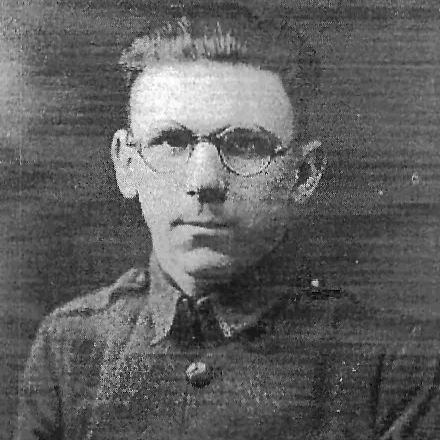
Gilbert A. Twigg was born in 1868 in Maryland, though details about his early childhood and family life are limited. As a young adult, he lived a transient life, residing at various times in Great Falls, Montana, the Territory of New Mexico, and Burden, Kansas.
Twigg later enlisted in the United States Army, serving during the Philippine–American War and the subsequent American occupation of Cuba. His military service placed him in overseas conflicts during a period marked by brutal counterinsurgency campaigns and significant psychological strain on soldiers, though no formal records exist regarding his mental condition at the time of discharge.
By the early 1900s, Twigg had settled in Winfield, Kansas, where he worked as a miller at Baden Mills. Locally, he was known by the nickname “Crazy Twigg,” a label reportedly tied to eccentric behavior rather than overt violence.
Privately, however, Twigg appeared deeply unhappy. Letters later recovered by police revealed a long-standing sense of personal failure, emotional isolation, and resentment toward the Winfield community. He expressed lingering pain over a romantic breakup that had occurred nearly a decade earlier.
On the evening of Thursday, August 13, 1903, a public concert was held at the corner of Ninth Avenue and Main Street in Winfield, Kansas. The event, performed by W. H. Caman and his military band, drew a crowd estimated at 2,000 to 5,000 people, making it one of the town’s largest public gatherings of the year.
At approximately 9:00 p.m., Gilbert A. Twigg positioned himself in a dark alley behind the Odd Fellows building, overlooking the crowd. Armed with a double‑barreled shotgun, he opened fire without warning, discharging multiple rounds in rapid succession into the densely packed audience.
Six people were killed at the scene or died shortly thereafter. Three additional victims succumbed to their injuries later in hospital, bringing the total death toll to nine, with at least 25 others wounded. Panic swept through the crowd as people fled in all directions, many unsure where the shots were coming from in the poorly lit street.
As the shooting continued, two men attending the concert ran into the alley in an attempt to disarm Twigg. Faced with confrontation and imminent capture, Twigg drew a revolver and shot himself, dying at the scene.
Police later searched Twigg’s boarding room, where they discovered several letters. One was addressed broadly to the public and expressed his bitterness toward the people of Winfield, whom he accused of shunning him and interfering in his personal life. Another letter, addressed to a friend in Montana and dated September 1, 1902, lamented his loneliness and regret over not marrying, stating that his friend’s settled life contrasted painfully with his own unhappiness.
The deceased victims of the shooting included James Dawson Billiter (23), William F. “Bog” Bowman (55), Otis Niles Carter (24), Roy C. Davis (15), Elmer E. Farnsworth (35), Sterling Race (28), Port B. Smith (19), and Charles Russell Thomas (32). An additional victim, whose identity was recorded in period reports, later died of injuries sustained during the attack, bringing the total number of fatalities to nine.
