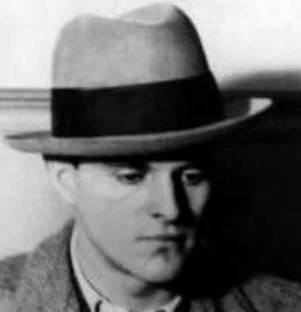
d: 1931
Summary
Name:
Georges GauchetYears Active:
1930Status:
ExecutedClass:
MurdererVictims:
1Method:
Bludgeoning / ShootingDeath:
December 26, 1931Nationality:
Franced: 1931
Summary: Murderer
Name:
Georges GauchetStatus:
ExecutedVictims:
1Method:
Bludgeoning / ShootingNationality:
FranceDeath:
December 26, 1931Years Active:
1930"The verdict is just. Guillotine me as soon as possible."
— Georges Gauchet
Georges Gauchet was the son of a wealthy Parisian family. Around 1924, he received an inheritance of 194,000 francs, which he squandered over the following years as a fixture of Montmartre's nightclub scene, living the life of a "man about town." According to press accounts at the time, he became involved with a woman who encouraged his growing drug addiction and helped him waste his fortune. As his money ran out, his friends and family refused to lend him further funds, and by November 1930, he had only 10 francs to his name.
By his own courtroom testimony, robbery had been on Gauchet's mind for several days by mid-November 1930. On November 17, he entered a jewelry shop at 123 Avenue Mozart in Paris, run by an elderly jeweler, Jean-Pierre Dannenhoffer, who was alone in the shop that evening. Gauchet ordered a special watch and told Dannenhoffer he would return in three days to collect it. Before returning, he stopped at his garage and took a wrench, which he put in his pocket.
On November 19, 1930, Gauchet returned to the shop and asked to examine several rings. As Dannenhoffer showed him the rings, Gauchet attempted to slip some of them out of sight to steal them. Despite his advanced age, Dannenhoffer noticed and threw himself at Gauchet, and a struggle broke out as Gauchet tried to keep him from crying out for help. Gauchet struck him first with the wrench he had brought, then with a mallet he found in the shop, breaking its handle in the process.
When Dannenhoffer fell but then got back up, Gauchet, spotting a revolver in an adjoining room and recalling he had his own gun in his pocket, drew it, cocked it, and shot the jeweler once point-blank in the temple. In his later courtroom account, Gauchet claimed he had only intended to frighten Dannenhoffer, shouting "Don't touch me!" before the gun went off, and insisted he had not meant to kill him and had hoped he had not.
Afterward, Gauchet remained composed. He gathered up jewelry and rings from the shop, removed his blood-stained shirt collar, wrapped a scarf around his neck to conceal the evidence, searched the cash register and took 1,600 francs, then left the shop, hailed a taxi, and went to a cinema to finish out the evening.
Gauchet was arrested not long after the murder and was brought back to the scene of the crime in February 1931 for an official reconstruction. He was tried before the Cour d'Assises de la Seine in mid-October 1931. At trial, Gauchet acknowledged committing the robbery and the killing but disputed that the murder itself, as opposed to the robbery, had been premeditated — a distinction his defense attorney, César Campinchi, argued should entitle him to "mitigating circumstances" from the jury, which could have spared him execution in favor of a sentence of hard labor. Gauchet stated openly in court that he understood he could not avoid hard labor under even the most favorable outcome, but that avoiding execution was the only thing that mattered to him.
Testimony from friends and family attempted to portray Gauchet as a victim of his own wealth; his own uncle gave emotional testimony stating, "This child was not raised. He was not loved, never had any [affection]." The prosecutor, however, argued forcefully for the death penalty, describing Gauchet as one of the "most abject products of the postwar era" and a "burglar-murderer who killed to avoid being caught," urging the jury to reject any mitigating circumstances to protect both human life and shopkeepers in their stores. The jury found Gauchet guilty and rejected mitigating circumstances, resulting in a mandatory death sentence.
Georges Gauchet was executed by guillotine outside the Prison de la Santé in Paris on the morning of December 26, 1931, becoming, according to contemporary press accounts, the first member of high French society guillotined since the French Revolution. A large crowd gathered in the fog and cold to witness the execution, including cabaret patrons still in evening dress, messenger boys, street sweepers, laborers, and tramps; police set up cordons roughly 200 yards on either side of the guillotine to manage the crowd. Gauchet arrived at the site by horse-drawn prison van. According to one account, he refused the traditional cigar and glass of rum customarily offered to condemned prisoners before execution. He went to his death calmly and in silence; his head fell into the basket as a nearby church's bells struck seven. It was the second execution carried out in Paris that year.
