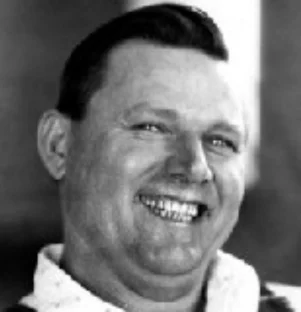
1888 - 1928
Summary
Name:
George Jefferson HassellNickname:
Texas Bluebeard / Man with the Killer Smile / Mr. BakerYears Active:
1917 - 1926Birth:
July 05, 1888Status:
ExecutedClass:
Mass MurdererVictims:
13Method:
Bludgeoning / Strangulation / Throat-cutting / ShootingDeath:
February 10, 1928Nationality:
USA1888 - 1928
Summary: Mass Murderer
Name:
George Jefferson HassellNickname:
Texas Bluebeard / Man with the Killer Smile / Mr. BakerStatus:
ExecutedVictims:
13Method:
Bludgeoning / Strangulation / Throat-cutting / ShootingNationality:
USABirth:
July 05, 1888Death:
February 10, 1928Years Active:
1917 - 1926Date Convicted:
January 11, 1927“I would like to announce to the world that I am prepared to meet my God. I have made my confession to God and man—man does not understand it all, but God does.”
— George Jefferson Hassell
George Jefferson Hassell was born on July 5, 1888, in Smithville, Texas. He was one of several children in his family and later became known in criminal history because of two separate family murder cases in California and Texas. Public records and later case summaries describe him as a tenant farmer, former military deserter, convicted offender, and family annihilator.
He reportedly had a history of criminal conduct before the Farwell murders, including military desertion and embezzlement. He had also been married more than once before his final marriage. Some accounts state that he had a child while young and later abandoned that family. These earlier details are difficult to verify fully, but they appear repeatedly in historical reporting about the case.
Hassell’s family history also included the death of his brother, Thomas. According to later accounts, Thomas died after reportedly being kicked in the head by a mule. Hassell was said to have been the only witness to that death. No confirmed criminal charge against Hassell has been found in connection with his brother’s death, so it should be treated as suspicious only in later reporting, not as a proven murder.
After Thomas Hassell died, George Hassell married Thomas’s widow, Susan Ferguson Hassell. Through that marriage, he became stepfather to her children. The family lived on a farm near Farwell, Texas, close to the New Mexico border. By 1926, Hassell was living with Susan and eight of the children in the household.
Before the Texas murders, Hassell had lived for a period in Whittier, California. There, he used the name “Baker” and lived with Marie Vogel, described in records as his common-law wife, along with three children in the household. After the Farwell murders were discovered, Hassell confessed that he had also killed Marie Vogel and the three children in California in 1917. Investigators in California later searched the former Whittier property and found human remains, supporting his confession.
George Jefferson Hassell’s first confirmed murder case took place in Whittier, California, in 1917. At that time, he was living under the surname “Baker” with Marie Vogel, his common-law wife, and three children. After his later arrest in Texas, Hassell confessed that he had killed Vogel and the children years earlier. Authorities in Whittier investigated his statement and found remains at the former residence, which supported the confession.
The California victims were not the basis of the Texas conviction that led to Hassell’s execution, but they became an important part of his criminal history. Their deaths showed that the Farwell case was not his first known act of family murder. The exact date in 1917 and the complete personal details of each child are not consistently confirmed in accessible public records.
In December 1926, Hassell committed the murders that brought him to trial. He was living near Farwell, Texas, with his wife Susan “Susie” Ferguson Hassell and eight children in the household. Published accounts state that the family disappeared after a violent incident inside the home. Hassell told neighbors and others that his wife and children had gone to Oklahoma, and he began selling household property and farm items. This explanation drew suspicion because relatives in Oklahoma had not seen the missing family.
Authorities eventually searched the property. The bodies of Susan and the eight children were found buried in a pit or cellar area on the Hassell farm. The victims had been hidden after the killings. When officers discovered the remains, Hassell attempted suicide by stabbing himself near the heart, but he survived and was taken into custody.
Hassell later confessed to killing his wife and the children. Early Associated Press reports quoted him as saying, “I did it; I did it.” According to the court record, he admitted killing his stepson Aldon or Alton Hassell, as well as his wife and the other children. The Texas Court of Criminal Appeals later stated that the facts of the case supported the death penalty and that Hassell’s confession was corroborated by physical evidence and witness testimony.
The exact sequence of the Texas murders varies in published accounts, but the general account is that Hassell first killed Susan after an argument. Reports stated that the argument involved his sexual abuse of Maudie, his underage stepdaughter and niece. After killing Susan, he killed the children in the home. The younger children were reportedly killed first. The older boys were killed after they resisted or after one returned home later. Alton, the eldest son, was the specific victim named in the murder case that brought Hassell to trial.
After the bodies were found, Hassell’s case drew major public attention in Farwell, Texas, and nearby Texico, New Mexico. Because the crime involved nine members of one family and because Hassell also confessed to the earlier California killings, the case was widely reported in newspapers.
Hassell was indicted on multiple murder charges but was tried first for the murder of his stepson Alton / Aldon Hassell. His trial was held in Parmer County, Texas, before Judge Reese Tatum. A court-appointed attorney represented him. The jury found him guilty of murder, and he was sentenced to death.
Hassell appealed the conviction. On June 15, 1927, the Texas Court of Criminal Appeals affirmed the judgment. The court noted that he had confessed to killing his stepson, his wife, and other children in the household. A rehearing was denied on October 12, 1927.
George Jefferson Hassell was executed by electrocution at Huntsville Unit in Texas on February 10, 1928. He was 39 years old.
