
Summary
Name:
George HolmanNickname:
BubberYears Active:
1944Status:
DeceasedClass:
Mass MurdererVictims:
22Method:
Fire / ArsonNationality:
USASummary: Mass Murderer
Name:
George HolmanNickname:
BubberStatus:
DeceasedVictims:
22Method:
Fire / ArsonNationality:
USAYears Active:
1944Date Convicted:
August 3, 1944“No matter what anyone else may think, God knows I am not guilty.”
— George Holman
George Holman was a San Francisco cafe proprietor who became known for his conviction in the New Amsterdam Hotel fire case. Contemporary reports described him as a Black man in his late 40s at the time of trial. Holman was also known by the nickname “Bubber.” The nickname appears in the California Court of Appeal’s record, which described him by that name during the account of his movements near the New Amsterdam Hotel shortly before the fire.
Before the fire, Holman was known to several people connected to the hotel. The appellate record described Gertrude Jordan as a resident of the building and stated that Holman had been at or near her apartment on the night of the fire. Witness accounts about Holman’s exact location became one of the most disputed parts of the case. Jordan first testified in a way that placed him in her kitchen when the fire began, but she was later confronted with earlier statements and grand-jury testimony saying he had left before the fire was discovered.
The court record also described the New Amsterdam Hotel as a low-cost residential hotel at Fourth and Clementina Streets in San Francisco. It had a brick lower exterior but wooden upper floors, narrow hallways, small rooms, and many occupants. The structure’s interior materials and layout later became important because the fire spread rapidly through the building.
Shortly before midnight on March 27, 1944, a fire broke out at the New Amsterdam Hotel in San Francisco, California. The building was located at the southeast corner of Fourth and Clementina Streets. The California Court of Appeal later stated that more than 70 people were inside the hotel when the fire started and that the first alarm was sounded at 11:55 p.m. By the time firefighters arrived, flames were already coming from upper-floor windows.
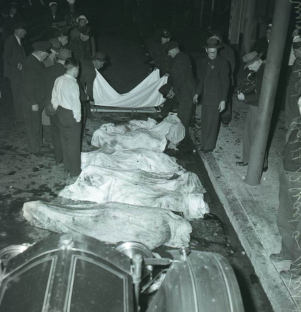
The fire spread very quickly through the hotel. The appellate record stated that 21 people burned to death inside the building. Thirteen of those victims were burned beyond recognition. A twenty-second victim, Mamie Pulaski, either jumped or fell from a third-story window while trying to escape and died immediately from a skull fracture.
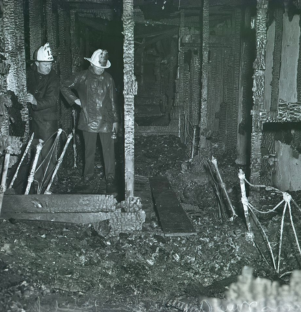
Fire officials believed the fire did not spread in an ordinary way. A fire department witness inspected the scene several times and concluded that the fire appeared to have started near the rear stairway around the second-floor landing. He testified that the rapid spread suggested the use of an accelerant such as gasoline, benzine, or kerosene.
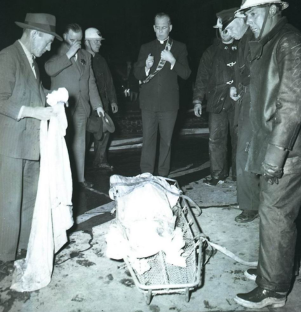
The prosecution charged Holman under the theory that the 22 deaths occurred during the commission of arson. The indictment contained 22 counts, one for each person killed. The prosecution argued that a volatile liquid had been used to accelerate the fire and that the deaths therefore supported first-degree murder charges under California law.
The trial evidence centered heavily on Holman’s movements and on witness statements. One witness testified that Holman had bought five gallons of gasoline two days before the fire. Other testimony placed Holman near the rear of the building or described him leaving the area as the fire was being discovered. The appellate court later summarized that the prosecution evidence included witness testimony about Holman with a can, liquid on the floor near Jordan’s apartment, the gasoline purchase, and threats allegedly made shortly before the fire.
The defense challenged the reliability of the prosecution’s case. Gertrude Jordan’s statements were inconsistent, and defense counsel attempted to present evidence that she had made contradictory statements about whether Holman had left her rooms before the fire began. The appellate court discussed those issues but did not reverse the conviction.
On August 3, 1944, a San Francisco jury found George Holman guilty of 22 counts of first-degree murder. Newspaper summaries reported that the jury recommended life imprisonment instead of death. Holman denied responsibility after the verdict and reportedly said, “No matter what anyone else may think, God knows I am not guilty.”
On August 15, 1944, Holman was sentenced to life imprisonment on the 22 murder counts. Many historical summaries state that he received 22 life terms. Some older crime summaries describe them as consecutive, but the California Court of Appeal later found that the consecutive wording was legally improper under the law then governing first-degree murder sentences.
On December 7, 1945, the California Court of Appeal affirmed Holman’s conviction but modified the judgment. The court removed the wording that made the 22 life terms consecutive and remanded the case for resentencing consistent with life imprisonment on each count.
Years later, questions were raised publicly about the strength of the case. In 1951, Governor Earl Warren ordered an investigation into Holman’s conviction after reporting by the San Francisco Chronicle raised issues about witness credibility and the evidence used at trial. An Atlanta Daily World report stated that Holman had continued to claim innocence while serving his sentence at San Quentin and that Walter Gordon, then head of the California Adult Authority, was assigned to handle the review.
