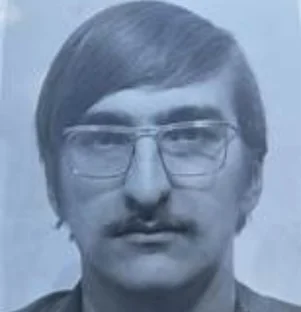
1951 - 2020
Summary
Name:
George GeschwendtYears Active:
1976Birth:
September 07, 1951Status:
DeceasedClass:
Mass MurdererVictims:
6Method:
ShootingDeath:
May 22, 2020Nationality:
USA1951 - 2020
Summary: Mass Murderer
Name:
George GeschwendtStatus:
DeceasedVictims:
6Method:
ShootingNationality:
USABirth:
September 07, 1951Death:
May 22, 2020Years Active:
1976Date Convicted:
July 19, 1976George Geschwendt lived with his mother and brother across the street from the Abt family in the Trevose-Feasterville area of Bucks County, Pennsylvania, a suburb of Philadelphia. He had a difficult childhood; his father reportedly chased him and his siblings with a knife on at least one occasion and attempted to run him over with a car. Growing up, Geschwendt was bullied by two of the Abt family's sons, Michael and Clifford, who reportedly shot at him with a BB gun and mocked his mother's broken English. At age 24, unemployed and working as a landscaper, Geschwendt purchased a .22-caliber pistol and ammunition, then falsely reported the gun stolen the same day he bought it.
On the morning of March 12, 1976, after his mother and brother had left for work, Geschwendt broke into the empty Abt family home by smashing a kitchen window and climbing through, then carefully cleaned up the broken glass to avoid raising suspicion. He positioned himself hidden behind a piano, giving him a clear line of sight to both the kitchen door and the living room door, and waited for the family to return from work and school — a wait that would last roughly six hours.
As each family member arrived home individually, Geschwendt shot them once in the head, wearing ear protectors throughout. After each killing, he dragged the body down to the basement, reloaded his weapon, and waited for the next person to arrive. He killed John Abt, 49; his wife, Margaret; their daughter Margie, 19; their son John Jr.; and their younger daughter, Cathy (also recorded as Kathy) — as well as Garson "Gary" Engle, 20, Margie's boyfriend, who was also present. He also shot and killed the family's St. Bernard dog, Heidi, concealing her body under articles of clothing. Geschwendt's actual primary targets, brothers Michael and Clifford Abt, never returned home during his wait; he ultimately abandoned his ambush and fled, alarmed by the phone ringing repeatedly inside the house. He later told police he regretted being unable to stay long enough to kill the entire family as he had intended.
Before leaving the area, Geschwendt discarded his shoes and gloves near the Delaware River and had his bloodied clothes cleaned and donated to Goodwill Industries. Three days later, he disposed of the gun, spent shell casings, and remaining ammunition in nearby Neshaminy Creek. That evening, he went home, ate a sandwich, watched television, and went to bed.
Michael Abt, 21, discovered his family's bodies in the basement after arriving home and noticing bloodstains and bloody rags throughout the house.
Children fishing in Neshaminy Creek discovered the discarded murder weapon, which investigators traced back to Geschwendt. About a week after the killings, on March 22, 1976, Bensalem Township police asked Geschwendt to come in for questioning, ostensibly regarding his earlier report that the gun had been stolen. He was given a polygraph examination, which indicated his answers were deceptive; once informed of these results, he gave a full, detailed confession describing the killings and the events before and after them, and later gave a further stenographically recorded confession following his arraignment that evening. He never repudiated this confession.
Geschwendt was indicted on six counts of first-degree murder. His defense at trial did not dispute that he had committed the killings, instead arguing he was legally insane at the time. The trial, conducted in two stages under Pennsylvania procedure — a culpability phase followed by a penalty phase — concluded on July 19, 1976, with the jury convicting him and recommending the death penalty. However, in 1977, the Pennsylvania Supreme Court ruled the state's death penalty statute unconstitutional in Commonwealth v. Moody, and Geschwendt's sentence was automatically converted to six consecutive terms of life imprisonment.
On direct appeal, the Pennsylvania Superior Court and, in a divided ruling, the Pennsylvania Supreme Court affirmed Geschwendt's conviction and modified sentence in 1982 (Commonwealth v. Geschwendt, 500 Pa. 120). The central issue, then and for years afterward, was Geschwendt's argument that the trial court had improperly refused to instruct the jury that it could return a specific verdict of "not guilty by reason of insanity" — rather than a simple binary "guilty or not guilty" — and that jurors should have been told such a verdict could result in his psychiatric commitment rather than outright release.
By 1983, Geschwendt had exhausted his direct state appeals. In February 1991, a federal magistrate revisited this jury-instruction argument and found merit in it, recommending a new trial. On November 8, 1991, a three-judge panel of the U.S. Court of Appeals for the Third Circuit agreed, ruling that Geschwendt must be given a new trial or released from prison. Circuit Judge Ruggero Aldisert wrote pointedly for the panel: "Here we have a man who confessed to the brutal killing of six people over a period of six hours. His only defense was insanity; yet the jury was instructed to bring back an either/or verdict — guilty or not guilty."
Bucks County prosecutors, deeply opposed to the ruling, sought review by the full Third Circuit sitting en banc. Following a second round of arguments in May 1992, the en banc court reversed the panel's decision by a vote of 7–4 in June 1992, finding that the trial court's instructions allowing for an alternative conviction of third-degree murder had provided constitutionally sufficient allowance for Geschwendt's insanity claim, even without a distinct not-guilty-by-reason-of-insanity verdict option. This ruling ended Geschwendt's most significant legal challenge, and his conviction and life sentences stood.
George Geschwendt remained incarcerated for the rest of his life, ultimately housed at the State Correctional Institution at Waymart in Wayne County, Pennsylvania. He died there of natural causes on May 22, 2020, after serving 44 years in prison, without ever being released. His death was confirmed directly by Pennsylvania Department of Corrections Communications Director Ryan Tarkowski; the Bucks County District Attorney's Office has also confirmed he died in prison in 2020.
