They Will Kill You Logo
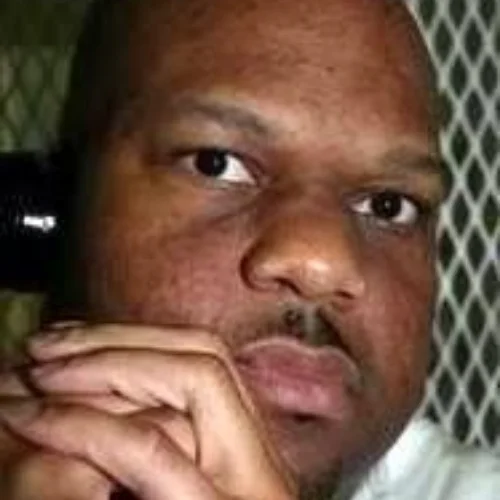
George Alarick Jones

1974 - 2010

George Alarick Jones

Summary

Name:

George Alarick Jones

Years Active:

1992 - 1993

Birth:

April 10, 1974

Status:

Executed

Class:

Murderer

Victims:

2

Method:

Shooting

Death:

June 02, 2010

Nationality:

USA
George Alarick Jones

1974 - 2010

George Alarick Jones

Summary: Murderer

Name:

George Alarick Jones

Status:

Executed

Victims:

2

Method:

Shooting

Nationality:

USA

Birth:

April 10, 1974

Death:

June 02, 2010

Years Active:

1992 - 1993

Date Convicted:

November 13, 1995

"I hope it helps his family, son, and loved ones. This has been a long journey, one of enlightenment. It's not the end. It's only the beginning."


George Alarick Jones

Suggest an update

Bio

George Alarick Jones was born on April 10, 1974, in Texas. By his late teens, Jones had become involved with a group of young men responsible for a series of robberies and violent crimes in the Dallas area. Court records later revealed that the State introduced evidence of an earlier murder committed in December 1992 involving twenty-year-old Kindra Buckner. Prosecutors used this evidence during the penalty phase of Jones's capital murder trial to demonstrate a continuing threat of future violence.

Jones was approximately nineteen years old when he committed the murder of Forrest Hall. During sentencing proceedings, the defense presented evidence concerning Jones's youth and background in an attempt to persuade jurors to impose a life sentence instead of death. However, prosecutors argued that his involvement in multiple violent offenses demonstrated an escalating pattern of criminal behavior.

Murder Story

George Alarick Jones was involved in two robbery-related murders committed in Dallas County, Texas, within a span of several months. The first known homicide occurred in December 1992 and involved twenty-year-old Kindra Buckner. Although Jones was not being tried for Buckner's murder during his later capital murder proceedings, evidence presented during the punishment phase established that Buckner had been abducted during a robbery and subsequently shot to death. Prosecutors introduced details of the crime to demonstrate Jones's continuing threat of future violence. Because the Buckner case was not the primary focus of the trial, fewer publicly available records exist regarding the precise sequence of events leading to her death.

Several months later, on April 13, 1993, Jones and several accomplices, including Derrick Rogers, drove to a shopping mall in Dallas intending to find someone to rob. They noticed twenty-two-year-old Forrest Hall arriving at the mall and waited for him to return to his vehicle. When Hall left the shopping center, Jones and Rogers, armed with a .380-caliber handgun, confronted him and forced him into his own car while two additional accomplices followed in a separate vehicle. The group drove Hall to a secluded area near Lancaster in southern Dallas County. Once there, Hall was ordered out of the vehicle and told to lie down in the grass. According to Rogers' testimony, Jones then shot Hall twice in the back of the head at close range, killing him. Hall's body was later discovered in a roadside ditch, and investigators recovered two spent .380-caliber shell casings near the scene. Medical evidence confirmed that Hall died from the gunshot wounds.

Approximately five months after Hall's murder, Derrick Rogers confessed to detectives and implicated Jones in the crime. Rogers later testified against him at trial. Investigators subsequently obtained an arrest warrant and took Jones into custody at his South Dallas residence. Within hours of his arrest, Jones provided a voluntary three-page written confession admitting his involvement in Hall's murder. He also acknowledged that a car stereo and speakers recovered from his home belonged to Hall. Further investigation revealed that Hall's tires and rims had been pawned at a nearby pawn shop, and a forensic document examiner concluded that Jones had personally signed the pawn receipt connected to the stolen property. In exchange for his cooperation and testimony, Rogers received a twenty-two-year prison sentence for aggravated robbery. During Jones's capital murder trial for the death of Forrest Hall, prosecutors relied on his confession, Rogers' testimony, physical evidence linked to the victim's stolen property, and evidence of the earlier murder of Kindra Buckner to argue that Jones posed a continuing danger to society.

Like what you're reading?
Join our mailing list for exclusive content you won't find anywhere else. You'll receive a free chapter from our e-book, increased chances to win our t-shirt giveaways, and special discounts on merch.