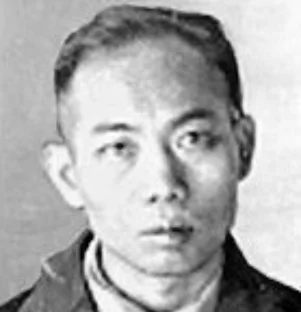
d: 1924
Summary
Name:
Gee JonNickname:
Gee Gar Hue / Jon Gee / E.Z. John / Zhu Jiaxiu (朱家休)Years Active:
1921Status:
ExecutedClass:
MurdererVictims:
1Method:
ShootingDeath:
February 08, 1924Nationality:
Chinad: 1924
Summary: Murderer
Name:
Gee JonNickname:
Gee Gar Hue / Jon Gee / E.Z. John / Zhu Jiaxiu (朱家休)Status:
ExecutedVictims:
1Method:
ShootingNationality:
ChinaDeath:
February 08, 1924Years Active:
1921Date Convicted:
December 3, 1921"Gas all the same as rope or shoot'em gun."
— Gee Jon
Gee Jon, whose Chinese name has been recorded as Zhu Jiaxiu (朱家休), was born in China around 1895 during the late years of the Qing Dynasty. The precise date and location of his birth have never been conclusively documented in surviving public records. Most historical sources indicate that he immigrated to the United States between 1907 and 1908 while still a young teenager.
After arriving in America, Gee Jon settled primarily in San Francisco's Chinatown. During the early twentieth century, San Francisco's Chinese community operated under a complex social structure shaped by discrimination, immigration restrictions, and the influence of Chinese associations known as tongs. Originally formed as mutual aid organizations, some tongs became involved in criminal enterprises and violent rivalries.
Gee Jon became associated with the Hop Sing Tong, one of the major tong organizations operating in California. Historical accounts describe the Hop Sing Tong as being involved in gambling, liquor trafficking, and other illicit activities during the Prohibition era. Rivalries between Chinese organizations frequently resulted in violent confrontations known as the "Tong Wars," which had affected Chinese communities in the western United States since the late nineteenth century.
By 1921, tensions between the Hop Sing Tong and rival organizations had escalated once again. Unlike many earlier tong killings that occurred within San Francisco's Chinatown, the conflict expanded into smaller western communities, including mining towns in Nevada. Gee Jon eventually became involved in one of these deadly disputes.
Some records identify him as having worked as a cook at various points in his life. However, much of what is known about him stems directly from court proceedings and newspaper coverage related to the murder for which he was convicted.
On the morning of August 28, 1921, the body of Tom Quong Kee was discovered inside his cabin in Mina, a small mining town in Mineral County, Nevada. Kee had been shot and killed the previous evening, August 27, 1921. Investigators soon connected the homicide to the ongoing violence associated with tong rivalries occurring throughout the western United States.
Evidence presented during trial indicated that Gee Jon and another Chinese man, Hughie Sing, had traveled from Reno toward the Mina area shortly before the murder. Authorities learned that the pair had hired a taxi driver for transportation. Witness testimony and circumstantial evidence eventually linked them to the killing.
Mineral County Sheriff George Hammill had observed two unfamiliar Chinese men in Mina before the murder occurred. After Tom Quong Kee's body was found, investigators identified footprints near the crime scene and traced possible suspects. Sheriff Hammill contacted Reno authorities, leading to the arrests of Gee Jon and Hughie Sing on August 28, 1921, less than twenty-four hours after the murder.
During questioning, Hughie Sing initially implicated Gee Jon as the individual who fired the fatal shots. Although Sing later recanted his confession and both men pleaded not guilty, prosecutors maintained that Gee Jon had acted as the gunman while Sing assisted in carrying out the killing.
A preliminary hearing took place on September 8, 1921. The case proceeded to trial in the Seventh Judicial District Court for Mineral County in Hawthorne, Nevada. The proceedings lasted from November 28 through December 3, 1921.
On December 3, 1921, a jury found both defendants guilty of first-degree murder. In February 1922, Judge J. Emmet Walsh sentenced both men to death. A motion seeking a new trial was denied.
Nevada had recently enacted legislation authorizing execution by lethal gas, replacing hanging as the state's primary execution method. The law, passed in 1921, was promoted as a more humane form of capital punishment. As a result, Gee Jon and Hughie Sing became the first condemned prisoners eligible for execution under Nevada's new statute.
Defense attorneys James M. Frame and Fiore Raffetto pursued appeals over the next several years. Among the issues raised was the argument that execution by lethal gas constituted cruel and unusual punishment under constitutional protections.
On January 5, 1923, the Nevada Supreme Court affirmed the convictions and rejected the challenge to the execution method. The court concluded that lethal gas represented a humane advancement in carrying out death sentences.
Further attempts to overturn the convictions proved unsuccessful. Public petitions seeking clemency circulated throughout Nevada. Some organizations argued for mercy, while others supported the sentences due to concerns about tong-related violence.
Eventually, Hughie Sing's death sentence was commuted to life imprisonment because of his youth and the determination that Gee Jon had been the actual shooter.
Gee Jon remained on death row at Nevada State Prison in Carson City while preparations were made for the first gas chamber execution in American history. Prison officials initially considered introducing poison gas directly into his cell while he slept, but concerns over leakage and practical limitations caused them to abandon the idea.
A makeshift airtight chamber was instead constructed at the prison. On February 8, 1924, Gee Jon entered the chamber shortly after dawn. Witnesses observed as sodium cyanide released hydrogen cyanide gas inside the sealed room. Reports indicated that he lost consciousness within minutes.
Gee Jon was pronounced dead on February 8, 1924, at approximately 29 years of age. His execution marked a significant moment in American penal history, as he became the first person in the United States to be executed by lethal gas. The method would later be adopted by several other states before eventually being replaced in most jurisdictions by lethal injection.
