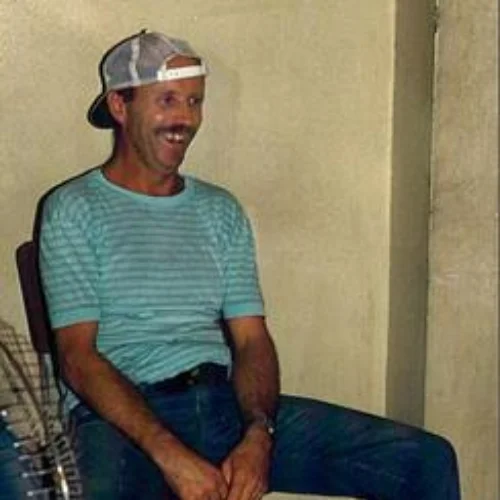
1944 - 2001
Summary
Name:
Friedrich LeibacherNickname:
Fritz LeibacherYears Active:
2001Birth:
July 21, 1944Status:
DeceasedClass:
Mass MurdererVictims:
14Method:
Shooting / BombingDeath:
September 27, 2001Nationality:
Switzerland1944 - 2001
Summary: Mass Murderer
Name:
Friedrich LeibacherNickname:
Fritz LeibacherStatus:
DeceasedVictims:
14Method:
Shooting / BombingNationality:
SwitzerlandBirth:
July 21, 1944Death:
September 27, 2001Years Active:
2001“Day of Reckoning for the Zug Mafia”
— Friedrich Leibacher
Friedrich Heinz "Fritz" Leibacher was born in Zug on 21 July 1944. He grew up in a middle-class family with two brothers. His father later said that when Friedrich started school his behavior changed in ways that worried the family.
As a teenager he was sent to a reformatory. In 1960, when he was 16, a psychiatrist described him as a potentially dangerous psychopath. He left the reformatory that year and later became a drifter for a time. He also worked as a clerical assistant in Zurich.
Leibacher did not serve in the Swiss militia or armed forces. In 1965 he earned his high school diploma and began studying law at the University of Zurich. His law studies lasted only one semester. He later obtained a business degree and trained as a waiter. Most of his later work was occasional rather than steady employment.
He was described by some records as exhibitionist and very manipulative. For a period he worked as a management consultant and owned a company called Media Zeitschriften AG. In 1975 he bought a sailing yacht and used it to travel the world.
Leibacher had three marriages to women from the Dominican Republic. All of the marriages were short. He had three children from these marriages. In 1994 he returned from the Dominican Republic to Switzerland with his daughter.
Medical and psychiatric evaluations in later years noted several concerns. A 1970 assessment described schizoid personality traits, hypochondriac tendencies, and a need for attention. In 1996 doctors recorded diagnoses including antisocial personality disorder, probable alcoholism, mental impairment, and mild schizophrenia. In 1995 he received an invalidity pension, largely because of tinnitus.
On 27 September 2001, Friedrich Leibacher carried out an attack in the parliament building of the Canton of Zug in Switzerland. He entered the building disguised as a police officer and was armed with multiple legally obtained weapons. He shot and killed 14 people in the parliament and then killed himself. It was the first time a Swiss politician had been killed since the 19th century.
Leibacher had a long history of criminal actions. These included assaults, illegal importation of guns, child molestation, and violent threats. His criminal record was later expunged, and he was approved to buy firearms. He had been sued for threatening a man with a gun three years before the attack and was under police surveillance afterward.
In the months before the attack, Leibacher became involved in legal battles with the Canton of Zug. He blamed cantonal officials, especially Director of Transport Robert Bisig, and left a letter with accusations titled "Day of Reckoning for the Zug Mafia." Bisig survived the attack.
During the attack, many members of the cantonal government and legislature were killed or wounded. Fourteen people died. Several others were injured, some seriously, and one was left paralyzed. The assembly hall where the meeting took place was the scene of the killings. Leibacher also left a suicide note and other documents in his car.
The shooting lasted a short time and was recorded on tape that had been running during the meeting. Police did not fire any shots in responding to the incident. Leibacher had a history of mental health diagnoses, and official reports said he was responsible for his actions.
After the attack, the canton made changes to the layout and security of the parliament building. A memorial with 14 points of light was unveiled in Zug in 2004. The canton used money from Leibacher’s estate to help victims, and the state provided further compensation under Swiss law.
The massacre led to changes in how cantons handle people who make threats. Case managers now gather information and assess violence risk. Building security in many local parliaments was increased. National gun laws did not change immediately after the attack, and a 2011 federal initiative for stricter gun rules was rejected by voters. In 2019, a later referendum aligned Swiss law with an EU weapons directive and made some rules stricter.
