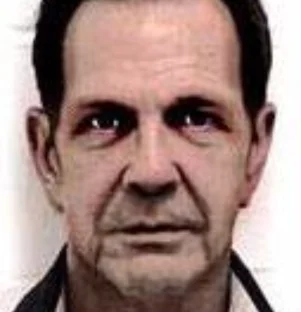
1938 - 2001
Summary
Name:
Fred Marion Gilreath Jr.Years Active:
1979Birth:
January 19, 1938Status:
ExecutedClass:
MurdererVictims:
2Method:
ShootingDeath:
November 15, 2001Nationality:
USA1938 - 2001
Summary: Murderer
Name:
Fred Marion Gilreath Jr.Status:
ExecutedVictims:
2Method:
ShootingNationality:
USABirth:
January 19, 1938Death:
November 15, 2001Years Active:
1979Date Convicted:
February 29, 1980Fred Marion Gilreath Jr. was reportedly born on January 19, 1938. Later mitigation evidence described a childhood marked by poverty and fear of a violent, alcohol-dependent father. Gilreath served in the military, married Linda Van Leeuwen during the late 1960s and had two children with her. He had no documented criminal record before the murders.
By adulthood, Gilreath had developed a serious dependence on alcohol. Mental-health evidence collected by his attorneys reportedly described paranoia, delusional thinking and other psychological problems. His trial attorney obtained military, medical and mental-health records and identified relatives and acquaintances who could testify about his history, but Gilreath instructed the lawyer not to present mitigating evidence during sentencing.
By May 1979, his marriage was ending. Linda had moved out of the family home and was staying with her mother and stepfather. Gilreath had reportedly threatened Linda’s life, threatened her mother and stepfather and threatened to burn their trailer. Despite those threats, Linda returned to the residence with her father on May 11 to retrieve her belongings.
On the afternoon of May 11, 1979, Linda Gilreath and her father, Gerrit Van Leeuwen, arrived at the Gilreath home in Cobb County. Linda planned to collect personal belongings and was expected to pick up her stepfather from work at 3:30 p.m. When she failed to arrive, her stepfather contacted police and explained that he feared domestic violence because Gilreath had previously made threats.
Police reached the house at approximately 5:00 p.m. They received no answer but found the porch and sliding door partly open, heard music and detected a strong smell of gasoline. Looking through the door, an officer saw a body. The officers entered because they believed people inside might need emergency assistance and found Linda and her father dead.
Linda had been shot six times with two firearms. Van Leeuwen had been shot four times with three firearms. Gasoline had been poured over and around both victims and across sections of the house, but it had not ignited. Officers found a burning pilot light in the kitchen, creating the possibility that Gilreath expected the gasoline fumes or liquid to catch fire after he left.
Witnesses working nearby heard five gunshots shortly after Linda’s blue Plymouth Duster arrived. Gilreath left in that vehicle and drove toward Hendersonville, North Carolina. He later testified that he had left before the murders, stopped at a liquor store and continued to North Carolina while drinking heavily. He denied killing either victim.
Police located him at his brother’s office that evening. He was driving Linda’s car, and officers found .22-caliber ammunition inside it. Additional cartridge and shotgun-shell cases recovered from a cabin associated with him were later linked through ballistics testing to the firearms used in the murders.
Gilreath’s trial concluded on February 29, 1980. The prosecution’s case was primarily circumstantial, but the jury found him guilty of both murders and returned two death sentences. Gilreath had directed his attorney not to call mitigating witnesses during sentencing, leaving the jury without evidence about his childhood, alcohol dependence, mental-health history and positive relationships with family members. The court formally imposed the sentences on March 3.
The Georgia Supreme Court affirmed the convictions and sentences on June 30, 1981. It ruled that police lawfully entered the residence because they were responding to a possible emergency and that the evidence sufficiently supported both the guilty verdicts and the aggravating circumstances used to impose death.
Gilreath later argued that his attorney had been ineffective for failing to present mitigating evidence. The Eleventh Circuit rejected the claim in 2000, emphasizing that Gilreath had repeatedly and expressly instructed his attorney not to present that evidence. The federal court also concluded that the omitted background information did not create a reasonable probability that the jury would have selected life imprisonment.
During his final clemency proceedings, his children and other relatives of both victims asked that his death sentence be commuted. They argued that executing him would create additional trauma for a family that had already lost Linda and Gerrit. The Georgia Board of Pardons and Paroles denied clemency, and court challenges to the clemency process failed.
Gilreath was originally scheduled to die on November 14, 2001. Several temporary stays delayed the execution until the afternoon of November 15. He was executed by lethal injection at approximately 3:53 p.m. at the Georgia Diagnostic and Classification Prison. In his final statement, he thanked his attorneys, family and members of the prison staff for treating him with dignity and respect.
