Summary
Name:
Fred HeyworthYears Active:
1996Status:
ImprisonedClass:
Mass MurdererVictims:
4Method:
ArsonNationality:
United KingdomSummary: Mass Murderer
Name:
Fred HeyworthStatus:
ImprisonedVictims:
4Method:
ArsonNationality:
United KingdomYears Active:
1996Date Convicted:
May 16, 1997“I never ever intended to hurt any children, any adults; it’s not in my nature.”
— Fred Heyworth
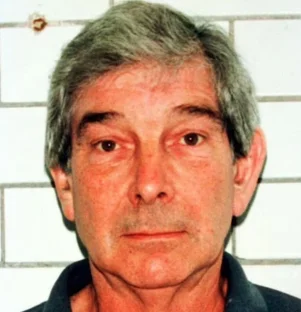
Fred Heyworth was born in 1938. By the time of the murders, he was 59 years old and lived in Southampton, Hampshire. Public reporting described him as a van driver and a Freemason. Heyworth was married to Janette Heyworth, who was 22 years younger than him. Their relationship had broken down before the murders. Janette left him and stayed at the Sholing, Southampton, home of her sister, Beverley Good, and Beverley’s husband, Melvyn Good. This became the central background to the crime because prosecutors said Heyworth’s anger and resentment over his wife leaving him were directed at the Good household.
The Good family lived in a house on Sullivan Road in Sholing. Beverley and Melvyn Good had several children in the home, including Terry, Alison, Nicola/Nichola, Patrick, Kelly, and Andrea. Janette’s move into the house placed Heyworth’s marital conflict directly around the Good family, even though the children themselves had no role in the dispute.
At trial, the prosecution presented Heyworth as angry, jealous, unhappy, and seeking revenge after his wife left him. Reports stated that, shortly before the fire, he had described the Good family as “scum.” On the night before the attack, he attended a Masonic function where Janette was working behind the bar. When a card was passed around for guests to sign, he wrote his name as “Fred Heyworth, single.”
In the early hours of Sunday, May 5, 1996, a fire broke out at the Good family home on Sullivan Road in Sholing, Southampton. The fire was deliberately started. Contemporary reporting from The Independent stated that firefighters later found the bodies of four children in a back bedroom of the house: Patrick Good, 6; Terry Good, 12; Alison Good, 10; and Nicola Good, 8. Post-mortem examinations showed that all four children died from inhaling fumes.
The fire was started when petrol was poured through the letterbox of the home and ignited. This caused a sudden fireball in the hallway and quickly turned the house into an inferno. Most of the family had been sleeping at the time. Beverley Good and her daughter Kelly saw petrol being poured through the letterbox and were on the stairs when the hallway was engulfed in flames.
Beverley Good, Melvyn Good, and their daughter Kelly escaped the burning house. Kelly, who was 15 at the time, suffered serious burns. Neighbors had to stop the parents from trying to re-enter the house as Beverley screamed for her children. Firefighters were initially forced back by the intensity of the blaze before they were able to reach the children’s bodies in the rear bedroom.
Police quickly treated the fire as deliberate. A May 7, 1996 report stated that investigators were examining whether the attack may have been caused by someone holding a grudge against the family. Police also appealed for information from anyone who had seen a person riding or pushing a bicycle in the Sullivan Road area between midnight and 2:00 a.m.
Heyworth was detained during the initial investigation and was later charged with the murders. The Irish Times reported on May 13, 1996, that the uncle of the four children had been charged with their murders after the arson attack.
At trial at Winchester Crown Court, the prosecution said Heyworth had cycled to the Good family home carrying petrol. He poured the petrol through the letterbox and set it alight because his estranged wife was staying there. He later admitted to detectives that he had lit the fire, although he claimed he could remember only going home to bed afterward.
Heyworth denied intending to kill the children. He told the court that he believed the Good family had gone away for the weekend and thought the house was empty. However, evidence showed that lights and two television sets were on inside the home at the time of the attack. The jury rejected his claim that he did not intend to hurt anyone.
On May 16, 1997, the jury found Heyworth guilty of murdering Terry, Alison, Nicola/Nichola, and Patrick Good. He was also found guilty of the attempted murders of Beverley Good, Melvyn Good, and Kelly Good. The jury consisted of eight men and three women.
Mrs Justice Steel sentenced Heyworth to life imprisonment for each of the four children’s murders. During sentencing, she described his actions as premeditated and carefully planned, and said that by the jury’s verdict, he had intended to kill or cause really serious harm to the occupants of the house.
After the verdict, Beverley and Melvyn Good, along with their daughters Kelly and Andrea, issued a statement saying they were pleased justice had been done, but that no punishment could compensate for the loss and suffering caused by the murders. Fred Heyworth was not sentenced to death because capital punishment had already been abolished for murder in the United Kingdom.
