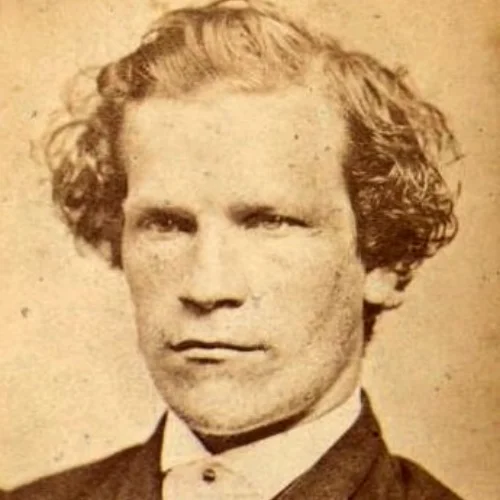
1840 - 1864
Summary
Name:
Franz MullerYears Active:
1864Birth:
October 31, 1840Status:
ExecutedClass:
MurdererVictims:
1Method:
BeatingDeath:
November 14, 1864Nationality:
Germany1840 - 1864
Summary: Murderer
Name:
Franz MullerStatus:
ExecutedVictims:
1Method:
BeatingNationality:
GermanyBirth:
October 31, 1840Death:
November 14, 1864Years Active:
1864Franz Müller was born on October 31, 1840, in what was then the German Confederation. He later moved to London, where he worked as a tailor. By the 1860s he was living in England as a young German immigrant tradesman. Müller became known to police only after the murder of Thomas Briggs, a case that drew national attention because it was considered the first murder committed on a British train. At the time, railway travel was expanding quickly, and the killing caused public concern about passenger safety inside closed railway compartments.
Before the crime, Müller was connected to people in London through his tailoring work and social contacts. After the murder, investigators traced stolen property from the victim to Müller, including items linked to Briggs. By the time police identified him as a suspect, Müller had already boarded a ship for New York.
On July 9, 1864, 69-year-old Thomas Briggs boarded a North London Railway train from Fenchurch Street. Briggs was a city banker and was traveling in a first-class compartment. During the journey, he was attacked inside the carriage, beaten, robbed of his gold watch and chain, and thrown from the train.
A driver on another train later saw Briggs lying near the railway tracks between Bow and Victoria Park, also known locally as Hackney Wick. Briggs was still alive when found and was taken to a nearby public house, but he died from his injuries shortly afterward.
The first major clues were discovered inside Briggs’s train compartment. Passengers found blood in the carriage, and police recovered a black beaver hat believed to belong to the attacker. Investigators later learned that a German man had exchanged a gold chain that was identified as belonging to Briggs.
Suspicion soon turned to Franz Müller. A cabdriver named Matthews helped identify him, and a photograph of Müller was shown to witnesses. By then, Müller had already left Britain on a ship bound for New York. Scotland Yard detectives crossed the Atlantic on a faster ship and arrived before him.
When Müller arrived in New York on August 25, 1864, he was arrested. Police found Briggs’s gold watch and a hat among his possessions. Müller was extradited back to Britain to face trial for murder.
Müller’s trial took place at the Old Bailey in London. Much of the case against him was circumstantial, but prosecutors argued that the stolen property and witness identification connected him to the crime. Müller denied guilt throughout the trial, but the jury convicted him of murder, and he was sentenced to death.
On November 14, 1864, Franz Müller was hanged outside Newgate Prison in London. A large crowd gathered for the public execution. Before his death, he reportedly confessed in German by saying, “Ich habe es getan,” meaning “I did it.”
