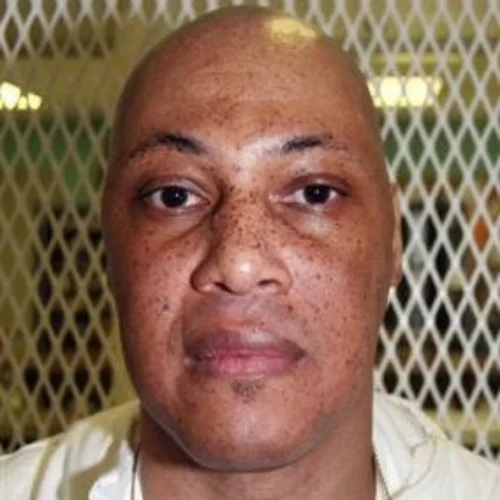
1959 - 2009
Summary
Name:
Frank MooreYears Active:
1994Birth:
May 16, 1959Status:
ExecutedClass:
MurdererVictims:
2Method:
ShootingDeath:
January 21, 2009Nationality:
USA1959 - 2009
Summary: Murderer
Name:
Frank MooreStatus:
ExecutedVictims:
2Method:
ShootingNationality:
USABirth:
May 16, 1959Death:
January 21, 2009Years Active:
1994“Capital self defense is not Capital Murder.”
— Frank Moore
Frank Moore was born on May 16, 1959. He was originally from Hot Springs, Arkansas, and later lived in Texas. By the time of the 1994 killings, he was 34 years old and living in the San Antonio area. Before the murders, Moore had an extensive criminal record. He had previously been convicted of attempted murder and drug-related offenses. Reports also stated that he had served multiple prison terms and had been released on parole before the January 1994 double killing.
Court-related reports described Moore as having connections to violent street-gang activity, including the East Terrace Gangsters and the Crips. Moore denied that he was actively involved in several gangs at the time and said his earlier Crips connection came from his teenage years in California. Prosecutors used his prior convictions and prison conduct during the punishment phase of his trial.
In the early morning of January 21, 1994, Frank Moore became involved in a confrontation with Samuel Boyd, 23, and Patrick Clark, 15, outside the Wheels of Joy Club in San Antonio, Texas. The dispute began after a fight involving Moore, his half-brother, Boyd, and Clark. After the confrontation, Boyd and Clark got into a car outside the club.
Moore claimed that Boyd and Clark tried to run him over and that he fired in self-defense. According to testimony summarized in later reports, one of Moore’s friends tossed him a rifle from the trunk of a nearby car. Moore then fired multiple shots into the vehicle. Boyd was killed by gunfire, and Clark was also fatally shot. Prosecutors rejected Moore’s self-defense claim and argued that he used excessive and intentional lethal force.
After the shooting, Moore drove away. He was arrested three days later. During the punishment phase, prosecutors presented evidence of his prior criminal history, including attempted murder and drug convictions. They also argued that he had gang ties and a history of violent conduct. Moore denied some of the gang-related allegations but acknowledged that he had been involved with the Crips as a teenager.
A jury first convicted Moore of capital murder in June 1996 and sentenced him to death. In June 1998, the Texas Court of Criminal Appeals reversed that conviction because jurors had not been instructed that they could consider lesser offenses such as murder or voluntary manslaughter. Moore was retried in 1999, convicted again of capital murder, and sentenced to death. The Texas Court of Criminal Appeals affirmed the second conviction and sentence in January 2002.
Moore continued to challenge his conviction and death sentence through state and federal appeals. His lawyers continued to raise self-defense arguments, including affidavits from eyewitnesses, but the courts denied relief. About an hour before the execution, the U.S. Supreme Court rejected a final request for a stay.
Frank Moore was executed by lethal injection in Huntsville, Texas, on January 21, 2009, exactly 15 years after the killings. He was pronounced dead at 6:21 p.m. In his final statement, he repeated his self-defense position and thanked his wife, family, church supporters, and others. He did not address the victims’ relatives who witnessed the execution.
