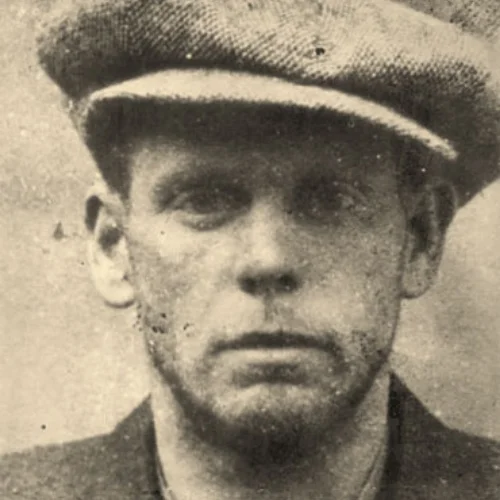
1896 - 1920
Summary
Name:
Francis Percy ToplisNickname:
The Monocled MutineerYears Active:
1920Birth:
August 22, 1896Status:
DeceasedClass:
MurdererVictims:
1Method:
ShootingDeath:
June 06, 1920Nationality:
United Kingdom1896 - 1920
Summary: Murderer
Name:
Francis Percy ToplisNickname:
The Monocled MutineerStatus:
DeceasedVictims:
1Method:
ShootingNationality:
United KingdomBirth:
August 22, 1896Death:
June 06, 1920Years Active:
1920Francis Percy Toplis was born on August 22, 1896, in Chesterfield, Derbyshire. His parents were Herbert and Rejoice Elizabeth Toplis. The family faced financial difficulties, which led to Percy being raised by his grandparents. His upbringing was challenging, and he often moved between relatives.
At the age of 11, he got into trouble for the first time. In March 1908, he was birched for obtaining two suits through false pretenses. His grandparents struggled to care for him, and the court decided he should live with his aunt, Annie Webster, at Colliery Row in Blackwell.
Percy attended school until he was 13. After leaving school in 1910, he started an apprenticeship as a blacksmith at the Blackwell colliery. However, he did not enjoy the work and had a poor attendance record. After an argument with his boss, he left and chose a life of travel and minor crime.
In 1911, Percy found himself in legal trouble again. He was sentenced to ten days in prison in Dumfries for not paying for two train tickets. He returned to England, but his issues with the law continued. By 1912, at the age of 15, he was convicted of attempted rape and sentenced to two years of hard labor. He was released in 1914.
In August 1914, after leaving prison, Percy enlisted in the Royal Army Medical Corps. He served as a stretcher bearer during World War I and began his active duty in Loos. His unit was sent to Gallipoli, where he faced harsh conditions. He became ill with dysentery but was not evacuated until the campaign ended.
After his time in the hospital, he worked in a munitions factory and was later stationed in various locations, including Salonika and Egypt. He contracted malaria during this time and was sent back to Britain. Sadly, in August 1918, his father died, and Toplis deserted his post shortly after. He faced another legal issue and was sentenced to two years for fraud.
In 1920, after his release from prison, Toplis joined the Royal Army Service Corps and was stationed in Bulford. He soon became involved in selling rationed fuel on the black market and began forging documents. He was known for wearing a gold monocle as part of his disguise. This became a significant part of his identity.
On April 25, 1920, Sidney George Spicer, a taxicab driver, was found dead from a gunshot wound on Thruxton Down near Andover. On that night, Francis Percy Toplis was seen in Bulford Camp around 11:00 p.m. Before that, he went absent without leave. An inquest took place regarding Spicer’s death, and the jury returned a verdict of 'wilful murder' against Toplis, ensuring that he would be executed if captured.
Following the murder, Toplis spent time in London, posing as a decorated army officer. The heavy media coverage about the murder led him to flee to Wales and then to Tomintoul in Scotland. On June 1, 1920, a farmer noticed smoke rising from a remote gamekeeper's bothy and alerted the police. When Police Constable George Greig and others confronted Toplis, he fired a pistol, injuring them, before escaping on a bicycle.
Toplis continued his flight, traveling to Aberdeen and then taking a train to Carlisle, where he was seen on June 5. The next day, PC Alfred Fulton encountered a man in partial military dress on the roadside. After recognizing him as a suspect in the murder, Fulton returned to find Toplis changing into civilian clothes. When confronted again, Toplis brandished a revolver.
Fulton reported this to police headquarters and sought assistance. Inspector William Ritchie and Sergeant Robert Bertram joined him after disguising their uniforms. They drove to apprehend Toplis, accompanied by the chief constable's son, Norman de Courcy-Parry. They saw Toplis walking down the road and attempted to arrest him near Romanway. Toplis tried to flee, leading to a gunfight. During the exchange, Toplis was shot in the chest and died.
On June 9, Toplis was buried in Penrith's Beacon Edge Cemetery. An inquest ruled the shooting justifiable homicide. The case remains notable for the questions about who fired the fatal shot. Toplis’s personal belongings, including his monocle, were later donated to Penrith Museum.
