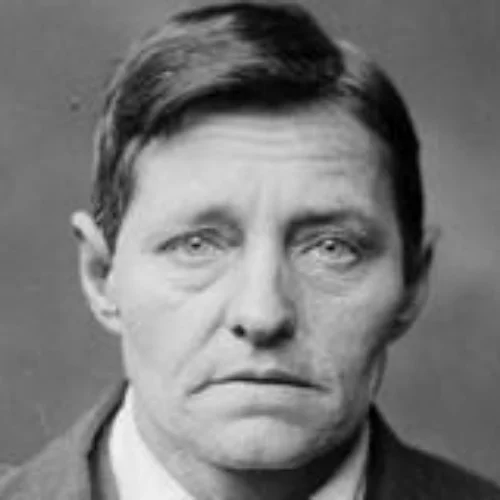
1875 - 1938
Summary
Name:
Eugenia FalleniNickname:
Harry Leo Crawford / Jean FordYears Active:
1917Birth:
July 25, 1875Status:
DeceasedClass:
MurdererVictims:
1Method:
Blunt force traumaDeath:
June 10, 1938Nationality:
Italy1875 - 1938
Summary: Murderer
Name:
Eugenia FalleniNickname:
Harry Leo Crawford / Jean FordStatus:
DeceasedVictims:
1Method:
Blunt force traumaNationality:
ItalyBirth:
July 25, 1875Death:
June 10, 1938Years Active:
1917Date Convicted:
October 6, 1920Eugenia Falleni was born on 25 July 1875, reputedly near Livorno or Florence in Italy. She was the eldest of about 22 children, of whom seventeen survived. Her family moved to Wellington, New Zealand, about 1877 when she was around two years old.
Her father worked as a carrier with a horse and cart and sometimes as a fisherman. He was described as a stern disciplinarian. As a child and teenager Eugenia often ran away and took work in brickyards, stables and other places. She frequently dressed in male clothes to get these jobs.
In her late teens Eugenia left home and went to sea, taking work as a cabin boy. While working on ships her sex assigned at birth was discovered during a conversation in Italian with the ship's captain. Around 1898 she was put ashore at Newcastle, New South Wales, while pregnant.
In 1898 she gave birth to a daughter, Josephine, in Sydney. She placed the child in the care of an Italian-born woman, Mrs de Angeles, in Double Bay. Josephine later said her mother was known to people as Harry Crawford and that Mrs de Angeles was called "Granny."
After arriving in Australia Eugenia began presenting herself as a man and used the name Harry Leo Crawford. She worked a series of manual jobs in meatworks, hotels, laundries, a rubber factory and in private service. By 1912 he was employed as a yardman and sulky driver for Dr G. R. C. Clarke in Wahroonga, northern Sydney.
While working for Dr Clarke, Harry met Annie Birkett, who was a housekeeper for the Clarkes and a widow with a young son. After a short courtship the pair went through a marriage ceremony on 19 February 1913 at the Methodist parsonage in Balmain South. Several witnesses later said Annie and the household did not realise Harry had been assigned female at birth until years later.
On 1 October 1917 a woman did not return from a picnic at Chatswood. A short time later a woman's remains were found in scrubland near Mowbray Road, Chatswood. The remains were later identified as Annie Birkett.
Annie's husband, who used the name Harry Leo Crawford, did not report her missing. He told others that she had left him. Annie's son became suspicious and, in 1920, his concerns led to an interview with the police.
Police exhumed the remains and carried out further examinations. Evidence including dental work and a gemstone helped to identify the body as Annie Birkett. Police arrested Harry Leo Crawford, who later gave his name as Eugenia Falleni, at a hotel on 5 July 1920.
The case drew wide public attention and was called the "Man-Woman case" in the press. Falleni appeared at hearings and at the trial wearing different types of clothing. Witnesses, including Annie's son and Falleni's daughter Josephine, gave evidence at the hearings and at the trial.
Falleni pleaded not guilty. A jury found Falleni guilty and the court sentenced Falleni to death on 6 October 1920. The sentence was commuted to imprisonment for life on 6 December 1920. An appeal was dismissed by the Court of Criminal Appeal.
Falleni was released from Long Bay Prison on 18 February 1931 on condition of living as a woman. Falleni took the name Jean Ford and ran a boarding house in Paddington. On 9 June 1938 Falleni was struck by a motorcar on Oxford Street and died of the injuries on 10 June 1938. Falleni was identified by fingerprint records and was buried in Rookwood Cemetery.
The case continued to attract attention after the trial. Historians, writers and artists have since examined the records, the trial and the press coverage.
