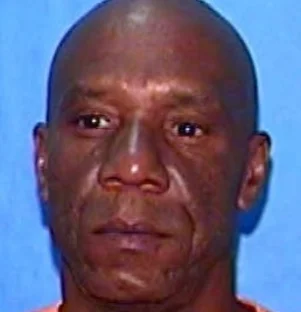
b: 1959
Summary
Name:
Etheria Verdell JacksonYears Active:
1985Birth:
March 07, 1959Status:
Awaiting ExecutionClass:
MurdererVictims:
1Method:
Stabbing / StrangulationNationality:
USAb: 1959
Summary: Murderer
Name:
Etheria Verdell JacksonStatus:
Awaiting ExecutionVictims:
1Method:
Stabbing / StrangulationNationality:
USABirth:
March 07, 1959Years Active:
1985Date Convicted:
June 20, 1986“I can’t change my story now.”
— Etheria Verdell Jackson
Etheria Verdell Jackson was born on March 7, 1959. By the mid-1980s, he was living in Jacksonville, Florida, and was in a relationship with Linda Riley, his live-in girlfriend and the mother of one of his children. Before the murder of Linton Moody, Jackson had already been involved with the criminal justice system. Florida capital-case records list prior incarceration history that included burglary of an occupied dwelling, robbery with a deadly weapon, and escape. These prior offenses showed that Jackson had a documented criminal history before the 1985 murder case.
At the time of the crime, Jackson was living with Riley and her children. Riley had purchased a washing machine from Linton Moody on an installment plan. Moody, who operated a retail furniture business with his brother in Jacksonville, visited Riley’s residence to collect monthly payments from customers. This business relationship brought Moody to Riley’s home on December 3, 1985, where Jackson was present.
Linton Moody was a 64-year-old Jacksonville furniture-store owner who operated a retail furniture business with his brother, Wendell. On December 3, 1985, Moody went to Linda Riley’s residence to collect a monthly installment payment for a washing machine she had purchased from him. Before going there, Moody had cashed a $4,000 check, which he used to make change for customers who paid him with government checks.
According to Riley’s trial testimony, Moody arrived at the residence while Jackson and Riley’s children were present. Moody gave Riley a receipt after cashing her government check. Before Moody could leave, Jackson attacked him and held a knife to his throat. Riley testified that Jackson ordered her to take Moody’s wallet and keys.
While Moody pleaded for his life, Jackson bound and gagged him, then choked him into unconsciousness with a belt. When Moody regained consciousness, Jackson struck him in the face with a cast on his forearm. Jackson then straddled Moody and stabbed him repeatedly in the chest. The medical examiner later determined that Moody had been stabbed seven times in the upper left chest, causing massive internal bleeding and death.
After the killing, Riley helped Jackson conceal the body by wrapping it in carpet and placing it in the rear compartment of Moody’s station wagon. Jackson drove the vehicle away and abandoned it. On December 5, 1985, Officer Godbee discovered Moody’s body inside the station wagon. Evidence recovered with the body included Moody’s calling-card box and briefcase.
Riley reported the murder on the same day the body was found. Another witness testified that Jackson later flagged down two men while wearing a cast on his forearm and asked whether they knew where to buy cocaine. According to that witness, Jackson displayed bundles of money and said he had “hit a sweet lick.” The group later returned to Jackson’s residence, where Riley injected Jackson with cocaine.
Jackson denied being the killer and claimed that Riley had committed the murder while he was away. He also claimed that Riley had been involved with Moody while Jackson was in prison and that the alleged affair had motivated the crime. However, Jackson’s mother testified that he gave her several different versions of the killing, at least two of which placed him at the scene.
Investigators also obtained a search warrant for the cast on Jackson’s forearm. No blood was found on it, but a detective testified that Jackson made statements suggesting awareness of his opportunity to commit the crime. Fingerprint evidence also connected him to Moody’s calling-card box found in the victim’s station wagon.
Jackson was indicted for first-degree murder on December 19, 1985, and pleaded not guilty on December 23, 1985. On June 20, 1986, he was found guilty of first-degree murder. On July 11, 1986, the jury recommended death by a vote of 7 to 5. On August 8, 1986, the trial court sentenced him to death.
The Florida Supreme Court affirmed his conviction and death sentence on direct appeal in 1988. Later state and federal postconviction challenges were denied, including a 2022 Florida Supreme Court ruling rejecting his request for relief under newer death-penalty sentencing law arguments.
