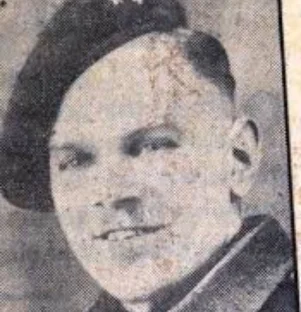
1923 - 1944
Summary
Name:
Ernest James KempNickname:
Gunner Ernest KempYears Active:
1944Birth:
October 04, 1923Status:
ExecutedClass:
MurdererVictims:
1Method:
StrangulationDeath:
June 06, 1944Nationality:
United Kingdom1923 - 1944
Summary: Murderer
Name:
Ernest James KempNickname:
Gunner Ernest KempStatus:
ExecutedVictims:
1Method:
StrangulationNationality:
United KingdomBirth:
October 04, 1923Death:
June 06, 1944Years Active:
1944Date Convicted:
April 18, 1944Ernest James Harman Kemp was born on October 4, 1923, in Gillingham, Kent. He was born outside marriage and later used his mother’s surname. His father had died when he was about four years old. Before entering military service, Kemp lived in New Cross, South London, and worked as a porter at a local railway station.
Kemp joined the Queen’s Royal Regiment, also known as the West Surreys, on December 29, 1942. During his army service, he was posted to several locations, including Maidstone, Exeter, Ilfracombe, and Taunton. In 1943, he transferred to the Royal Artillery and served at Aberdeen, Cromer, Watford, and Woolwich. His later crime took place while Britain was still at war, and Kemp was still connected to the armed forces at the time.
On February 8, 1944, shortly before the murder, Kemp escaped while under military police escort. He had been taken to a dentist and climbed out through a toilet window. After that escape, he remained at large. During this period, witnesses later described a talkative soldier wearing an impressive group of medal ribbons. Police later became suspicious because some of the medal ribbons appeared to represent awards that had been issued before Kemp was old enough to have earned them.
The victim, Iris Miriam Deeley, known in several accounts as Miriam Deeley, was a 21-year-old member of the Women’s Auxiliary Air Force. She had joined the WAAF on August 7, 1942. Memorial records identify her as Leading Aircraftwoman Iris Miriam Deeley, service number 2130707, daughter of Donald Alan and Miriam Deeley of Wanstead.
Deeley was engaged to Aircraftman William Quill, a radar mechanic. During the weekend of February 12–13, 1944, she had a weekend pass and spent time with Quill at her family home in Wanstead. Quill later escorted her to Charing Cross railway station so she could return to her unit at RAF Kidbrooke. When she missed the last direct train to Kidbrooke, she phoned her unit to say she would be late and then boarded a train toward Lewisham.
On the night of February 13–14, 1944, Iris Miriam Deeley was returning to her WAAF unit after spending the weekend with her fiancé and family. After missing the last direct train from Charing Cross to Kidbrooke, she took another train route. She did not safely return to her station.
On February 14, 1944, Deeley’s body was discovered in an allotment near the railway by Well Hall Station in Eltham, London. She had been sexually assaulted and strangled with her own scarf. Her body had been dragged from the place where she was attacked to the location where it was found. Investigators also found items nearby and noted large footprints close to the scene.
Police appealed for information. Witnesses came forward and reported seeing Deeley with a man who appeared to be a soldier. The description circulated by police focused on a talkative soldier wearing what looked like an unusually impressive set of medal ribbons.
Early on February 22, 1944, Police Constable Charles Memory, a former First World War soldier, saw a soldier with a WAAF member. Memory noticed that the man’s uniform displayed medal ribbons that did not appear to match his age or likely service history. After the WAAF member left, Memory arrested the soldier and took him to Albany Road Police Station. The man identified himself as Gunner Ernest Kemp.
Chief Inspector Edward Greeno, who led the murder investigation, was notified because Kemp matched the description of the wanted man. Investigators learned that Kemp was a deserter and questioned him about his movements between February 12 and February 14. His answers were evasive. Police also found items belonging to Deeley in his rucksack. When Kemp’s boots were compared with the footprints found near Deeley’s body, they matched the size of the impressions at the scene. He was then detained as the suspect in Deeley’s murder.
Kemp was tried at the Old Bailey on April 18, 1944, before Mr Justice Cassels. The prosecution was led by L. A. Byrne and Gerald Howard. Kemp was represented by F. H. Lawson. He pleaded not guilty. The defence called no evidence. The jury found Kemp guilty of murder and added a recommendation for mercy, but the judge sentenced him to death. The National Archives catalogue confirms the case as a Central Criminal Court murder conviction on April 18, 1944, with a death sentence.
Kemp appealed, but the appeal was dismissed. He was executed by hanging at Wandsworth Prison on June 6, 1944, the same day as the Allied D-Day landings in Normandy. Commonwealth War Graves Commission material and British execution records both list his execution date as June 6, 1944.
Iris Miriam Deeley was buried at the City of London Cemetery and Crematorium. Commonwealth War Graves Commission material records her as a 21-year-old WAAF member who died on February 14, 1944, and was murdered by Gunner Ernest James Harman Kemp.
