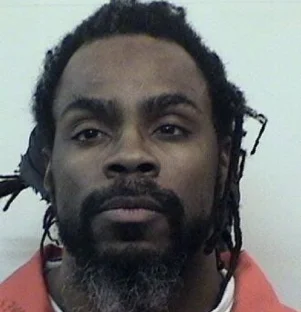
b: 1968
Summary
Name:
Eric Darnell HolmesYears Active:
1989Birth:
August 23, 1968Status:
Awaiting ExecutionClass:
MurdererVictims:
2Method:
StabbingNationality:
USAb: 1968
Summary: Murderer
Name:
Eric Darnell HolmesStatus:
Awaiting ExecutionVictims:
2Method:
StabbingNationality:
USABirth:
August 23, 1968Years Active:
1989Date Convicted:
November 28, 1992“I’m going to kill that bitch tonight.”
— Eric Darnell Holmes
Eric Darnell Holmes was born on August 23, 1968. Indiana death-row records and crime summaries identify him as Eric D. Holmes, Indiana Department of Correction number 932132. The official Indiana Department of Correction death-row list from 2019 identified him as a Black male born in August 1968, sentenced in Marion County on March 26, 1993.
The Indiana Supreme Court’s direct-appeal opinion confirms several background factors that were presented as mitigation during sentencing. The trial court considered evidence that Holmes had lost his mother when he was seven years old, had an absent or uninterested father, experienced neglect and abuse by surrogate caregivers, had educational and social difficulties, and had adapted well while jailed before trial.
The court also noted that Holmes was 21 years old at the time of the murders and had worked at a Shoney’s restaurant for at least three months before the crime. His employment ended after an argument with co-worker Amy Foshee. That workplace dispute became part of the prosecution’s account of motive, along with robbery, because Holmes later returned to the restaurant with Michael Vance at closing time.
Before the murders, Holmes had no major adult criminal history noted as an aggravating factor. The sentencing court gave mitigating weight to his lack of adult criminal conduct and minimal juvenile record. These details were considered by the trial court but were found not to outweigh the aggravating factors of robbery and multiple murder.
On November 16, 1989, Eric D. Holmes committed a robbery and stabbing attack at the Shoney’s restaurant where he had worked in Indianapolis, Indiana. Earlier, Holmes had argued with co-worker Amy Foshee and was fired from his job. The Indiana Supreme Court later summarized that Holmes had worked at the restaurant for at least three months before the incident.
At closing time, Charles Ervin, a manager, Theresa Blosl, another manager, and Amy Foshee were leaving the restaurant. Ervin was carrying the restaurant till. Holmes and Michael Vance trapped the three employees in the foyer, with one blocking the way outside and the other preventing them from going back inside. Holmes and Vance then attacked the employees and took the till.
All three victims were stabbed multiple times. Charles Ervin and Theresa Blosl died from their wounds, while Amy Foshee survived. Foshee later testified at trial and identified Holmes and Michael Vance as the attackers.
The evidence also included testimony from Gail Watkins, a Shoney’s employee and friend of Raymond Vance. Watkins said Holmes had made a threat about Amy Foshee before the attack. Raymond Vance, Michael Vance’s brother, also testified that after the attack, Holmes and Michael Vance got into a car with blood on them. According to Raymond’s testimony, Holmes said, “Mike, I did it. I was wrong but I did it.”
Michael Vance was tried separately. He was convicted of two counts of felony murder, robbery, and attempted murder, and received a total executed sentence of 190 years. The Indiana Supreme Court later noted that Vance’s role and sentence were considered during Holmes’s death-penalty review.
Holmes was tried in Marion County Superior Court before Special Judge Cynthia S. Emkes. He was convicted of two counts of murder for the intentional killings of Charles Ervin and Theresa Blosl. He was also convicted of attempted murder for the attack on Amy Foshee, robbery, and conspiracy to commit robbery. The jury could not reach a unanimous recommendation on the death penalty, so the final sentencing decision went to the judge under Indiana law at that time.
On March 26, 1993, Holmes was sentenced to death for the intentional murder of Theresa Blosl. The trial court also imposed a 60-year sentence for the intentional killing of Charles Ervin and additional sentences for the other convictions. The death sentence was based on two aggravating circumstances: that Blosl was killed during a robbery and that Holmes had committed multiple murders.
On direct appeal, the Indiana Supreme Court affirmed Holmes’s murder convictions and death sentence. However, the court ordered changes to two non-death counts: it directed resentencing on the robbery conviction as a lower-level robbery count and vacated the conspiracy conviction on double-jeopardy grounds. The death sentence remained in place.
Holmes later pursued post-conviction relief. A lower post-conviction court initially granted relief in part and vacated the death sentence because of prosecutorial misconduct, but the Indiana Supreme Court reversed that partial grant on May 19, 2000. The state high court held that the petition for post-conviction relief should be denied, leaving the death sentence in effect.
Federal habeas proceedings continued for years. In 2016, the United States Court of Appeals for the Seventh Circuit reviewed Holmes’s habeas case and described the earlier rulings involving his mental competency to assist counsel. The court ultimately rejected his habeas claims, while noting that any execution would still require a separate legal determination of whether he was competent to be executed.
As of the current Indiana Public Defender Council death-penalty information page, Holmes remains listed among Indiana’s sentenced death-row inmates. His current status is not listed as executed or deceased. Instead, the state page states that he is awaiting a decision in the Seventh Circuit Court of Appeals following habeas corpus proceedings.
