Summary
Name:
Elton Manning JacksonNickname:
Hampton Roads KillerYears Active:
1987 - 1996Status:
ImprisonedClass:
Serial KillerVictims:
1-12Method:
StrangulationNationality:
USASummary: Serial Killer
Name:
Elton Manning JacksonNickname:
Hampton Roads KillerStatus:
ImprisonedVictims:
1-12Method:
StrangulationNationality:
USAYears Active:
1987 - 1996Date Convicted:
August 21, 1998“I’m black. I’m gay. Andre and I had a nice time that weekend, and then he turns up dead.”
— Elton Manning Jackson
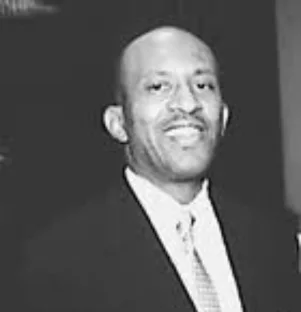
Elton Manning Jackson was born in 1956. By the 1990s, he was living in Portsmouth, Virginia, in the Hampton Roads region, an area that includes Norfolk, Chesapeake, Portsmouth, and nearby communities. He is a gay man. His case became closely tied to fears within the Hampton Roads gay community because a series of men, many of whom were gay or had connections to places where men met other men for sex, had been found dead in similar circumstances over a period of nearly ten years. Many of those victims were described by authorities as men with unstable housing, drug involvement, day-labor backgrounds, or other vulnerabilities that made them less visible to the public.
Before his arrest, Jackson had contact with men in the same social circles or environments as several victims. Court records later showed that prosecutors used testimony from men who said they had engaged in paid or consensual sexual encounters with Jackson and that those encounters had become violent. Those witnesses described incidents involving restraints, straps, rough sexual conduct, and attempted strangulation. Their testimony was admitted at trial because prosecutors argued it showed a pattern similar to the killing of Andrew “Andre” Smith.
On July 22, 1996, the body of Andrew D. “Andre” Smith was found in Chesapeake, Virginia. Smith was a 38-year-old gay man whose nude body had been dumped near the side of a road. A medical examiner determined that he had died from ligature strangulation. His death was considered the last in a series of similar killings that had alarmed the Hampton Roads region for years.
Investigators soon focused on Elton Manning Jackson. On July 23, 1996, police contacted Jackson during a neighborhood canvass. He initially told officers that he did not know Smith and had only seen his photograph on television. Officers later testified that Jackson appeared nervous and avoided eye contact during that conversation.
Jackson was arrested on May 6, 1997. During a videotaped police interview, he changed his earlier account and admitted that Smith had been to his home. At trial, Jackson testified that he and Smith had consensual sex on July 20, 1996, and that he gave Smith twenty dollars before Smith left around 10:00 p.m. Jackson denied killing him.
The prosecution presented forensic evidence linking Smith to Jackson’s home. A bloodstain found on Jackson’s mattress matched Smith’s DNA. Jackson’s DNA matched semen recovered from Smith’s body. Court records also described additional evidence, including fibers and cigarette butts, that investigators said connected Smith to Jackson.
The prosecution strengthened its case by calling three men who described prior sexual encounters with Jackson that they said turned violent. Kevin Benton testified that Jackson tied his hands behind his back and approached him from behind with a leather strap. Tommy Anderson testified that Jackson became rough during a sexual encounter, threatened him, drove him to a secluded area, and approached him with a strap. Willie Swimpson testified that Jackson similarly approached him from behind with a strap during a sexual encounter. Jackson denied some of these accounts and claimed the incidents were consensual or fabricated.
The court allowed this testimony because it was relevant to identity and pattern. Prosecutors argued that the prior incidents bore significant similarities to Smith’s death: male victims, sexual contact, payment or money-related arrangements, drug use by the men involved, and an attempted or completed strangulation from behind.
On August 21, 1998, a jury convicted Elton Manning Jackson of first-degree murder for the killing of Andrew Smith. On October 27, 1998, he was sentenced to life imprisonment. The Virginia Court of Appeals affirmed the conviction in 2000.
Authorities publicly described Jackson as the prime suspect in up to 11 other similar killings in the Hampton Roads area. The victims in that suspected series were mostly men found dumped near remote roads or interstate access points between 1987 and 1996. However, Jackson was not convicted of those additional murders.
