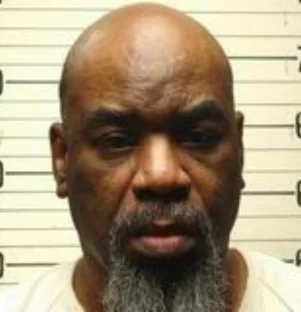
Summary
Name:
Edward Jerome HarbisonNickname:
E.JYears Active:
1983Status:
ImprisonedClass:
MurdererVictims:
1Method:
BludgeoningNationality:
USASummary: Murderer
Name:
Edward Jerome HarbisonNickname:
E.JStatus:
ImprisonedVictims:
1Method:
BludgeoningNationality:
USAYears Active:
1983Date Convicted:
December 2, 1983Edward Jerome Harbison was born in 1955 and was known by the nickname “E.J.” At the time of the crime, Harbison was living in Chattanooga, Tennessee. He was romantically involved with Janice Duckett, whose brother, David Schreane, later became Harbison’s co-defendant in the burglary and murder case.
Court records indicate that Harbison had completed the eleventh grade and had been regularly employed before the case. During the sentencing phase of his trial, his mother testified briefly that he had been a good son and had maintained employment.
Later post-conviction proceedings raised questions about whether his trial lawyers had adequately investigated his family background for mitigation. Evidence presented after trial included a family tragedy involving one of Harbison’s sisters, who had killed her two children and later died by suicide while committed to a state hospital. Courts considered this evidence during later appeals but did not find it sufficient to overturn the conviction or sentence at that time.
On January 15, 1983, Frank Russell returned home from work in Chattanooga, Tennessee, and discovered that his wife, Edith Russell, had been murdered. Edith’s body was found inside a small apartment at the rear of the Russell home. The Russells rented the apartment to a tenant who was away on vacation at the time.
Edith had last been seen alive that afternoon at a neighborhood market, where witnesses spoke with her between about 2:30 p.m. and 2:45 p.m. When her body was discovered near midnight, grocery bags and ignition keys were still inside her car in the driveway. Her husband later said that she usually left the outside porch lights on for safety, but the lights were off when he came home.
Medical examiners determined that Edith died from massive skull fractures and severe head injuries. Her face and head had been crushed and disfigured by repeated blows. The Russell home and the rented apartment had been burglarized. Missing property included a television, two cable converters, a quartz heater, a Polaroid camera, a Cross pen and pencil set, a jeweler’s loupe, a jewelry box, antique jewelry, a marble vase, and Edith’s purse.
Police later recovered several stolen items from the home of Janice Duckett, Harbison’s girlfriend. The jeweler’s loupe was found in Harbison’s shaving kit. Other stolen items, including Edith’s purse and jewelry box, were found in a nearby vacant apartment. The stolen television was recovered from the home of David Schreane’s girlfriend.
David Schreane was arrested and questioned on February 21, 1983. He led police to the missing marble vase, which later tested positive for blood. Investigators also found fragments in Harbison’s car that were consistent with the marble vase.
Harbison was arrested the same day. In a taped statement, he confessed to killing Edith Russell. He said that he and Schreane went to the Russell home, believed it was empty, and broke in with a screwdriver. According to his statement, Edith returned while they were carrying stolen items out of the house. Harbison said he thought she was reaching for a gun, grabbed her, and struck her with the marble vase.
At trial, Harbison denied killing Edith. He testified that he had not been at the Russell home that day and claimed he was at his girlfriend’s residence. He also claimed that his confession had been coerced and that police threatened to arrest his girlfriend and remove her children if he did not confess.
Harbison was convicted of first-degree murder, second-degree burglary, and grand larceny. He was sentenced to death. Over the years, his appeals raised several issues, including ineffective assistance of counsel, possible Brady violations involving undisclosed police files, and claims involving another possible suspect, Ray Harrison. Courts rejected his efforts to overturn the conviction.
In 2007, Harbison’s scheduled execution was stayed because of litigation over Tennessee’s lethal injection protocol. In 2009, his case reached the United States Supreme Court in Harbison v. Bell, which addressed federally funded counsel for state clemency proceedings. In January 2011, Tennessee Governor Phil Bredesen granted clemency and commuted Harbison’s death sentence to life imprisonment without the possibility of parole. As of the latest available public record, Edward Jerome Harbison remains incarcerated under that life sentence.
