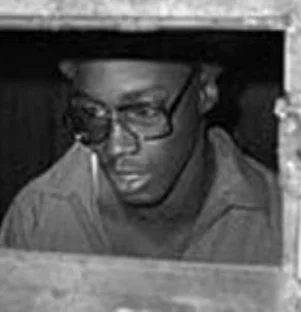
1960 - 1987
Summary
Name:
Edward Earl JohnsonYears Active:
1979Birth:
June 22, 1960Status:
ExecutedClass:
MurdererVictims:
1Method:
ShootingDeath:
May 20, 1987Nationality:
USA1960 - 1987
Summary: Murderer
Name:
Edward Earl JohnsonStatus:
ExecutedVictims:
1Method:
ShootingNationality:
USABirth:
June 22, 1960Death:
May 20, 1987Years Active:
1979"Well, I guess no one's going to call. OK, let's get this over with."
— Edward Earl Johnson
Edward Earl Johnson was born on June 22, 1960 in Mississippi. He was 18 years old when he was arrested and later convicted in the case that led to his death sentence. Johnson was African American, poor, and tried in Mississippi during a period when death penalty cases involving Black defendants and white victims were heavily criticized by civil rights and anti-death-penalty advocates. His case later became internationally known because of the BBC documentary Fourteen Days in May, which followed the final two weeks of his life on death row.
Throughout his years on death row, Johnson maintained that he had not killed Marshal J.J. Trest. He also claimed that his confession had been forced through threats by police. His supporters later argued that the case against him was weak and that another suspect may have been involved. However, the courts upheld the conviction and death sentence.
On June 2, 1979, an elderly woman named Sally Franklin was attacked inside her home in Walnut Grove, Mississippi. Prosecutors alleged that Edward Earl Johnson broke into Franklin’s house between 2:00 a.m. and 3:00 a.m., threatened to rape her, and struggled with her. Franklin was knocked unconscious during the incident.
After noise from the attack drew attention inside the house, Johnson fled. According to the prosecution’s account, Walnut Grove Marshal J.J. Trest arrived at the scene while Johnson was leaving. Court records state that Trest approached Johnson’s car and asked what he was doing. Johnson answered “nothing,” then took out a .25-caliber pistol. As Trest shined a flashlight into the vehicle, Johnson jumped out and shot him three times in the body.
The prosecution said that after Trest fell, Johnson struck him with the pistol, then took Trest’s .357 Magnum revolver and shot him twice in the head. Medical evidence showed that the head wounds caused Trest’s death. Johnson was charged with capital murder for killing a peace officer acting in the line of duty. He was also convicted in connection with the assault of Sally Franklin. He was sentenced to death and spent about eight years on death row.
Johnson’s appeals challenged the death sentence and trial proceedings, including the aggravating circumstances used by the prosecution and the trial court’s refusal to give certain jury instructions. Federal courts rejected his habeas claims, and his execution was allowed to proceed.
His case drew international attention in 1987 when the BBC documentary Fourteen Days in May filmed the final days before his scheduled execution. In the documentary, Johnson continued to deny killing Trest and said his confession was obtained under pressure.
Despite last-minute efforts by attorney Clive Stafford Smith and others, Johnson was executed in Mississippi’s gas chamber at Parchman Prison on May 20, 1987. He was pronounced dead at 12:06 a.m. He was approximately 26 years old.
