They Will Kill You Logo
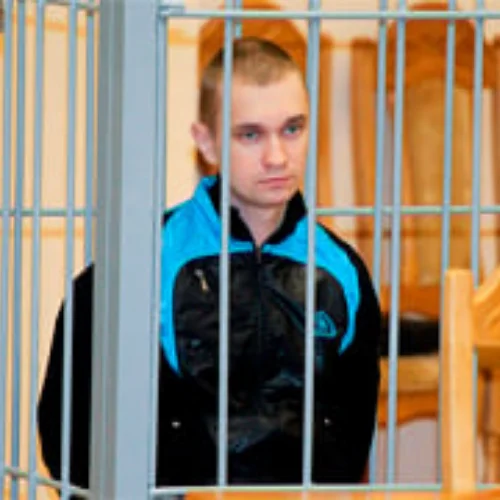
Dzmitry Kanavalau

Dzmitry Kanavalau

Summary

Name:

Dzmitry Kanavalau

Years Active:

2008 - 2011

Status:

Executed

Class:

Mass Murderer

Victims:

15

Method:

Bombing

Nationality:

Belarus
Dzmitry Kanavalau

Dzmitry Kanavalau

Summary: Mass Murderer

Name:

Dzmitry Kanavalau

Status:

Executed

Victims:

15

Method:

Bombing

Nationality:

Belarus

Years Active:

2008 - 2011

bio

Suggest an update

Dzmitry Kanavalau was born in 1986 in the city of Vitebsk, located in northeastern Belarus. Publicly available information about his early life is limited, as Belarusian authorities released only minimal personal background details following his arrest. He was raised and educated in Vitebsk and later completed vocational training, eventually securing employment at a tractor manufacturing plant in the region.

Kanavalau lived a largely unremarkable public life prior to his arrest. There is no documented history of political activism, organized extremist involvement, or formal military or explosives training disclosed in official records. According to investigators, he was described by acquaintances as reserved and socially withdrawn. Psychological evaluations conducted after his arrest concluded that he was legally sane, though reports stated that he expressed enjoyment in witnessing the suffering of others, a statement that would later become part of the prosecution’s narrative.

By the late 2000s, Kanavalau had developed technical skills sufficient to construct improvised explosive devices. Investigators later alleged that he had been experimenting with homemade explosives for several years prior to the 2011 Minsk Metro bombing. Despite this, he had no known criminal convictions before 2011.

In April 2011, Kanavalau traveled from Vitebsk to Minsk, allegedly to meet a woman he had encountered online. During this period, he rented an apartment in the capital city, where he was joined by his acquaintance Uladzislau Kavalyou.

Like what you're reading?
Join our mailing list for exclusive content you won't find anywhere else. You'll receive a free chapter from our e-book, increased chances to win our t-shirt giveaways, and special discounts on merch.

murder story

Belarus experienced several bomb-related incidents in the years preceding 2011. In September 2005, two explosions occurred in the city of Vitebsk, injuring dozens but causing no fatalities. Another major incident took place on 4 July 2008 during Independence Day celebrations in Minsk, when a bomb detonated at a public concert, injuring 54 people. That attack was initially classified as hooliganism rather than terrorism.

Following the 2011 Minsk Metro bombing, investigators stated that forensic evidence, including fingerprint analysis conducted with assistance from Interpol, linked Dzmitry Kanavalau to the 2008 Independence Day bombing. Authorities alleged that the explosive devices used in both incidents shared distinctive construction features.

On 11 April 2011 at approximately 17:55 local time, an improvised explosive device detonated at Kastryčnickaja station in the Minsk Metro during evening rush hour. The station, located in central Minsk, was crowded with commuters. The device was concealed beneath a bench near the inbound track and detonated as a train was arriving.

The explosion killed 15 people and injured at least 315 others, making it the deadliest terrorist incident in Belarusian history. The blast was equivalent to approximately five to seven kilograms of TNT and was packed with metal fragments, nails, and ball bearings, causing extensive shrapnel injuries. Structural damage occurred within the station, and the force of the explosion was felt at neighboring stations.

The Belarusian Prosecutor General’s Office immediately classified the incident as a terrorist attack. A national day of mourning was declared, and emergency security measures were implemented across the Minsk Metro system.

President Alexander Lukashenko ordered an intensive investigation, demanding daily progress reports and full transparency. Belarusian security services released a composite sketch of the suspected perpetrator and appealed to the public for video and photographic evidence.

On 13 April 2011, Dzmitry Kanavalau and Uladzislau Kavalyou were arrested. Authorities announced shortly thereafter that both men had confessed to involvement in the bombing. Kanavalau was identified as the individual who constructed and detonated the explosive device, while Kavalyou was accused of acting as an accomplice.

Investigators stated that Kanavalau admitted responsibility not only for the Minsk Metro bombing but also for earlier bombing incidents in Belarus. Despite extensive questioning, officials claimed that no clear political or ideological motive was established.

The trial of Kanavalau and Kavalyou began in September 2011 under intense domestic and international scrutiny. Proceedings were conducted in Belarusian courts, and both defendants were charged with terrorism and multiple counts of murder.

In November 2011, the court found Dzmitry Kanavalau guilty. He was sentenced to death by shooting, the maximum penalty under Belarusian law. The verdict and sentencing were criticized by international human rights organizations, the European Union, and members of the Belarusian opposition, who raised concerns about due process, the speed of the investigation, and the handling of evidence.

Dzmitry Kanavalau was executed by shooting in March 2012. As is customary in Belarus, the exact date, time, and location of the execution were not disclosed to the public or to family members. Confirmation of the execution was later provided by state authorities.

Belarus remains the only country in Europe to carry out executions, and the case further intensified international criticism of the country’s use of capital punishment.

The 2011 Minsk Metro bombing occurred during a period of economic crisis and political unrest in Belarus. The incident led to heightened security across public transportation systems and sparked widespread debate, both domestically and internationally, regarding the investigation, trial, and executions.

While Belarusian authorities maintained that the case was conclusively solved, skepticism persisted among opposition figures, independent journalists, and international observers. These concerns centered on the lack of transparency surrounding the confessions, the secrecy of the executions, and the broader political context in which the case unfolded.

Dzmitry Kanavalau remains officially recorded as the primary perpetrator of the deadliest terrorist attack in Belarusian history.