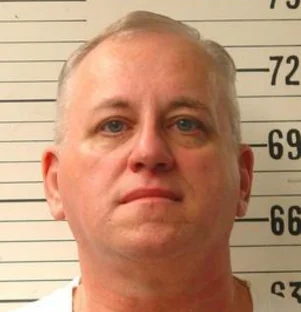
1951 - 2019
Summary
Name:
Donnie Edward JohnsonYears Active:
1984Birth:
January 15, 1951Status:
ImprisonedClass:
MurdererVictims:
1Method:
SuffocationDeath:
May 16, 2019Nationality:
USA1951 - 2019
Summary: Murderer
Name:
Donnie Edward JohnsonStatus:
ImprisonedVictims:
1Method:
SuffocationNationality:
USABirth:
January 15, 1951Death:
May 16, 2019Years Active:
1984Donnie Edward Johnson was born on January 15, 1951, in the United States. By the early 1980s, Johnson was living in Tennessee and was married to Connie Johnson. The couple's relationship would later become the focus of one of Tennessee's longest-running death penalty cases. During this period, Johnson was employed at Force Camping Sales in Shelby County, where he worked in a managerial role. The business became a central location in the events that led to his criminal conviction.
Public records indicate that Johnson maintained regular employment and appeared to be living an ordinary life prior to the homicide that brought him national attention. However, few reliable sources provide detailed information about his personal relationships, financial circumstances, or activities before the crime. As a result, much of his life before 1984 remains undocumented in publicly available records.
Johnson first came to widespread public attention following the death of his wife, Connie Johnson, in December 1984. The investigation and prosecution that followed transformed him from a private citizen into a defendant facing one of the most serious criminal charges under Tennessee law. His case quickly became notable because of the involvement of a work-release inmate, Ronnie McCoy, who admitted helping dispose of the victim's body and later became the prosecution's key witness.
After his arrest and conviction, Johnson spent decades pursuing legal appeals while maintaining his innocence. Throughout those proceedings, he consistently argued that McCoy was responsible for the killing and that he had been wrongly convicted. These claims formed the foundation of numerous challenges filed in state and federal courts over the following years.
Much of Johnson's adult life after 1985 was spent on Tennessee's death row. Court records show that he became involved in extensive post-conviction litigation, including appeals concerning witness testimony, alleged prosecutorial misconduct, and questions surrounding whether McCoy had received favorable treatment in exchange for cooperating with prosecutors. These legal battles continued for more than three decades and brought his case before multiple appellate courts, including the United States Court of Appeals for the Sixth Circuit.
As the years passed, Johnson remained one of Tennessee's longest-serving death row inmates. Despite repeated legal challenges and requests for relief, courts consistently upheld his conviction and sentence. His case continued to attract attention from attorneys, journalists, and death penalty observers because of the disputed testimony and the unusual circumstances involving the prosecution's primary witness.
Johnson remained incarcerated until 2019, when all remaining legal avenues had been exhausted. On May 16, 2019, he was executed by lethal injection at the Riverbend Maximum Security Institution in Nashville, Tennessee, at the age of 68. His execution marked the end of a case that had remained in the Tennessee court system for more than thirty-four years following the death of his wife.
On December 8, 1984, Donnie Edward Johnson reported to work at Force Camping Sales in Shelby County, Tennessee. Earlier that day, he signed Ronnie McCoy out of the Shelby County Penal Farm, where McCoy was serving a four-month sentence for false reporting and participating in a work-release program. The two men spent the day working at the business.
Later that afternoon, Johnson's wife, Connie Johnson, arrived at the camping center. According to testimony presented during the trial, McCoy left the couple alone in a sales office for a short period. McCoy later told investigators and jurors that when he returned, he discovered Connie Johnson dead and was shown her body by Donnie Johnson.
Prosecutors alleged that Johnson murdered his 30-year-old wife by forcing a plastic garbage bag into her mouth, causing her death by suffocation. Evidence presented at trial indicated that after the killing, efforts were made to conceal the crime. McCoy admitted that he assisted in cleaning the office and helping dispose of the victim's body. He claimed that he participated because he feared Johnson.
Investigators determined that Connie Johnson's body had been transported from the business and abandoned near the Mall of Memphis. Her body was discovered the following day, prompting a homicide investigation by local authorities.
During the investigation, Johnson denied responsibility for the killing. He claimed that Ronnie McCoy had murdered Connie Johnson while he was away from the office. According to Johnson, he helped clean the scene and dispose of the body because he feared what McCoy might do if he refused to cooperate. McCoy, however, gave a different account and identified Johnson as the person responsible for the murder.
The conflicting stories became a central issue during Johnson's trial. Prosecutors relied heavily on McCoy's testimony, along with other evidence gathered during the investigation. After hearing the evidence, a Shelby County jury rejected Johnson's version of events and found him guilty of first-degree murder in 1985.
Following his conviction, Johnson was sentenced to death. Over the next three decades, he pursued numerous appeals in both state and federal courts. Throughout those proceedings, he maintained that he was innocent and continued to argue that McCoy was the actual killer.
One of Johnson's primary claims involved allegations that prosecutors had failed to disclose an agreement with McCoy in exchange for his testimony. Johnson's attorneys pointed to a later pre-sentence report that suggested McCoy may have received immunity. Prosecutors and McCoy denied that any such agreement existed, and courts ultimately concluded that there was insufficient evidence to prove that a secret deal had been made.
Johnson's case remained active in the courts for many years as judges reviewed challenges related to witness testimony, prosecutorial conduct, and the handling of evidence. Despite these efforts, his conviction and death sentence were repeatedly upheld.
After exhausting his appeals, Johnson faced execution in Tennessee. Although inmates sentenced before 1999 were permitted to choose electrocution, Johnson ultimately was executed by lethal injection at the Riverbend Maximum Security Institution in Nashville, Tennessee. On May 16, 2019, he was pronounced dead at the age of 68.
More than thirty-four years after the murder of Connie Johnson, the case came to a close with Johnson's execution. The conviction remained intact, and Tennessee courts continued to recognize him as the person responsible for the December 8, 1984 killing of his wife.
