Summary
Name:
Donald LangNickname:
DummyYears Active:
1965 - 1971Status:
DeceasedClass:
MurdererVictims:
2Method:
Stabbing / StrangulationNationality:
USASummary: Murderer
Name:
Donald LangNickname:
DummyStatus:
DeceasedVictims:
2Method:
Stabbing / StrangulationNationality:
USAYears Active:
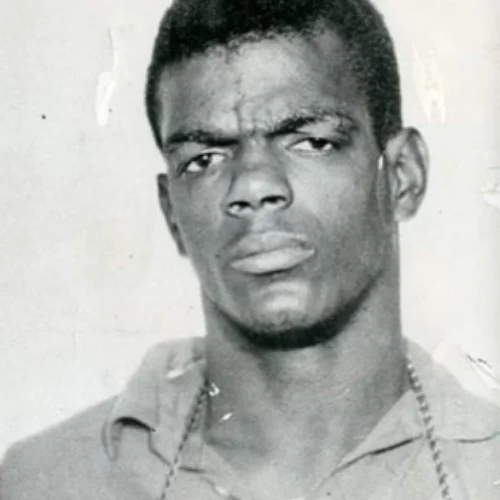
1965 - 1971Donald Lang was born in Chicago, Illinois, around 1945. He was deaf and could not speak. He also could not read, write, use sign language, or read lips. Reports say Lang lost his hearing when he was very young. Because his family had limited money, he did not receive the special education or training that could have helped him communicate. As he grew up, he could only use simple gestures and rough drawings to express himself.
Even with these disabilities, Lang was able to work. Before his first murder charge, he lived with relatives in Chicago and worked on loading docks. People who knew him described him as someone who could do physical work, but he had no real way to explain his thoughts clearly.
Lang’s communication problems later became a major issue in court. Lawyers and doctors said he could not understand the charges against him and could not help his attorney defend him. Even his lawyer, Lowell J. Myers, who was also deaf and worked with deaf clients, could not communicate with him well enough for a normal trial.
In November 1965, Donald Lang was charged with killing Ernestine Williams in Chicago. She was found dead after being stabbed and beaten. Lang was identified as a suspect and charged with murder. The case quickly became difficult because Lang could not hear, speak, read, write, or use sign language. His lawyer and doctors said he could not understand the murder charge or help with his defense. Because of this, the court ruled that he was not fit to stand trial.
Lang was sent to the Illinois mental health system instead of being tried. This created a legal problem because he had not been convicted, but the state also believed he could be dangerous. In 1970, the Illinois Supreme Court ruled that he should either be tried or released. The 1965 case was later dismissed because the main witness had died, and Lang was released in February 1971.
A few months later, in July 1971, Lang was arrested again after another woman, Earlene Brown, was killed in Chicago. Brown had been seen entering the Viceroy Hotel with Lang. Witnesses said Lang later came back downstairs alone. Brown was later found dead in a closet inside one of the hotel rooms. Police found blood on some of Lang’s clothing. This evidence became important during the case. Lang was tried in 1972, and the court used special procedures because of his communication problems. A jury convicted him, and he was sentenced to 14 to 25 years in prison.
The conviction was later overturned in 1975. The appeals court said Lang’s disabilities made it impossible for him to receive a fully fair trial because he could not properly communicate with his lawyer or understand the court process. After that, Lang was again placed under the Illinois mental health system. Courts continued to review his case for years. Judges had to decide whether he could ever become fit for trial, and whether he could safely be released.
Donald Lang’s case became one of the most unusual criminal cases in Illinois history. He was accused of two killings and convicted once, but the conviction was overturned because he had no meaningful way to communicate in court.
