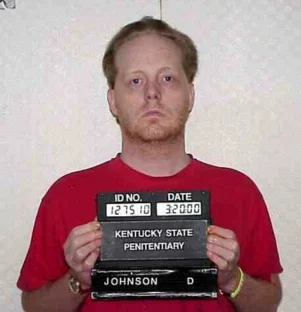
b: 1967
Summary
Name:
Donald Herb JohnsonYears Active:
1989Birth:
May 25, 1967Status:
ImprisonedClass:
MurdererVictims:
1Method:
StabbingNationality:
USAb: 1967
Summary: Murderer
Name:
Donald Herb JohnsonStatus:
ImprisonedVictims:
1Method:
StabbingNationality:
USABirth:
May 25, 1967Years Active:
1989Date Convicted:
October 1, 1997Donald Herb Johnson was born on May 25, 1967, in the United States. Before his arrest, Johnson lived in eastern Kentucky. Johnson first came to the attention of law enforcement and the public following the murder of Helen Madden in Hazard, Kentucky, in late 1989. The crime quickly became one of the most notorious homicide cases in the region because of its extreme violence and the severe injuries inflicted upon the victim.
Following his arrest, Johnson spent years in the Kentucky court system while prosecutors pursued capital charges against him. The legal proceedings continued for several years before he ultimately entered guilty pleas to multiple felony offenses, including capital murder.
After receiving a death sentence in 1997, Johnson pursued numerous appeals and post-conviction challenges. Court records show that he argued his guilty plea was not entered knowingly and voluntarily and that he had received ineffective legal advice. These claims were repeatedly reviewed by Kentucky courts and later by federal courts.
Over the decades that followed, Johnson remained incarcerated while pursuing state and federal appeals. His case became part of Kentucky's death penalty litigation system and continued through multiple levels of judicial review. As of early 2026, his death sentence remained in place and he continued to be housed on Kentucky's death row.
On the evening of November 29, 1989, 61-year-old Helen Madden was working alone at the Bright 'N Clean Laundry in Hazard, Kentucky. Madden had been employed at the laundromat for many years and was nearing the end of her shift when Donald Herb Johnson entered the business.
According to court records, Johnson initially asked Madden if he could use the telephone because he needed to contact his brother and find a place to stay for the night. Madden allowed him to make several calls, but the attempts were unsuccessful. As closing time approached, she informed Johnson that he needed to leave so she could close the business.
At some point afterward, Johnson attacked Madden inside the laundromat. Prosecutors later established that the assault was prolonged and extremely violent. Madden was beaten, stabbed numerous times, sexually assaulted, and subjected to severe physical abuse. Evidence presented in court showed that she suffered at least twenty-four stab wounds. Additional injuries indicated that she had been tortured during the attack.
The assault ended with Madden's death inside a storage area of the laundromat. After the killing, Johnson stole money from the business before leaving the scene. Court records indicate that approximately $270 was taken during the robbery. The following morning, a co-worker arrived at the laundromat and discovered Madden's body. The injuries were so severe that individuals familiar with her reportedly had difficulty identifying her. Law enforcement officers quickly launched a homicide investigation.
Investigators soon developed Johnson as a suspect. Evidence gathered during the investigation linked him to the crime, and he was arrested on December 1, 1989, one day after Madden's body was discovered. Prosecutors charged Johnson with murder, robbery, and burglary. Additional sexual assault-related charges were later added as investigators gathered more evidence concerning the attack.
The case remained pending for several years. Eventually, Johnson entered guilty pleas to capital murder, first-degree robbery, first-degree burglary, and two counts of first-degree sexual abuse. By pleading guilty, he admitted responsibility for the crimes and avoided a traditional guilt-phase jury trial.
Following the guilty pleas, the case proceeded to a penalty phase to determine whether Johnson would receive a death sentence. Extensive legal proceedings followed concerning how sentencing should be conducted. After years of litigation, a sentencing hearing was held in Floyd County.
On October 1, 1997, Johnson was sentenced to death for the murder of Helen Madden. The sentence was imposed after the court reviewed evidence concerning the nature of the crime and the aggravating factors presented by prosecutors.
In the years that followed, Johnson pursued numerous appeals in state and federal courts. He argued that his guilty plea had been improperly influenced and that legal errors occurred during the proceedings. Kentucky courts rejected those claims, and subsequent federal reviews likewise failed to overturn the conviction or sentence.
More than three decades after the murder, Johnson remained on Kentucky's death row while continuing to challenge his conviction through the appellate process. His case remains one of the most widely cited Kentucky capital murder cases from the late twentieth century.
