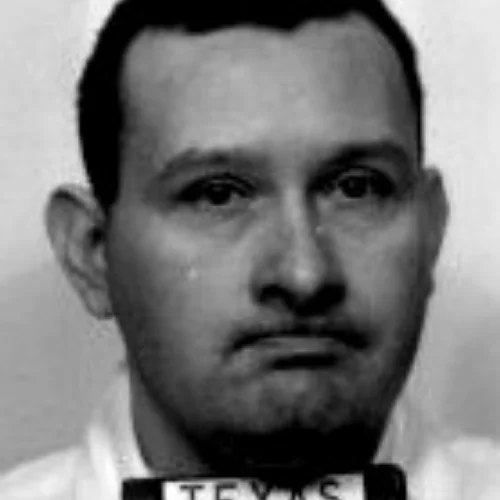
b: 1961
Summary
Name:
Doil Edward LaneYears Active:
1980 - 1990Birth:
April 15, 1961Status:
ImprisonedClass:
MurdererVictims:
2Method:
Stabbing / StrangulationNationality:
USAb: 1961
Summary: Murderer
Name:
Doil Edward LaneStatus:
ImprisonedVictims:
2Method:
Stabbing / StrangulationNationality:
USABirth:
April 15, 1961Years Active:
1980 - 1990“You tuck away my clores when you can not hurt no one with a box of 24 cloros.”
— Doil Edward Lane
Doil Edward Lane was born on April 15, 1961. His early life was difficult, and he had developmental problems from a young age. Doctors later believed he may have suffered a lack of oxygen at birth, which could have affected his brain development. Lane’s biological father died shortly after he was born. He was later raised by his mother and stepfather.
As a child, Lane struggled in school and was placed in special education classes. Later testing showed that he had very low intellectual functioning, with an IQ reported in the mid-60s. His lawyers and experts said he had trouble understanding complex situations and functioned at a childlike level.
During his youth, Lane was sent to the Brown School in San Marcos, Texas. This was a residential treatment facility for children with developmental and behavioral problems. This connection later became important because San Marcos was also where 8-year-old Bertha Martinez was murdered in 1980.
By 1980, Lane was living in or connected to Hays County, Texas. That year, Bertha Martinez disappeared and was later found murdered. The case remained unsolved for more than ten years. Lane later moved to Kansas, where he became connected to the 1990 murder of 9-year-old Nancy Shoemaker.
On March 20, 1980, 8-year-old Bertha Martinez disappeared from San Marcos, Texas. Reports stated that a man approached children near her home and asked if they had seen a lost dog. Bertha followed the man on her bicycle. She never returned home.
Six days later, searchers found Bertha’s body in a small tin shed in a field only a short distance from her home. She had been sexually assaulted, stabbed, and strangled. Investigators also found that some of her clothing and personal items had been taken. The crime shocked the San Marcos community, but the case remained unsolved for more than a decade.
In 1990, another child was killed in Kansas. On July 30, 1990, 9-year-old Nancy Shoemaker disappeared in Wichita while walking to a nearby store to buy soda for her younger brother. Her disappearance led to a large search. Her remains were later found in a rural area near Belle Plaine, Kansas. Investigators determined that she had likely died from strangulation or asphyxiation. Kansas Supreme Court records later identified Lane as the prime suspect in Nancy’s murder.
The Kansas investigation led police back to Lane. Officers also investigated Donald Wacker, a friend of Lane’s. Wacker was later convicted in Kansas of kidnapping and aiding a felon in connection with Nancy Shoemaker’s death. Court records state that Wacker told police Lane forced Nancy into the car, sexually assaulted her, and strangled her.
During the investigation, Lane confessed to involvement in both the Texas and Kansas murders. In the Bertha Martinez case, he claimed that his mother and stepfather were also involved, but the charges against them were later dropped. His stepfather died before Lane’s Texas trial, and his mother was reportedly in a mental health facility at the time of the trial.
Lane was returned to Texas and tried for the capital murder of Bertha Martinez. His trial began in January 1994. In February 1994, a jury convicted him of capital murder for Bertha’s death. The Texas Court of Criminal Appeals later confirmed that the case involved the murder of 8-year-old Bertha Martinez on March 20, 1980, in Hays County, and that Lane was sentenced to death.
At trial, Lane’s confessions were a major part of the prosecution’s case. The Texas Court of Criminal Appeals stated that Lane admitted in oral confessions to kidnapping, sexually assaulting, and murdering Bertha. The court ruled that the confession was enough to support the capital murder conviction because the evidence showed the underlying offense of aggravated sexual assault.
Lane was also convicted in Kansas for crimes connected to Nancy Shoemaker’s death. In 1995, he was sentenced to at least 40 years in prison for murder and received additional sentences connected to kidnapping and rape. Kansas officials stated that he would be returned to serve those sentences if he was not executed in Texas.
Lane remained on Texas death row for years. His lawyers argued that he had an intellectual disability and could not legally be executed. In 2002, the United States Supreme Court ruled in Atkins v. Virginia that executing people with intellectual disabilities violated the Eighth Amendment. The ruling became central to Lane’s case.
In November 2006, a Texas trial court reviewed Lane’s intellectual-disability claim. Based on agreed findings from both sides, the court recommended that his death sentence be commuted to life in prison. On March 9, 2007, Governor Rick Perry commuted Lane’s death sentence to life imprisonment. The Texas Court of Criminal Appeals later noted that the governor’s commutation had changed Lane’s sentence from death to life in prison.
