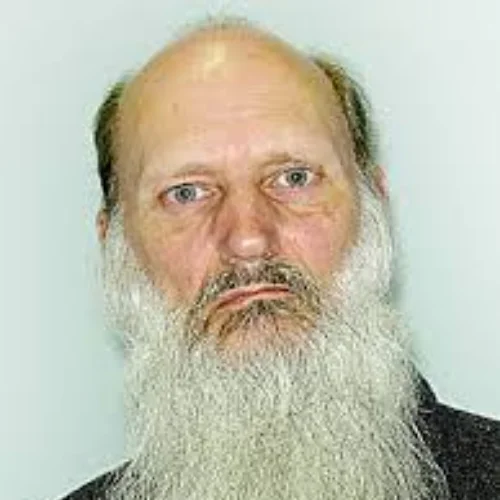
1948 - 2013
Summary
Name:
Derek Ernest PercyYears Active:
1965 - 1969Birth:
September 15, 1948Status:
DeceasedClass:
Serial KillerVictims:
1Method:
Stabbing / Strangulation / MutilationDeath:
July 23, 2013Nationality:
Australia1948 - 2013
Summary: Serial Killer
Name:
Derek Ernest PercyStatus:
DeceasedVictims:
1Method:
Stabbing / Strangulation / MutilationNationality:
AustraliaBirth:
September 15, 1948Death:
July 23, 2013Years Active:
1965 - 1969“I could have done it but I can’t remember.”
— Derek Ernest Percy
Derek Ernest Percy was born on September 15, 1948, in Strathfield, New South Wales, Australia. He grew up in a family with four children. His father worked for the railways, and they lived in various places as his father moved for work. In 1954, the family moved to Chelsea and then to Warrnambool in 1958. He moved again to Mount Beauty in 1961.
In school, Derek was described as intelligent but also as a boy who kept to himself. He had few friends and did not show much interest in sports or social activities. Instead, he spent a lot of time alone, which caused some concern among his parents. They were particularly protective of him after losing another child, which may have influenced their parenting style.
Derek's behavior raised some flags during his teenage years. He was suspected of stealing women's underwear in a strange act referred to locally as "snowdropping." Around this time, he also exhibited odd behavior, such as wearing women's clothing and slashing at garments with a knife. His interest in violent and sexual themes began to emerge in his writings during this period.
Derek did not complete his education as planned. He failed his year 11 exams and left school in 1966. Following this, he initially tried working at his father's petrol station. He joined the navy later that year, where he was described as a model recruit and performed well in his training. However, he started to develop disturbing fantasies that he later documented in graphic detail.
His military service allowed him to travel and explore different parts of Australia, including locations where later child abductions and murders occurred. His time in the navy coincided with a series of unsolved cases involving missing children. He was noted to be in areas where these events took place, raising suspicions about his involvement.
Percy was eventually arrested in 1969 for the murder of a young girl named Yvonne Tuohy. He claimed he couldn't remember his actions during the crime. Following his arrest, hospitals classified him as mentally unfit to stand trial, and he was sent to a psychiatric facility instead of prison.
Derek Ernest Percy murdered Yvonne Elizabeth Tuohy on July 20, 1969, near a beach in Warneet, Victoria, Australia. The victim was a twelve-year-old girl, and on that day, she was with her friend Shane Spiller. Percy, who was twenty-one years old and a naval rating, approached the children, stabbed Yvonne with a knife, and abducted her. Shane managed to escape by threatening Percy with a tomahawk.
After the abduction, Shane quickly reported the incident to the police, providing a description of Percy, his car, and details about a naval badge on the vehicle. This information helped police locate Percy at HMAS Cerberus just hours later. They found him washing blood from his clothes, and he was arrested.
Percy was found to be insane during the trial that followed. Experts believed he acted in a frenzy and later experienced shock at his actions. The body of Yvonne Tuohy was eventually found ten kilometers away from the beach where she was taken. It was discovered that Percy had difficulty recalling the details of the crime, and his memory seemed to be fading. He was later declared criminally insane, found not guilty by reason of insanity, and sentenced to be detained indefinitely.
While in prison, Percy was seen as a model inmate and participated in various activities. He worked in the printing industry and managed to keep himself in good shape. However, he also kept to himself and did not have visitors. Throughout the years, he continued to be a suspect in several other child abductions and murders, including the Beaumont children, who went missing in Adelaide in 1966, and the murders of several young girls.
In the years following his incarceration, there were ongoing concerns about the possibility of his release. In 1998, there were fears that Percy could be freed after he had served twenty-five years in detention. However, reviews by judges consistently deemed him a danger to the public and denied any requests for release. Multiple psychiatric evaluations labeled him as having sadistic tendencies with a particular interest in harming children.
Percy underwent a one-to-one sex offenders' program in 2004, during which he sought possible parole, but reports indicated he may not actually suffer from a mental illness. Instead, he was described as having severe personality issues and a sadistic fantasy life. Those who evaluated him believed he posed a significant threat and should not be transferred to a less secure facility.
In the years after the murder, there were further investigations into Percy's potential involvement in other unsolved cases from the 1960s. Police re-examined his connections to various child abduction cases, including that of Linda Stilwell, who disappeared in 1968. Despite attempts to question him about these cases, Percy often claimed he could not remember any details.
In 2005, Percy was subpoenaed to give evidence concerning the murder of Simon Brook, a three-year-old boy who had been killed in Sydney in 1968, and he faced questions about his connection to numerous other unsolved child murders. His claims of memory loss continued, and he made no admissions during these interrogations.
Derek Percy remained incarcerated until his death in 2013, and many of the details surrounding the full extent of his crimes may never have been uncovered. He took potential details of other murders to the grave, as he consistently avoided taking full responsibility or providing information to the authorities regarding other possible victims.
