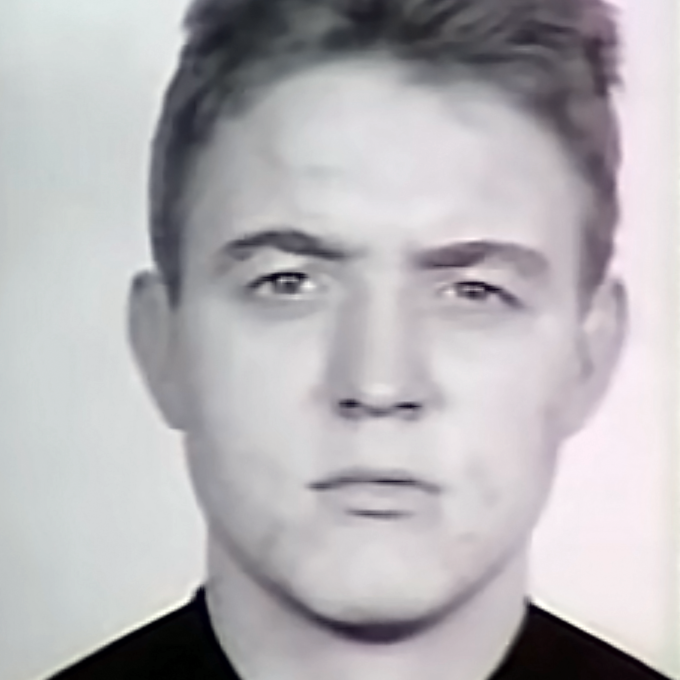
1942 - 2005
Summary
Name:
Dennis Manaford WhitneyYears Active:
1960Birth:
August 15, 1942Status:
DeceasedClass:
MurdererVictims:
7Method:
Shooting / BludgeoningDeath:
April 24, 2005Nationality:
USA1942 - 2005
Summary: Murderer
Name:
Dennis Manaford WhitneyStatus:
DeceasedVictims:
7Method:
Shooting / BludgeoningNationality:
USABirth:
August 15, 1942Death:
April 24, 2005Years Active:
1960Date Convicted:
June 30, 1960Dennis Manaford Whitney was born on August 15, 1942, and grew up in Victorville, California. He lived with his family and spent his early years in the high desert town, a region characterized in the mid-20th century by suburban sprawl and working-class communities. Though not extensively documented, reports suggest Whitney began to show troubling behavioral patterns at a young age. He reportedly expressed a desire to become involved in criminal activity, particularly robbery, and gravitated toward illegal subcultures in his teen years.
At the time of his killing spree, Whitney was only 17 years old. Despite his age, he demonstrated a high degree of mobility and violence during his cross-country rampage, using stolen cars, robbery funds, and the vulnerability of isolated gas stations to facilitate his crimes. He was not known to have a prior criminal record before the events of early 1960, and there is no indication he received formal psychiatric care before or during his incarceration.
Dennis Whitney’s killing spree began on February 12, 1960, in his hometown of Victorville, California. He entered a local gas station and robbed Jim Ryan, the attendant on duty. After a brief exchange, Whitney shot Ryan to death, escaping with a mere $30. This marked the beginning of a violent month-long spree that would leave seven people dead across three states.
Whitney then made his way to Phoenix, Arizona, where on February 20, he murdered 55-year-old Ira Lee Hardison and 40-year-old Spencer Frazier within hours of each other. He stole Frazier’s vehicle and used it to travel southeast. When the car broke down in Tucson the next day, Whitney once again targeted a gas station, killing 27-year-old Glen B. Smith and stealing $104 to fund his next move.
Using the money to hitchhike across the country, Whitney arrived in Miami, Florida, by February 24, 1960. Four days later, on February 28, he shot and killed 21-year-old Ken Mezzarno, a gas station operator. On February 29, he struck again, killing 53-year-old Arthur Keeler during a robbery that netted him another $50. These attacks began to draw police attention, as the profile of the suspect became clearer.
On March 2, Whitney attempted to kill 28-year-old Jack Beecher, another filling station employee. Beecher survived the attack and was able to provide police with a description of the suspect, a red-haired, teenage male , which was critical in narrowing down the investigation.
Whitney’s final known victim was 62-year-old Virginia Selby, abducted from a parking lot on March 4, 1960. He transported her to a secluded location where he bludgeoned and shot her to death, using both a claw hammer and his firearm. Reports indicate that Selby fought back, leaving Whitney with visible injuries on his hands, which would later help police link him to the crime.
On March 5, authorities arrested Whitney, who was already under suspicion for Selby’s murder. During questioning, he confessed not only to the Miami killings but also admitted to the earlier murders in California and Arizona. The scale and randomness of the violence shocked communities across the western and southern United States.
Whitney was formally charged with two murders such as those of Arthur Keeler and Virginia Selby. Though he avoided the death penalty for Selby’s murder, he was sentenced to death on June 28, 1960, for killing Keeler. His demeanor during the verdict was reportedly dazed, and even his defense attorneys expressed surprise that the jury had returned a unanimous death sentence against a teenager.
However, Whitney would not face execution. In 1972, following the landmark Furman v. Georgia ruling that declared the existing death penalty statutes unconstitutional, Whitney’s sentence was commuted to life imprisonment. He remained in the Florida prison system for the remainder of his life and died of unspecified natural causes on April 24, 2005, after spending 44 years behind bars.
