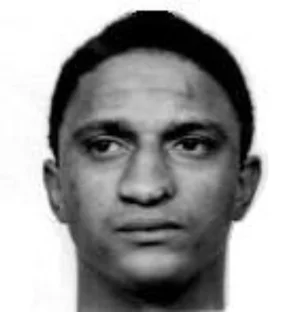
1962 - 2000
Summary
Name:
David HicksYears Active:
1988Birth:
January 15, 1962Status:
ExecutedClass:
MurdererVictims:
1Method:
BludgeoningDeath:
January 20, 2000Nationality:
USA1962 - 2000
Summary: Murderer
Name:
David HicksStatus:
ExecutedVictims:
1Method:
BludgeoningNationality:
USABirth:
January 15, 1962Death:
January 20, 2000Years Active:
1988Date Convicted:
January 30, 1989“Hey, don’t y’all worry about me, okay?”
— David Hicks
David Hicks was born on January 15, 1962, in Freestone County, Texas. Texas Department of Criminal Justice records list him as Black, 5 feet 8 inches tall, 148 pounds, with black hair and brown eyes. His listed education level was 11 years, and his prior occupation was laborer. TDCJ records show that he was 26 years old at the time of the offense and was received on Texas death row on February 2, 1989.
Before the murder of Ocolor Hegger, Hicks had a prior prison record. TDCJ lists a three-year sentence for aggravated assault, with a prison receipt date of September 9, 1982, and discharge on June 17, 1983. TDCJ also lists a 10-year sentence for burglary, kidnapping, and fleeing a police officer, with a prison receipt date of May 23, 1986, and parole on August 19, 1987.
By April 1988, Hicks was living in the rural Teague area of Freestone County. His grandmother, Ocolor Hegger, lived in a small home outside Teague. Hicks and other relatives were familiar with her home, and family members knew that a hammer was usually kept hanging inside a kitchen cabinet. That hammer later became important evidence after Hegger was found dead and the tool was missing from its usual place.
On the evening of April 25, 1988, David Hicks and his cousin Lester Busby visited Ocolor Hegger at her home outside Teague, Texas. As they arrived, they spoke with another grandson, Eddie Branch, who was leaving after his usual visit with Hegger. Hicks and Busby stayed inside Hegger’s home for about 10 to 15 minutes and left at around 7:15 p.m. When they left, Hegger was watching television.
After leaving Hegger’s house, Hicks and Busby went to the home of Ethel and Robert Porter, where they visited with others. Hicks briefly left to eat at his father’s house, then returned. Hicks, Busby, and another man later bought beer and returned to the Porters’ home. Eventually, Hicks and Busby went to Busby’s house, which was next door to Hegger’s home. At about 9:30 p.m., Hicks left Busby’s house and said he was going home. Busby went inside and did not watch him leave.
The next morning, April 26, 1988, a neighbor found Ocolor Hegger dead in her kitchen at around 9:15 a.m. She was lying in a pool of blood. Her head and neck had been struck repeatedly with a blunt instrument, and she had been sexually assaulted. The autopsy showed massive blunt-force injuries, at least eight blows, a superficial stab wound to the neck, and numerous abrasions and contusions. The cause of death was blunt-force trauma to the head and neck.
Investigators searched Hegger’s home and the surrounding area. Family members noticed that the hammer normally kept inside her kitchen cabinet was missing. Police searched the area, including Busby’s yard, but did not find it at first. On May 8, 1988, about two weeks after the murder, Busby found the missing hammer in his yard. Both Busby and a deputy later testified that the hammer had not been there during the earlier search. Forensic testing showed blood on the hammer, but the blood could not be typed as human or animal.
The Texas Court of Criminal Appeals later noted that the evidence did not conclusively establish the exact weapon that caused the fatal blows. Some injuries were consistent with the hammer, while other evidence suggested that a heavy block of wood could also have been used. Because of that uncertainty, the court upheld the wording that Hicks caused Hegger’s death by beating and striking her with a blunt instrument whose exact nature was unknown to the grand jury.
The case remained unresolved until August 1988, when Hicks was arrested on an outstanding misdemeanor theft warrant. Clothing taken from his car had presumptive blood evidence, and DNA testing later linked him to semen recovered from the victim’s body. TDCJ’s offender summary states that prosecutors later discovered that Hicks’s DNA matched semen found in the victim.
DNA evidence became a major issue in Hicks’s trial and appeal. In 1989, the use of DNA evidence in criminal trials was still relatively new. The Texas Court of Criminal Appeals reviewed the admissibility of the DNA evidence and affirmed the trial court’s decision to admit it. The court noted testimony from State witnesses that the DNA method used was accepted in the scientific community and that the testing excluded all suspects except Hicks.
The State also presented jailhouse testimony. Two inmates testified that Hicks asked how to remove blood from clothing and how many times clothing had to be washed to remove traces of blood. Another inmate testified that Hicks admitted killing his grandmother and said he had used a knife, a fact that was not widely known at the time.
Hicks was indicted in Freestone County for capital murder, accused of killing Ocolor Hegger while committing or attempting to commit aggravated sexual assault. He pleaded not guilty. On January 30, 1989, a jury convicted him of capital murder. On February 1, 1989, the trial court sentenced him to death.
Hicks appealed automatically to the Texas Court of Criminal Appeals. On March 31, 1993, the court affirmed his conviction and death sentence. The court rejected his challenges to the DNA evidence, the sufficiency of the evidence concerning the murder weapon, and other trial issues. The United States Supreme Court denied certiorari on June 20, 1994.
Hicks continued to challenge his conviction and sentence through state and federal habeas proceedings. In 1999, the United States Court of Appeals for the Fifth Circuit denied his request for a certificate of appealability. The Fifth Circuit described the case as a Texas capital conviction for sexually assaulting and murdering his grandmother and found no basis to allow the habeas appeal to proceed.
Hicks maintained his innocence while on death row and claimed that other evidence had been overlooked. Execution reporting states that he released a written statement before the execution proclaiming his innocence. However, his appeals did not stop the sentence, and no court overturned the conviction.
David Hicks was executed by lethal injection in Huntsville, Texas, on January 20, 2000. TDCJ lists him as execution number 202 in Texas since the state resumed executions, with TDCJ number 930, age 38, from Freestone County. He was pronounced dead at 7:29 p.m.
