1960 - 1999
Summary
Name:
Darrick Leonard GerlaughYears Active:
1980Birth:
June 17, 1960Status:
ExecutedClass:
MurdererVictims:
1Method:
Stabbing / Run over repeatedly with a carDeath:
February 03, 1999Nationality:
USA1960 - 1999
Summary: Murderer
Name:
Darrick Leonard GerlaughStatus:
ExecutedVictims:
1Method:
Stabbing / Run over repeatedly with a carNationality:
USABirth:
June 17, 1960Death:
February 03, 1999Years Active:
1980Date Convicted:
December 19, 1980“How do you feel when you kill game?”
— Darrick Leonard Gerlaugh
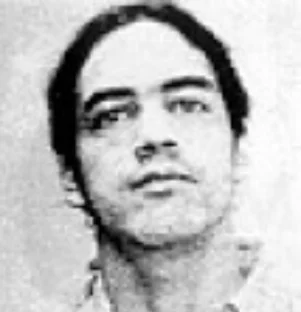
Darrick Leonard Gerlaugh was born on June 17, 1960. A member of the Gila River Indian Community, he grew up away from that community in a military family, with an Anglo father and a Pima mother, and knew relatively little about traditional Native practices in his youth. He became involved in drugs and alcohol as a young man and, at the time of the murder, was 19 years old and on probation for a prior robbery conviction.
On January 24, 1980, Gerlaugh and two friends, Joseph Encinas and James Matthew Leisure, all residents of Chandler, Arizona, were hitchhiking toward Phoenix and had agreed beforehand to rob whoever picked them up. Shortly before midnight, 22-year-old Scott Schwartz, who walked with the aid of a leg brace and crutches due to a leg injury, offered them a ride. Once inside the car, Gerlaugh suddenly drew a firearm and forced Schwartz to drive to a deserted area on the outskirts of Mesa.
When the group got out of the car and Gerlaugh demanded money at gunpoint, Schwartz briefly managed to wrestle the gun away and pointed it back at his attackers, pulling the trigger — but the gun was not loaded, and it failed to fire. Gerlaugh reportedly taunted him, "There's no bullets in the gun," before he and the others overpowered Schwartz. Gerlaugh had Encinas and Leisure hold Schwartz down on the road while he got into Schwartz's own Lincoln Continental and drove it over him multiple times, at one point positioning the car's left rear tire directly on Schwartz's body and revving the engine so the spinning wheel would kill him. When Schwartz still appeared to be alive afterward, Gerlaugh and Leisure stabbed him 30 to 40 times in the head, neck, and shoulders with a screwdriver. The group hid Schwartz's body in a nearby field, took $36 from him, and drove off in his car.
Gerlaugh and Encinas were tried jointly and convicted of first-degree murder, armed robbery, and kidnapping. Leisure pleaded guilty to first-degree murder separately; prosecutors later testified that this plea offer was extended specifically because Leisure's own confession to the murder had been suppressed on legal grounds, leaving only a palm print recovered from Schwartz's car months later as evidence against him. Trial courts found Gerlaugh had acted as the leader of the group and had taken all the proceeds of the robbery himself, making him the most culpable of the three; Encinas and Leisure each received life sentences, while Gerlaugh alone was sentenced to death for the murder on February 11, 1981, in addition to concurrent 21-year sentences for armed robbery and kidnapping, which ran consecutively with a separate 35-year-to-life sentence imposed for violating his prior robbery probation.
At Gerlaugh's presentencing hearing, his own defense attorney noted that reports from probation officers found no particular remorse in him at the time, while also cautioning the court not to weigh this too heavily given the limited insight such reports could offer. On later federal appeal, the Ninth Circuit Court of Appeals characterized the crime starkly, writing: "Darrick Gerlaugh sentenced himself to death when, while on probation for robbery, he mounted and led a savage and relentless attack on Scott Schwartz designed to kill his victim and to save himself from prison. Gerlaugh knew full well from previous experiences with the law what awaited him if he left a live victim behind."
Gerlaugh's case went through multiple rounds of state and federal appeal over nearly two decades, including three separate Arizona Supreme Court opinions (State v. Gerlaugh, 134 Ariz. 164 (1982); 135 Ariz. 89 (1983); and 144 Ariz. 449 (1985)) and federal habeas corpus review (Gerlaugh v. Lewis, 898 F.Supp. 1388 (D. Ariz. 1995); Gerlaugh v. Stewart, 129 F.3d 1027 (9th Cir. 1997)), all of which ultimately upheld his conviction and sentence. In 1987, while incarcerated, Gerlaugh was stabbed twice in the back by a fellow inmate as prisoners returned to their cells from breakfast.
Over his roughly 18 years on death row, Gerlaugh pursued a spiritual path to reconnect with his Pima and broader Native American heritage, participating in nine sweat lodge ceremonies over 15 years. Ahead of his execution, his spiritual adviser, Lenny Foster — director of the Navajo Nation Corrections Project and a coordinator for the National Native American Prisoners' Rights Advocacy Coalition — helped secure permission for Gerlaugh to undergo a purification sweat lodge ceremony on prison grounds. This request had previously been denied to five other Native American death row inmates in Arizona on security grounds; Arizona Department of Corrections Director Terry L. Stewart explained the decision to grant it, noting, "If he were a Catholic, we could in essence bring the religious practice to him if he wanted to participate in any of the sacraments. We cannot bring the sweat lodge to him." Gerlaugh became the first Native American inmate under an active death warrant in the United States permitted this ceremony as part of preparation for execution.
The ceremony took place on Saturday, January 30, 1999, with Foster present throughout, since outside witnesses were otherwise barred; Gerlaugh spent about two hours praying and singing traditional songs. Foster, who later spoke on Gerlaugh's behalf since Gerlaugh himself declined all interview requests, described the ceremony as providing "one last opportunity to cleanse his mind and body and purify, to make things right with his Creator," adding that Gerlaugh made prayers for both his own family and for his victim's family. A few days later, Gerlaugh also took part in a separate pipe ceremony, a sacred Native American ritual for connecting the physical and spiritual worlds. Foster said Gerlaugh had expressed deep remorse many times over what he had done.
Darrick Leonard Gerlaugh was executed by lethal injection at the Arizona State Prison in Florence, Arizona, on February 3, 1999, becoming the first Native American executed in Arizona since the state reinstated the death penalty in 1976. His final meal consisted of a New York steak cooked medium rare with Worcestershire sauce, two eggs, eight strips of bacon, two slices of buttered toast, a half-pint of peppermint ice cream, and 16 ounces of apple juice.
