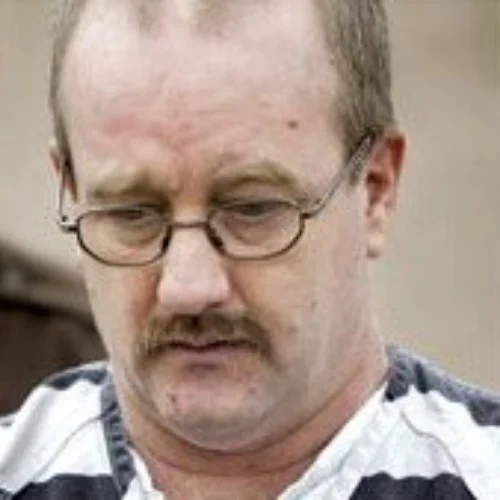
Summary
Name:
Daniel M. WolosonYears Active:
1981Status:
ImprisonedClass:
MurdererVictims:
1Method:
StrangulationNationality:
USASummary: Murderer
Name:
Daniel M. WolosonStatus:
ImprisonedVictims:
1Method:
StrangulationNationality:
USAYears Active:
1981Date Convicted:
March 18, 2006Daniel M. Woloson was born in 1959. Not much is known about his early life or childhood. He grew up in a time when many children had to navigate a changing world. Details about his family background, education, and upbringing are not widely available in public records.
During his teenage years, Woloson faced challenges that would shape his future. He had troubles with the law as a young adult. By the age of 22, he had already been involved in criminal activities. In 1979, he was convicted of burglary and served time for that crime. After his release, he was placed on parole.
Woloson's life continued to be marked by legal issues. He remained on the radar of law enforcement through his parole status, which created a pattern of instability in his life. He did not finish his education or pursue a stable career path. Instead, he worked various jobs, including maintenance work at an apartment complex in Carbondale, Illinois.
In 2004, advancements in technology would lead to his connection to a long-unsolved case. Until then, he lived in Michigan with no sign of being the suspect in a brutal crime committed in 1981.
On August 17, 1981, Susan Schumake, a 21-year-old student at Southern Illinois University Carbondale, was raped and murdered. She was using a shortcut across campus, known at that time as the Ho Chi Minh Trail. Following her death, her body was found between the railroad tracks and Highway 51.
The investigation initially focused on another suspect, John Paul Phillips, who was already a convicted killer. However, he was later ruled out through DNA testing. Over the years, several other suspects were also considered but were excluded from the investigation.
In September 2004, Daniel Woloson was arrested in Michigan, nearly 23 years after the murder. Advances in DNA technology played a crucial role in identifying him as the prime suspect. A DNA profile from the crime scene showed that his DNA matched that of the unknown male found in Schumake’s body, narrowing it down to one in 290 million people.
The trial for Woloson began after his arrest. During the four-day trial, the jury heard testimonies from a total of 19 witnesses, including retired police officers who had worked on the case. The prosecution centered its case on the DNA evidence linking Woloson to the crime.
On March 18, 2006, after deliberating for less than two hours, the jury found Woloson guilty of first-degree murder. He was sentenced to 40 years in prison on April 26, 2006. The case brought closure to Susan Schumake's family, who had waited decades for justice.
