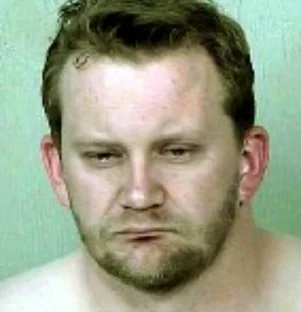
1973 - 2013
Summary
Name:
Dale HausnerNickname:
The Serial ShooterYears Active:
2005 - 2006Birth:
February 04, 1973Status:
DeceasedClass:
Serial KillerVictims:
6Method:
ShootingDeath:
June 19, 2013Nationality:
USA1973 - 2013
Summary: Serial Killer
Name:
Dale HausnerNickname:
The Serial ShooterStatus:
DeceasedVictims:
6Method:
ShootingNationality:
USABirth:
February 04, 1973Death:
June 19, 2013Years Active:
2005 - 2006Date Convicted:
March 13, 2009“I’m willing to accept my punishment like a man without blaming anybody.”
— Dale Hausner
Dale Shawn Hausner was born on February 4, 1973, in the United States. Before becoming known as one of the men connected to the Phoenix-area “Serial Shooter” case, he worked ordinary jobs and presented himself publicly as someone involved in boxing and media work.
Hausner worked as a custodian at Phoenix Sky Harbor International Airport and also worked around boxing events as a photographer and boxing-related media figure. Reports described him as a former janitor who also took photographs for boxing websites, announced or worked around boxing events, and sought attention through side work connected to entertainment and media.
Before his arrest, Hausner lived in the Phoenix metropolitan area. He was divorced and had children. Public reports stated that two of his young sons died in a car accident in the 1990s. He also had a young daughter who was present at his apartment when police arrested him and Samuel Dieteman in 2006.
Hausner’s life before arrest did not fit the image many people around him expected from a serial offender. Some acquaintances later described him as polite, social, or involved in normal activities. Others said his behavior changed in the months before his arrest. He spent time with Samuel John Dieteman, a man who became his roommate and co-defendant. Dieteman later testified against Hausner and described their late-night drives through the Phoenix area.
The crimes later linked to Hausner became known as the “Serial Shooter” attacks. They occurred during a period when Phoenix residents were already alarmed by another unrelated serial offender known as the Baseline Killer. The two investigations overlapped in time, causing widespread public fear across the Phoenix metropolitan area.
The Serial Shooter attacks were usually carried out late at night or early in the morning. Victims were often pedestrians, bicyclists, or people outside alone. Animals were also targeted, including dogs and horses. The attacks appeared random and were usually carried out from a moving vehicle. Prosecutors later argued that Hausner sought attention from the crimes and followed news coverage about the attacks.
Between 2005 and 2006, the Phoenix metropolitan area experienced a series of random shootings that targeted pedestrians, bicyclists, animals, and people outside at night. The attacks became known as the Serial Shooter case. Police initially believed one person may have been responsible, but later concluded that more than one person was involved.
Dale Hausner was ultimately convicted of six murders and many other crimes connected to the shooting spree. His co-defendant and former roommate, Samuel John Dieteman, later pleaded guilty to two murders and testified against him. Investigators also examined the possible involvement of Hausner’s brother, Jeff Hausner, in related violence.
The first murder for which Hausner was convicted was the killing of David Estrada on June 29, 2005, in Tolleson, Arizona. Estrada was 20 years old. That same date was also connected to animal shootings. Over the following months, more people and animals were shot in different parts of the Phoenix area.
On November 11, 2005, Nathaniel Shoffner was killed. Case accounts state that Shoffner was shot after intervening when a dog was being targeted. His killing became one of the murders included in Hausner’s convictions.
On December 29, 2005, Jose Ortiz and Marco Carillo were fatally shot in Phoenix. Another man was also wounded during that same period. The attacks continued to show a pattern of random nighttime violence against people outdoors.
In 2006, the shootings continued and increased public fear. On May 2, 2006, Claudia Gutierrez-Cruz, a 20-year-old restaurant worker, was shot after getting off a bus in Scottsdale. Samuel Dieteman later testified that he fired the shot while Hausner drove. Although Dieteman admitted direct involvement in that killing, Hausner was still convicted because of his role in the murder.
The final murder tied to the convictions was the killing of Robin Blasnek on July 30, 2006, in Mesa, Arizona. Blasnek was 22 years old and was walking from her parents’ home toward her boyfriend’s home when she was shot. Her death was quickly linked to the Serial Shooter investigation through forensic evidence and similarities to the previous attacks.
Police identified Hausner and Dieteman after receiving tips from the public. A tipster named Ron Horton told investigators that Dieteman had spoken about involvement in the shootings. Police placed Hausner and Dieteman under surveillance and monitored their movements. Officers observed them driving late at night and slowing near pedestrians and bicyclists.
Investigators later obtained emergency wiretaps for Hausner’s apartment and car. Recorded conversations captured Hausner and Dieteman discussing the shootings and making statements that prosecutors later used as evidence. Police also recovered physical evidence, including firearms, ammunition, news clippings, a map marked near shooting locations, and items connected to Robin Blasnek’s murder.
Hausner and Dieteman were arrested near their Mesa apartment around midnight on August 3, 2006. After his arrest, Hausner denied involvement and even held a jailhouse press conference, but prosecutors later presented extensive physical evidence, forensic evidence, witness testimony, and recorded statements at trial.
Hausner was charged in multiple indictments with dozens of crimes, including murder, attempted murder, conspiracy, drive-by shooting, aggravated assault, animal cruelty, arson, and firearms offenses. The trial lasted several months. Samuel Dieteman testified for the prosecution and described how he and Hausner drove around at night looking for random people to shoot.
On March 13, 2009, a jury convicted Dale Hausner of six counts of first-degree murder and 74 additional non-capital offenses. He was acquitted of two murder charges and several other counts. The convictions included murders, attempted murders, drive-by shootings, aggravated assaults, animal cruelty, and arson-related charges.
During the penalty phase, Hausner waived the presentation of mitigation evidence after a competency examination. He apologized to his family and victims but also told the jury that he believed the death penalty would help the victims’ families heal. On March 27, 2009, the jury sentenced him to death for each of the six murder convictions.
The Arizona Supreme Court later reviewed the case on automatic appeal. In 2012, the court reversed one animal cruelty conviction but otherwise affirmed Hausner’s convictions and sentences, including the six death sentences.
Dale Hausner was sent to Arizona death row, but he was never executed. On June 19, 2013, he was found unresponsive in his cell at the Eyman state prison complex in Florence, Arizona. He was later pronounced dead. The medical examiner ruled his death a suicide caused by amitriptyline intoxication, meaning he died from an overdose of an antidepressant medication.
Hausner’s final legal status was deceased while under sentence of death. He remains recorded as one of the main offenders in the Phoenix Serial Shooter case, which involved six confirmed murder convictions, many nonfatal shootings, animal cruelty cases, and arsons during a period of public fear in Arizona.
