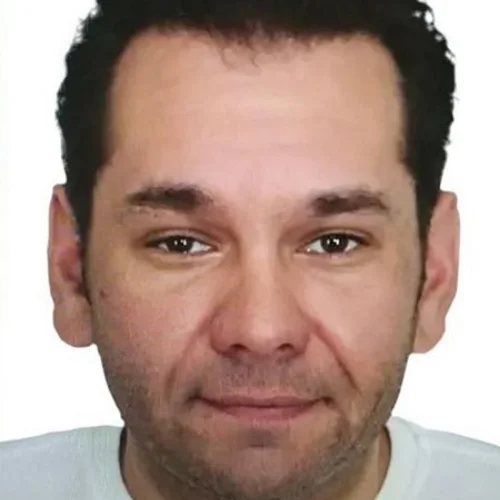
d: 2019
Summary
Name:
Ctirad VitásekYears Active:
2019Status:
DeceasedClass:
Mass MurdererVictims:
7Method:
ShootingDeath:
December 10, 2019Nationality:
Czech Republicd: 2019
Summary: Mass Murderer
Name:
Ctirad VitásekStatus:
DeceasedVictims:
7Method:
ShootingNationality:
Czech RepublicDeath:
December 10, 2019Years Active:
2019“Don’t shoot! I am sick!”
— Ctirad Vitásek
He was 42 years old in December 2019. He lived in the Ostrava region and his parents had a house in Jilešovice, a village near Ostrava.
He had three previous criminal convictions, including one for a violent crime. He had also been hospitalized in a psychiatric ward in the past. Because of those things, he was not allowed to legally own a firearm.
Family and friends said his mental state had been getting worse over a long time. They said it became much worse in September 2019. He became convinced he had a fatal illness, saying he thought he had pancreatic cancer. Doctors carried out tests and examinations that ruled out that cancer, but he kept seeking more medical checks.
About a month before the December 2019 events, he was on sick leave from work while he sought more examinations. His partner asked a doctor to request a psychiatric evaluation because she said he had become hard to live with. A psychiatric evaluation was arranged, but he did not attend it. He had spent time in a psychiatric ward two years earlier after a hospitalization for tetany, a condition that is often linked with depression.
On 10 December 2019, a mass shooting took place at Ostrava University Hospital in Ostrava, Czech Republic. Seven people were killed and two others were injured. The attacker was 42-year-old Ctirad Vitásek. He left the hospital before police arrived and later committed suicide as police closed in. He had three previous criminal convictions and a past psychiatric hospitalization.
He entered the hospital early in the morning and walked through the hallways. He stopped briefly at the cardiology waiting room and the gastroenterology waiting room, both nearly empty. At about 7:15 a.m. he went to the traumatology waiting room on the third floor. There were about thirty people there, many partially immobile or accompanying family members.
He tried to enter the doctor's office, but the doors were locked. He rattled the doors and then stood in the room with an illegal CZ 75B pistol held low by his leg. He raised the pistol to his head for a few seconds but did not pull the trigger. Several witnesses later said there had been no one legally armed inside to stop him then.
He opened fire on the people in the room. After three shots his weapon jammed. An eyewitness said it was clear he was not practiced with a gun. It took him about five seconds to clear the malfunction. He was shaking and gritted his teeth loudly.
After clearing the jam he kept shooting, aiming at victims' heads and necks. Six adults in the waiting room were killed. Two of those killed were off-duty prison guards, one with a leg in a splint and the other accompanying his minor daughter. A third victim had previous law enforcement training. Three other people were injured, and one of them died several days later.
When first responders arrived he had already left the scene. Police received the first emergency call at 7:19 a.m. and a police unit reached the hospital five minutes later. He had driven away in a grey Renault Laguna and at some point removed its registration plates. About three hours later he went to his parents' house in Jilešovice. There he told his mother he had committed the attack and said he would kill himself. His mother called the police and gave his whereabouts and a description of his car.
Police sent a helicopter and ground units and found him near Děhylov. As ground units closed in he shot himself in the head. He was initially conscious and communicated with first responders. He died after about 30 minutes of resuscitation attempts.
Family and friends said his mental state had worsened over a long period and significantly declined from September 2019. He became convinced he had a fatal illness, supposedly pancreatic cancer, but medical tests ruled that out. He sought more medical examinations and his partner asked a doctor to request a psychiatric evaluation. He did not follow through with that evaluation. He had been hospitalized in a psychiatric ward two years before after treatment for tetany.
The gun he used was a CZ 75 pistol that had been made about 30 years earlier as a non-functional cutaway replica for education and training. That cutaway was later illegally modified to full functionality. Police experts said they had not seen a similar conversion before and described it as very sophisticated. The firearm jammed at least once during the attack. Because of his past convictions and psychiatric hospitalization, he was not legally allowed to possess a firearm in the Czech Republic.
