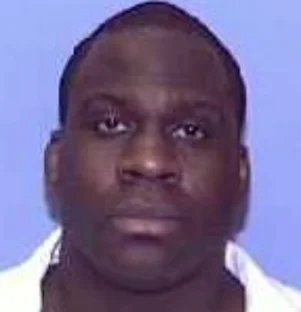
1975 - 2006
Summary
Name:
Corey James JenningsYears Active:
2000Birth:
March 31, 1975Status:
DeceasedClass:
MurdererVictims:
1Method:
ShootingDeath:
April 12, 2006Nationality:
USA1975 - 2006
Summary: Murderer
Name:
Corey James JenningsStatus:
DeceasedVictims:
1Method:
ShootingNationality:
USABirth:
March 31, 1975Death:
April 12, 2006Years Active:
2000Corey James Jennings was born on March 31, 1975, in St. Louis, Missouri. Before his capital murder conviction, he worked as a warehouseman and laborer. Jennings later lived in Harris County, Texas. At the time of the offense, he was 24 years old and lived near the Stop Then Got convenience store in the Spring area of Harris County. Court records indicate that he had no prior prison record before this case.
People who knew Jennings described him as physically distinctive because of his large build and the way he carried himself. Those descriptions later became important because the case against him relied heavily on surveillance footage and recognition by people who knew him.
On the night of March 6, 2000, 20-year-old Quy Quang Lam was working as a clerk at the Stop Then Got convenience store in the Spring area of Harris County, Texas. At approximately 10:30 p.m., a large man entered the store wearing dark clothing, a stocking cap, and a bandana. The man was armed with a gun. He forced Lam into a back room and shot him in the neck. Lam died from the gunshot wound. After the shooting, the robber took approximately $400 from the cash register and left the store.
The crime was recorded by the store’s surveillance camera. Although the video quality was not clear, investigators released images from the recording to local news stations. After the footage aired, several people contacted authorities and identified Corey Jennings as the man shown in the video. Investigators arrested Jennings after receiving those tips. Officers searched the apartment he shared with his wife, Bobbie Jennings. During the search, police recovered clothing similar to what the robber wore, including black clothing, stocking caps, boots, and a bandana. Officers did not find blood on the clothing and acknowledged that no physical evidence directly linked Jennings to the crime.
A key part of the prosecution’s case involved identification testimony. Several witnesses who knew Jennings testified that they believed he was the person shown in the surveillance footage. They based their opinions on his size, build, gestures, and manner of movement. The FBI also enhanced the surveillance video. A video specialist testified that the original recording was of marginal quality but could still allow recognition by people who already knew the person shown.
Jennings’ wife initially gave a sworn statement indicating that she believed her husband was the man in the video. At trial, however, she changed her position and testified that she no longer believed the person shown was Jennings. Other witnesses also gave conflicting testimony, including people who saw a man leaving the store around the time of the robbery.
Despite the defense’s challenge to the identification evidence, the jury convicted Corey James Jennings of capital murder in March 2001. On March 30, 2001, he was sentenced to death by lethal injection in Harris County. He was received by the Texas Department of Criminal Justice on April 11, 2001.
Jennings appealed his conviction and death sentence to the Texas Court of Criminal Appeals. He raised multiple issues, including challenges to the strength of the identification evidence, the admission of witness testimony, and the penalty-phase jury instructions. On June 25, 2003, the Court of Criminal Appeals rejected his claims and affirmed both the conviction and the death sentence.
Jennings remained on Texas death row at the Polunsky Unit in Livingston. His execution date had not been set. On April 12, 2006, he was found dead in his cell during a routine check and was pronounced dead at approximately 8:20 p.m. Prison officials reported that he died of natural causes, though specific medical details were not released publicly.
