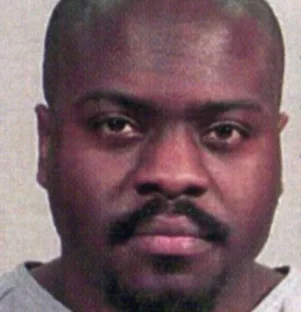
Summary
Name:
Cleamon Demone JohnsonNickname:
Big EvilYears Active:
1991 - 1994Status:
ImprisonedClass:
Serial KillerVictims:
12+Method:
ShootingNationality:
USASummary: Serial Killer
Name:
Cleamon Demone JohnsonNickname:
Big EvilStatus:
ImprisonedVictims:
12+Method:
ShootingNationality:
USAYears Active:
1991 - 1994Date Convicted:
June 8, 2023“I don’t answer to nobody. What I do is what I want to do and when I want to do it.”
— Cleamon Demone Johnson
Cleamon Demone Johnson was born in 1968 and grew up in South Los Angeles, California. He became widely known by the street name “Big Evil,” a nickname that later became closely tied to his public criminal record and media coverage. Johnson was associated with the 89 Family Swans, also described in some reports as the 89 Family Bloods, a Blood-affiliated street gang based around South Central Avenue and nearby streets in South Los Angeles.
Court records described Johnson as a high-ranking member of the 89 Family Swans during a violent period of gang conflict in the early 1990s. The gang’s territory was small, but law enforcement considered it heavily affected by shootings and retaliatory violence. Prosecutors later alleged that Johnson used his position in the gang to direct younger members, enforce discipline, and intimidate people who might cooperate with police.
Johnson’s neighborhood was surrounded by rival Crips sets, and prosecutors said many of the shootings connected to his case came from conflicts between the Bloods and Crips. His defense and people from his neighborhood described him differently, saying he had family support and could be helpful to people who knew him personally. However, investigators argued that his public image in the neighborhood was shaped by fear, because witnesses were often unwilling to speak against him.
By the early 1990s, Johnson had become a major focus of police attention. Detectives believed he was involved in or connected to multiple shootings, but many cases were difficult to prosecute because witnesses were afraid, unavailable, or later killed. Law enforcement eventually formed a task force with federal assistance to investigate the 89 Family and cases linked to Johnson and his associates.
The main case connected to Cleamon Johnson began on August 5, 1991, outside a car wash in South Los Angeles. Peyton Beroit and Donald Ray Loggins were sitting in a parked car when they were shot. Prosecutors alleged that Beroit was targeted because he was connected to a rival Crips gang and was inside 89 Family territory. Witnesses later testified that Johnson told fellow gang member Michael “Fat Rat” Allen to shoot Beroit and that Allen also killed Loggins during the attack.
The case was difficult from the beginning because many people were present, but witnesses were afraid to come forward. Police and prosecutors argued that Johnson’s reputation kept people silent. Years later, testimony from witnesses, including gang member Freddie Jelks, helped revive the case. Jelks testified that he saw Johnson give Allen the weapon used in the shooting.
Johnson was also linked in court records to other shootings from the same period. On September 14, 1991, Tyrone Mosley was killed during a drive-by shooting connected to gang rivalry. Kim Coleman and Kenneth Davis were wounded but survived. Prosecutors alleged that Johnson took part in the attack, but the case later ended without a final conviction against him.
On September 12, 1992, Albert Sutton brought his brother to Johnson’s area. Sutton’s brother was associated with a rival Crips gang, and a shooting followed. Sutton’s brother survived but was seriously injured. Sutton spoke with police and was expected to testify. Four days later, on September 16, 1992, Sutton was shot and killed. Prosecutors later alleged that Johnson ordered his cousin Leon Johnson to kill Sutton because Sutton planned to testify.
Another witness-related killing occurred in June 1994. Georgia Denise “Nece” Jones had testified in a murder case involving another gang member. After that case ended in a mistrial, she was expected to testify again. On June 13, 1994, Jones was shot and killed. Prosecutors argued that Johnson had ordered Reco Wilson to kill her, but an appellate court later ruled that the prosecution could not add that murder charge against Johnson in the same retrial case because of vindictive-prosecution concerns.
In 1997, Johnson and Michael Allen were convicted of the murders of Peyton Beroit and Donald Ray Loggins. The jury recommended the death penalty, and Johnson was sentenced to death. For years, he remained known as one of Los Angeles’ most high-profile gang-related death row inmates.
The case changed in 2011 when the California Supreme Court reversed Johnson’s and Allen’s convictions. The court found that the trial judge had improperly removed a juror during deliberations. Because of that ruling, the convictions and death sentences were set aside, and the case was sent back for retrial.
After the reversal, prosecutors pursued additional charges connected to old murder and attempted murder cases. In 2014, Johnson was charged with five murders: Albert Sutton, Georgia Jones, Donald Ray Loggins, Peyton Beroit, and Tyrone Mosley, along with the attempted murder of Kim Coleman. Johnson challenged the new charges as vindictive prosecution. In 2016, the California Court of Appeal ruled that some added charges had to be dismissed, including those involving Jones, Mosley, and Coleman, but allowed the Sutton-related charge to proceed.
In June 2023, Johnson entered a no contest plea to one count of first-degree murder for the killing of Peyton Beroit. As part of the plea deal, several other counts, including four murder charges, were dismissed. He was sentenced to 25 years to life in state prison. Because he had already spent more than 25 years in custody, he became eligible for parole, although eligibility does not mean release.
Cleamon Johnson’s final confirmed conviction is for the murder of Peyton Beroit. His earlier conviction for the murders of Beroit and Loggins was reversed, and several other killings remain part of the broader allegations and court history rather than final convictions against him.
