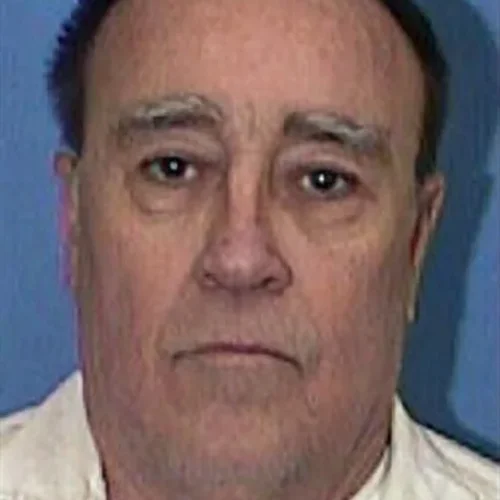
1940 - 2000
Summary
Name:
Claude Howard JonesNickname:
Carl Roy Davis / Butch Jones / Douglas Ray StarkeYears Active:
1976 - 1989Birth:
September 24, 1940Status:
ExecutedClass:
MurdererVictims:
3Method:
ShootingDeath:
December 07, 2000Nationality:
USA1940 - 2000
Summary: Murderer
Name:
Claude Howard JonesNickname:
Carl Roy Davis / Butch Jones / Douglas Ray StarkeStatus:
ExecutedVictims:
3Method:
ShootingNationality:
USABirth:
September 24, 1940Death:
December 07, 2000Years Active:
1976 - 1989"I hope this can bring some closure to y'all. I'm sorry for your loss."
— Claude Howard Jones
Claude Howard Jones was born on September 24, 1940, in Harris County, Texas. Public records indicate that he accumulated a lengthy criminal history spanning more than four decades. His first known conviction occurred in 1959, when he was imprisoned for robbery. Over the following years, Jones repeatedly entered and exited the prison system and developed an extensive record involving violent offenses and property crimes.
Jones served multiple prison sentences in Texas during the late 1950s and early 1960s. According to execution records, he served six years of a nine-year sentence between 1959 and 1963 and later served part of another five-year sentence before being released. He subsequently moved to Kansas, where his criminal behavior escalated further.
In 1976, Jones was convicted in Kansas of murder, robbery, and assault, receiving a life sentence. While incarcerated in Kansas, he committed another homicide by throwing gasoline on a fellow inmate and setting him on fire. Despite these convictions, Jones was eventually granted parole in 1984. He later returned to Texas, where he resumed criminal activity.
By late 1989, Jones had associated himself with Kerry Daniel Dixon Jr. and Timothy Mark Jordan. The trio embarked on a multi-state crime spree involving robberies that culminated in the fatal shooting of a Texas liquor store owner.
On November 14, 1989, Claude Howard Jones and his accomplices, Kerry Dixon and Timothy Jordan, gathered at the home of Jordan's father in Texas. Before leaving, Jordan provided Jones and Dixon with a Taurus .357 Magnum revolver that had been purchased by Jordan's girlfriend because Jordan was prohibited from legally obtaining a firearm.
Later that afternoon, Jones and Dixon drove to Zell's Liquor Store in Point Blank, San Jacinto County, where Allen Hilzendager, the thirty-seven-year-old owner of the business, was working alone. Jones entered the store and asked Hilzendager to retrieve a bottle for him. As Hilzendager turned away from the counter, Jones drew the revolver and shot him three times. Witness testimony later established that one bullet struck Hilzendager in the back, another was fired as he attempted to defend himself with his hands raised, and a final shot struck him while he was already on the floor. The first wound severed his aortic artery and punctured his lung, ultimately causing his death.
Across the highway, Leon Goodson and his fourteen-year-old daughter Wendy witnessed portions of the incident. Wendy observed a pickup truck arrive at the liquor store and watched a man matching Jones's description enter the building. Moments later, she heard three gunshots. The Goodsons later saw the man leave the store hurriedly and get into the passenger side of the truck before it sped away. After checking the store, they discovered Hilzendager lying in a pool of blood and contacted emergency services. Hilzendager was pronounced dead at the scene. Investigators determined that approximately $900 had been stolen from the cash register, although Jones overlooked nearly $7,000 hidden elsewhere in the store.
Three days later, Jones, Dixon, and Jordan robbed a bank in Humble, Texas, obtaining more than $14,000. They used the proceeds to finance a trip to Las Vegas before eventually traveling to Florida. On December 2, 1989, Jones was arrested in Fort Myers, Florida, in connection with bank robbery charges. During the investigation, one accomplice directed authorities to the Trinity River, where the murder weapon was recovered, while Timothy Jordan agreed to testify against Jones in exchange for a reduced sentence.
At trial in August 1990, prosecutors relied on eyewitness testimony, Jordan's statements, and a single hair fragment recovered from the liquor store counter. A Texas Department of Public Safety analyst testified that the hair could have belonged to Jones and excluded several other individuals tested. Jones chose not to testify in his own defense. The jury convicted him of capital murder and sentenced him to death. Dixon received a sixty-year prison sentence, while Jordan received ten years through a plea agreement.
Jones exhausted his appeals over the next decade. In the days leading up to his execution, his attorneys sought a stay to allow mitochondrial DNA testing on the hair evidence that had played a significant role in securing his conviction. The request was denied, and Jones withdrew a last-minute legal filing seeking testing. He did not seek clemency from Texas Governor George W. Bush.
On December 7, 2000, Claude Howard Jones was executed by lethal injection at the Huntsville Unit in Texas. Difficulties establishing intravenous access delayed the execution, and prison personnel ultimately inserted the IV into a vein in his left thigh. Before his execution, Jones addressed members of Allen Hilzendager's family, stating, "I hope this can bring some closure to y'all. I'm sorry for your loss." He then expressed love to his own family and said, "Let's go." Jones was pronounced dead at 6:42 p.m., becoming the fortieth and final inmate executed in Texas during a record-setting year for capital punishment.
