b: 1976
Summary
Name:
Clarence GardnerNickname:
CenoYears Active:
1993Birth:
December 30, 1976Status:
ImprisonedClass:
MurdererVictims:
1Method:
ShootingNationality:
USAb: 1976
Summary: Murderer
Name:
Clarence GardnerNickname:
CenoStatus:
ImprisonedVictims:
1Method:
ShootingNationality:
USABirth:
December 30, 1976Years Active:
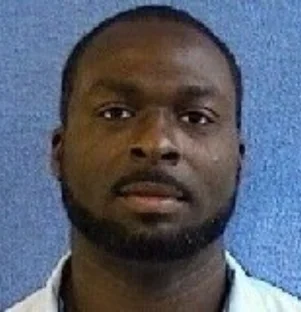
1993Clarence Gardner, known on the street as "Ceno," was born on December 30, 1976. By age 16, he was a member of the Gangster Disciples street gang in Chicago, active in a neighborhood near Calumet High School that sat at the border between Gangster Disciples/Black Disciples territory and that of rival gangs, the Vice Lords and Blackstones.
On the afternoon of October 28, 1993, around 4:55 p.m., Gardner was standing at 79th Street and Carpenter when two fellow Gangster Disciples, Richard Taylor (known as "Tony") and Demitrius Smith (known as "Meechie"), pulled up in a blue car. The three spotted members of the Calumet High School football team, including student manager Joseph Waites, walking nearby toward rival gang territory. Smith asked whether the players were "hooks" slang for Blackstone gang members. Gardner and Taylor, along with a fourth Gangster Disciple, Andre Bridges, approached the group, after a brief, tense exchange in which the players explained they were only planning an "egg fight" and were not gang members, the group dispersed toward the corner of 80th and Carpenter, where roughly fifteen Black Disciples were already gathered.
Smith and Taylor then drove to the middle of the block and got out; Smith charged the football players, igniting a brawl involving at least 50 people. Someone shouted "bust them folks" street slang for "shoot them" several times as the fight broke out. Waites tried to flee but fell and was surrounded and beaten by several Black Disciples, Gardner admitted to police that he joined in, punching Waites three times in the chest as Waites lay curled on the ground. The beating continued for roughly two minutes until Taylor returned from the car carrying a small-caliber automatic pistol and told the others to move aside because he was "fixing to bust" Waites. Gardner said "bust him," and Taylor shot Waites four times, killing him.
Taylor was separately convicted of first-degree murder for personally shooting Waites. Gardner was charged with first-degree murder under Illinois's "accountability" theory of accomplice liability, which holds participants in a common criminal plan equally responsible for the resulting acts of any one of them. At trial, several football players who witnessed the incident, including Waites's own brother, Michael, testified that Gardner had been the one directing the violence from the outset, repeatedly urging Taylor and others to shoot the players. Notably, none of these witnesses named Gardner in their initial statements to police on the day of the shooting — some even initially told police the person shouting "bust them" appeared to be a Black Disciple rather than identifying Gardner specifically — and only implicated him in follow-up interviews weeks later.
Gardner's trial, which began February 15, 1995, was tried before a Cook County jury. The defense sought to call a witness, Luther Donald, a friend of the victim, who would have testified that the "bust him" statement heard as the confrontation began came from inside the car — from Taylor or Smith, not Gardner. When Donald failed to appear on the final scheduled day of testimony, the trial judge denied a request for a short continuance, citing court scheduling concerns and calling the testimony "cumulative." The jury convicted Gardner of first-degree murder, and he was sentenced to 35 years in prison.
The Illinois Appellate Court affirmed Gardner's conviction on direct appeal in 1996, acknowledging "uneasiness" with the trial court's focus on its own scheduling but finding no reversible error, and cautioning lower courts generally that "the race is not always to the swift" when a fair trial is at stake.
Gardner subsequently sought federal habeas corpus relief, arguing the denied continuance and inadequate jury questioning about gang bias had denied him a fair trial. In May 1999, a three-judge panel of the U.S. Court of Appeals for the Seventh Circuit agreed, in a 2–1 decision, finding both constitutional violations and ordering that Gardner be released or retried within 120 days. The state sought rehearing before the full Seventh Circuit; in December 1999, the en banc court vacated the panel's decision and reinstated the district court's original denial of Gardner's petition, upholding his conviction.
In 2000, the Illinois Supreme Court, in an unrelated case, People v. Strain, established that under Illinois's own state constitutional standards (as opposed to the federal standard the Seventh Circuit had applied to Gardner), a trial court's failure to question jurors about gang bias constitutes reversible error whenever gang-related evidence plays a pervasive role in the trial. Gardner filed new state post-conviction petitions in December 2000 and again in December 2001, arguing this new precedent should apply to his case.
