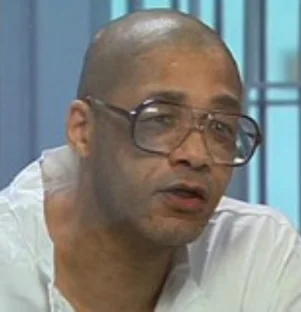
1959 - 2004
Summary
Name:
Charles Laverne SingletonYears Active:
1979Birth:
March 29, 1959Status:
ExecutedClass:
MurdererVictims:
1Method:
StabbingDeath:
January 06, 2004Nationality:
USA1959 - 2004
Summary: Murderer
Name:
Charles Laverne SingletonStatus:
ExecutedVictims:
1Method:
StabbingNationality:
USABirth:
March 29, 1959Death:
January 06, 2004Years Active:
1979Date Convicted:
October 30, 1979“I was going to speak, but I wrote it down. I’ll leave it up to the warden.”
— Charles Laverne Singleton
Charles Laverne Singleton was born on March 29, 1959. He grew up in a challenging environment, which shaped his early life. Singleton was diagnosed with schizophrenia later in his life, but details about his early childhood and family background are not widely documented.
In June 1979, when Singleton was 19 years old, he committed a robbery that led to the murder of a grocery store owner. His life took a dramatic turn as he faced the consequences of this action. After being convicted, he spent more than two decades on death row in Arkansas.
During his time in prison, Singleton’s mental health was a topic of discussion. He was diagnosed with paranoid schizophrenia, which raised questions about his mental state at the time of the crime and throughout his incarceration. The complexities of his mental health influenced legal arguments regarding his competency and the methods used to medicate him prior to his eventual execution.
Singleton was executed on January 6, 2004. His life story reflects a troubled trajectory marked by severe mental illness and criminal activity, culminating in a significant legal case surrounding the death penalty and mental health.
Mary Lou York was murdered in her grocery store, known as York's Grocery, on June 1, 1979. She was stabbed in the neck by Charles Laverne Singleton, who had entered the store around 7:30 p.m. on that day. Witnesses reported seeing Singleton and hearing Mary Lou scream. One of the witnesses, Patti Franklin, was related to Singleton. Shortly after entering the store, Mary Lou shouted for help, saying, "Patti, go get help, Charles Singleton is killing me." Another witness, Lenora Howard, saw Singleton leave the store and then saw Mary Lou, who was injured and crying, come to the front door.
First responders arrived soon after the incident. Police Officer Strother was the first to reach Mary Lou, who was found lying in a pool of blood. She informed Officer Strother that Singleton had attacked her during what he claimed was a robbery. As she was taken to the hospital, she repeatedly identified Singleton as her assailant, stating she was dying and that he was responsible for her injuries. Sadly, Mary Lou died from her wounds before reaching the emergency room.
Following the murder, evidence against Singleton was overwhelming. He was identified by several witnesses, and during the investigation, the police found an empty money bag in the store, suggesting that robbery was the motive behind the stabbing.
Singleton was arrested, tried, and subsequently convicted of capital felony murder. Throughout the legal proceedings, he was diagnosed with schizophrenia, complicating the legal process surrounding his appeal and execution. After many years on death row in Arkansas, including extensive legal battles regarding his mental health status, Singleton was executed by lethal injection on January 6, 2004. His final meal consisted of various foods, and he prepared a written statement that included many religious references. Singleton was pronounced dead shortly after the execution began.
