
1964 - 2013
Summary
Name:
Byron Anthony LooperNickname:
Low TaxYears Active:
1998Birth:
September 15, 1964Status:
DeceasedClass:
MurdererVictims:
1Method:
ShootingDeath:
June 26, 2013Nationality:
USA1964 - 2013
Summary: Murderer
Name:
Byron Anthony LooperNickname:
Low TaxStatus:
DeceasedVictims:
1Method:
ShootingNationality:
USABirth:
September 15, 1964Death:
June 26, 2013Years Active:
1998Date Convicted:
September 23, 2000Byron Anthony Looper was born on September 15, 1964, in Tennessee. He later spent part of his youth in Georgia. As a young man, he attended the United States Military Academy at West Point, but left after receiving an honorable discharge following a knee injury. Afterward, he moved into politics and public life.
Looper first ran for office in Georgia as a Democrat but lost. He later worked in politics and became involved in campaign activity before returning to Tennessee. By the 1990s, he had changed political parties and identified as a conservative Republican. In 1996, he legally changed his middle name from Anthony to “Low Tax”, using the unusual name change as part of his political image.
That same year, Looper was elected Putnam County Tax Assessor. He was known for an aggressive public style and repeated conflict with local officials. During his time in office, he faced accusations involving official misconduct and misuse of his position. In March 1998, he was indicted on charges including official misconduct, theft of services, and official oppression. Looper claimed the charges were politically motivated.
In 1998, Looper ran for two offices at the same time: the Republican nomination for Tennessee’s 6th Congressional District and the Republican nomination for the Tennessee State Senate. He lost the congressional primary but became the Republican nominee for the state senate race because he was the only Republican candidate on the ballot. His opponent in the general election was longtime Democratic State Senator Tommy Burks.
Burks was a well-known conservative Democrat, farmer, and experienced legislator. Before the murder, the race was expected to be uneventful, with Burks strongly favored to win. Looper’s campaign became widely remembered because he was the only candidate listed on the ballot after Burks’s death, due to Tennessee election law at the time.
On the morning of October 19, 1998, Tommy Burks was at his farm in Cumberland County, Tennessee. He had been speaking with farmhand Wesley Rex about work that needed to be done. Both men noticed a black car driving near the farm several times that morning. The driver was described as wearing sunglasses and black gloves.
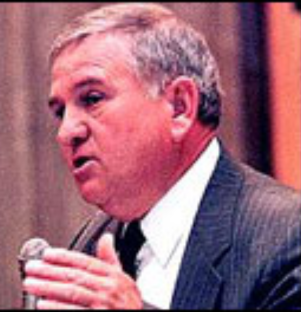
Shortly afterward, Burks was found dead in his pickup truck. He had been shot once in the head. At first, investigators had no clear personal motive for the killing. Burks was widely respected and had no known local enemy with an obvious reason to murder him. Suspicion later turned to Byron Looper after Wesley Rex saw Looper’s photograph on television and identified him as the man he had seen driving away in the black car.
After the murder, Looper disappeared from Tennessee. He went to Hot Springs, Arkansas, where he met with a childhood friend, Joe Bond, a Marine recruiter. Bond later became an important prosecution witness. According to the prosecution, Looper had developed a friendship with Bond months earlier partly because he wanted Bond’s knowledge of firearms. Bond testified that Looper talked about killing his political opponent and about hiding or changing evidence connected to the car used in the crime.
Looper was arrested on October 23, 1998, four days after the murder. He was charged with first-degree murder. His trial was delayed several times, partly because he changed lawyers repeatedly and filed many pretrial motions. The court eventually used jurors from Sullivan County because of heavy local publicity in Cumberland County.
At trial, the prosecution presented several major pieces of evidence. Wesley Rex identified Looper as the man seen leaving the area in the black car. Joe Bond testified about Looper’s statements after the murder. Political consultants also testified that Looper had previously talked about wanting to win a political race by killing an opponent. A Tennessee Bureau of Investigation expert testified that tire tracks at the scene matched Looper’s Audi.
The defense attempted to argue that Looper was not at the farm when Burks was killed. Some proposed alibi witnesses were not allowed to testify before the jury because they had not been properly disclosed under Tennessee’s notice rules. The jury rejected the defense case.
On August 23, 2000, Byron “Low Tax” Looper was convicted of first-degree murder and sentenced to life imprisonment without the possibility of parole. The victim’s family had requested that prosecutors not seek the death penalty, so Looper was not sentenced to death.
The murder created an unusual election situation. Tennessee law at the time removed a deceased candidate’s name from the ballot if the death occurred close to the election and did not allow the party to replace the candidate. Because Burks had been killed within that period, Looper became the only printed name on the ballot. To prevent Looper from winning the seat by default, Burks’s widow, Charlotte Burks, ran as a write-in candidate. She won overwhelmingly, receiving 30,252 votes to Looper’s 1,531.
Looper remained imprisoned after his conviction. He was first sent to Brushy Mountain State Penitentiary and later held at Morgan County Correctional Complex. On June 26, 2013, the Tennessee Department of Correction announced that he had been found unresponsive in his cell and pronounced dead at about 11:10 a.m.
