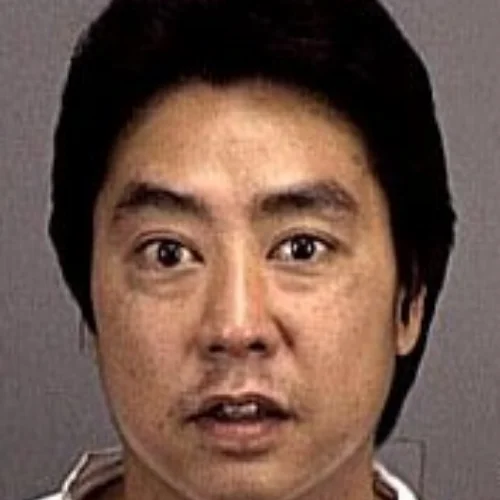
Summary
Name:
Byran Koji UyesugiYears Active:
1999Status:
ImprisonedClass:
Mass MurdererVictims:
7Method:
ShootingNationality:
USASummary: Mass Murderer
Name:
Byran Koji UyesugiStatus:
ImprisonedVictims:
7Method:
ShootingNationality:
USAYears Active:
1999Date Convicted:
June 13, 2000Byran Koji Uyesugi was born in 1959 in Honolulu, Hawaii. He grew up in the Nuuanu neighborhood of Honolulu. During his time at Roosevelt High School, Uyesugi was involved in the Army Junior Reserve Officer Training Corps (JROTC) and was a member of the riflery team. He was generally described by his classmates as a quiet and well-behaved student.
After graduating high school in 1977, Uyesugi had a life-changing incident. He was involved in a car accident when he crashed his father's car, hitting his head on the windshield. His brother, Dennis, noted that after this accident, Byran was never the same.
Uyesugi began working at Xerox in 1984 as a technician. During his time there, he developed a passion for raising and breeding goldfish and koi, which he sold to local pet stores. Uyesugi also had a keen interest in firearms, owning a significant collection. At one point, he had as many as 25 guns registered in his name, with records of ownership dating back to 1982. Police later found additional firearms at his father's home.
In the early years of his career at Xerox, Uyesugi seemed to be a typical employee. However, after his mother's death in 1988, he started to show signs of distress. According to his father, Hiroyuki, Uyesugi began to complain about a strange poking sensation in his head. His problems intensified after he was transferred to a different workgroup at Xerox.
Uyesugi started to express feelings of paranoia and accused his co-workers of harassment and tampering with equipment. His behavior led to growing concerns from his colleagues and management. They reported that he became increasingly isolated and withdrawn, leading others to ostracize him further.
In 1993, Uyesugi was arrested for damaging an elevator door in a fit of anger. After this incident, the court mandated that he undergo psychiatric evaluation and attend anger management classes. Although the psychiatrist observed that he had a delusional disorder and paranoia, he was not deemed dangerous at that time.
Byran Uyesugi also reported experiencing hallucinations, claiming that he heard voices and saw a shadow following him. In his mind, he believed that there was a conspiracy against him, and his home was under surveillance. Despite these issues, he did not seek the help of a psychiatrist as suggested by his father.
As time went on, Uyesugi became more anxious about changes in his job. Xerox began phasing out the copier model he had been servicing, and he resisted training on the new machines due to fear of falling behind. This situation escalated until, just one day before the tragic events of November 2, 1999, his manager insisted that he attend training.
Uyesugi's interactions with his peers continued to deteriorate, leading to feelings of anger and resentment toward his co-workers. His increasing isolation at work created a troubling environment, raising alarms about his mental state even further.
On November 2, 1999, Byran Koji Uyesugi arrived at work at the Xerox building in Honolulu, Hawaii. He entered the building armed with a 9mm Glock handgun. At around 8:10 a.m., he opened fire on his co-workers, targeting a meeting taking place on the second floor. Uyesugi shot seven men, including his supervisor. The victims were Christopher Balatico, Ford Kanehira, Ronald Kataoka, Ronald Kawamae, Melvin Lee, Peter Mark, and John Sakamoto. Five of the victims died instantly in the conference room where they were gathered.
After the shooting, Uyesugi fled the scene in a company van. Police began their investigation by closing off several streets in downtown Honolulu. By mid-morning, Uyesugi was cornered in the mountains nearby. A standoff ensued for nearly five hours, during which police were able to negotiate his surrender. He gave up shortly before 3 p.m. that day.
After his arrest, Uyesugi was charged with seven counts of murder and one count of attempted murder for firing at an eighth co-worker who managed to escape. He was held on a $7 million bail pending trial. His case gained significant media attention as it was the worst mass murder in Hawaiian history.
Uyesugi’s trial began on May 15, 2000. During the proceedings, he pleaded not guilty by reason of insanity. His defense team argued that he suffered from severe mental illness, including delusions and paranoia related to his work environment. The prosecution countered that, despite his claims of mental instability, Uyesugi was aware of his actions and acted out of anger over perceived mistreatment at work.
Ultimately, the jury found Uyesugi guilty of seven counts of first-degree murder, as well as the attempted murder charge. He was sentenced to life in prison without the possibility of parole on August 8, 2000. Uyesugi has since appealed his conviction, but the appeals have not changed the outcome of his case. He remains incarcerated, currently at the Tallahatchie County Correctional Facility in Mississippi, due to overcrowding in Hawaii’s prisons.
