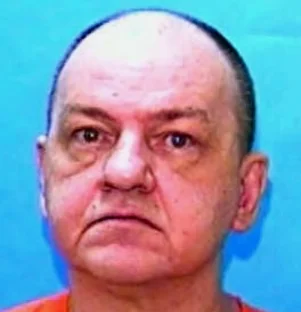
1948 - 2008
Summary
Name:
Burley Gilliam Jr.Years Active:
1982Birth:
August 13, 1948Status:
DeceasedClass:
MurdererVictims:
1Method:
Drowning / StrangulationDeath:
March 23, 2008Nationality:
USA1948 - 2008
Summary: Murderer
Name:
Burley Gilliam Jr.Status:
DeceasedVictims:
1Method:
Drowning / StrangulationNationality:
USABirth:
August 13, 1948Death:
March 23, 2008Years Active:
1982Date Convicted:
February 1, 1985“I got to get out of here.”
— Burley Gilliam Jr.
Burley Gilliam Jr. was born on August 13, 1948. Testimony presented during his trial described a violent and unstable childhood in which he was regularly beaten by his father and later by a stepfather. As the oldest child, he reportedly tried to protect his mother and six younger siblings. Family members also described him as a sickly child who experienced headaches, struggled academically and later exhibited behavior they believed to be seizures.
Gilliam was convicted of rape in Texas after an offense committed in 1969. At his later murder trial, he claimed the earlier case involved consensual sexual activity with a 15-year-old girl, but prosecution evidence indicated that the victim had neck bruising and a black eye. Gilliam served approximately seven years in prison. He later worked as a truck driver and was married twice. At the time of his 1988 retrial, he was married to his second wife, Cindy, and had an eight-year-old son from an earlier marriage.
Gilliam reported developing seizures after suffering head injuries in prison and was prescribed medication. He also had a history of heavy alcohol and drug use. On June 8, 1982, he was working as a truck driver for Tri-State Motor Transport and had stopped in South Florida while waiting for another assignment. Before meeting Marlowe, he admitted drinking whiskey and several beers.
On the evening of June 8, 1982, Gilliam met Joyce Marlowe at the Orange Tree Lounge, where she worked as a dancer. She was between work shifts and wanted something to eat, and Gilliam offered to drive her to a restaurant. Instead, the two eventually reached the Twin Lakes area in rural Dade County. A fisherman, Sandy Burroughs, heard a woman screaming and went toward the disturbance. He found Gilliam’s truck stuck in the sand and described Gilliam as extremely nervous but otherwise alert and behaving normally.
Marlowe was sexually assaulted and physically attacked near the lake. Medical evidence established that she suffered injuries to several parts of her body, including injuries caused by biting, beating and forceful restraint. She was ultimately strangled. Her body was found the following day, and evidence recovered from the area and Gilliam’s truck linked him to the scene.
Gilliam left Florida and travelled to Texas. Police arrested him there on June 15, 1982, and a Florida detective questioned him the following day at the Tarrant County Jail. Gilliam initially said that he and Marlowe had gone swimming and that he accidentally drowned her by holding her underwater for too long. He claimed that he tried unsuccessfully to revive her. That account was contradicted by the autopsy, which identified strangulation as the cause of death and documented extensive injuries resulting from the sexual assault.
A Dade County grand jury indicted Gilliam on July 8, 1982, for first-degree murder, sexual battery and grand theft. During his original proceedings, he repeatedly disputed or dismissed appointed attorneys and was eventually permitted to represent himself with standby counsel. On February 1, 1985, a jury convicted him of murder and sexual battery but acquitted him of grand theft. The jury unanimously recommended death, and the judge sentenced him to death for the murder and life imprisonment for sexual battery.
The Florida Supreme Court overturned those convictions on November 5, 1987, because Gilliam had been denied the right to challenge prospective jurors before they were sworn. The ruling did not find him innocent but required a new trial. At his 1988 retrial, Gilliam argued that he had acted during an epileptic seizure and therefore could not understand his conduct. Family members and a defense psychiatrist supported his claim, while prosecution experts challenged whether a seizure could account for the organized and violent acts involved. The jury rejected the insanity defense and convicted him again on June 17, 1988.
The retrial jury recommended death by a vote of 10–2. On August 16, 1988, the court sentenced Gilliam to death for first-degree murder and imposed a consecutive life sentence for sexual battery. The Florida Supreme Court affirmed the murder conviction and death sentence on May 2, 1991, although it ordered the sexual-battery sentence changed from consecutive to concurrent because the judge had not justified increasing it after retrial.
Gilliam continued pursuing state and federal post-conviction appeals. He alleged that prosecutors had withheld evidence, that his attorneys had provided ineffective representation and that additional evidence concerning his mental health, substance use and childhood should have been presented. The Florida Supreme Court rejected his principal post-conviction claims in 2002, and the Eleventh Circuit affirmed the denial of his federal habeas petition on March 6, 2007.
Gilliam remained under the death sentence but was never executed. Florida’s historical capital-case database records him as dead on March 23, 2008. The publicly accessible records reviewed do not state his medical cause of death. His death ended any remaining execution or appellate proceedings.
