Summary
Name:
Bruce Thomas HowseYears Active:
2001Status:
ImprisonedClass:
MurdererVictims:
2Method:
StabbingNationality:
New ZealandSummary: Murderer
Name:
Bruce Thomas HowseStatus:
ImprisonedVictims:
2Method:
StabbingNationality:
New ZealandYears Active:
2001Date Convicted:
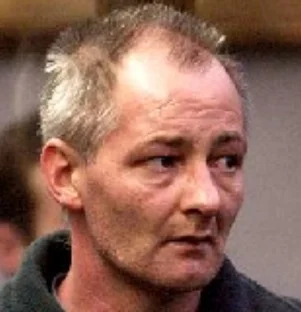
December 4, 2002Bruce Thomas Howse was born in about 1963. He was 39 at the time of sentencing in December 2002, according to the New Zealand Court of Appeal. By 2001, Howse was living in Masterton with his partner, Charlene Aplin. Her daughters, Saliel Aplin and Olympia Jetson, were his stepdaughters. The two girls slept in a separate sleep-out behind the family home, while Howse, Charlene Aplin, and two younger children slept inside the main house.
A major part of the Crown case was motive. Prosecutors argued that Howse killed the girls because sexual abuse complaints had been made against him and had begun to resurface. The Crown’s position was that he killed Saliel and Olympia to silence them and then tried to shift blame away from himself. Howse denied the sexual abuse allegations.
On the night of December 3, 2001, Saliel Aplin and Olympia Jetson went to bed in separate rooms in the sleep-out behind their Masterton home. During the night or early morning, both girls were fatally stabbed. Court records state that each girl received a single fatal knife wound. Saliel died within minutes, while Olympia bled to death over a longer period estimated by the pathologist at between 30 minutes and two hours.
At 3:38 a.m., Charlene Aplin called emergency services. She said she was calling for Howse, who claimed he had been attacked by a group of men. When police arrived, they found Saliel and Olympia dead in the sleep-out. Howse repeated his story that he had been assaulted and dragged from the house, but investigators later found that the injuries he claimed were caused by attackers were self-inflicted.
During later police questioning, Howse confessed to killing both girls. He said he had heard voices and needed help. In a recorded interview, he described how he had stabbed each child and demonstrated the motion of the knife blows. The Court of Appeal later found this evidence important because his description matched the injuries in a way that only the killer was likely to know.
The pathologist said Saliel was stabbed by a powerful downward thrust while lying on her back. Olympia was stabbed by an underarm thrusting blow that went through her arm and entered her body. The Court of Appeal noted that Howse’s demonstrations matched the wounds exactly and rejected the possibility that he had guessed those details by coincidence.
Howse later changed his story. On December 11, 2001, after he had been charged and remanded in custody, he gave another statement in the presence of his lawyer. This time, he claimed Charlene Aplin had killed the girls and that he had falsely accepted blame so she could attend their funeral. At trial, his defence was that Charlene Aplin was the killer, not him.
The Court of Appeal rejected that argument. It found there was no evidence supporting Howse’s claim that Charlene Aplin was the killer. The court also noted that Howse had Olympia’s blood on his trousers and that he had been able to describe blood patterns inside the sleep-out with unusual accuracy. The court said the evidence created an “irresistible inference of guilt.”
On December 4, 2002, a jury in the High Court at Wellington convicted Howse of two counts of murder. On December 18, 2002, he was sentenced to life imprisonment on each count with a minimum non-parole period of 28 years. At the time, it was reported as one of New Zealand’s longest minimum non-parole periods since the abolition of the death penalty.
Howse appealed his convictions and sentence. On August 7, 2003, the New Zealand Court of Appeal dismissed the conviction appeal but allowed the sentence appeal in part. The court reduced the 28-year minimum non-parole period to 25 years, with the minimum periods on both life sentences running concurrently.
Howse later appealed to the Privy Council against his conviction. The Privy Council record confirms that the Court of Appeal had dismissed the conviction appeal and reduced the minimum term to 25 years.
As of a 2024 New Zealand Department of Corrections OIA response, Bruce Thomas Howse was listed among offenders still in New Zealand prisons, serving a murder sentence, who had been in prison for 20 or more years and had never been granted parole. His sentence start date was listed as December 18, 2002.
